 €25-€200
Roman artisanal leather in Rome
AI summary
Roman artisanal leather tells the story of a lived-in Rome, made of daily gestures and skilled hands. Belts, notebooks, and small accessories come from a practical and ancient tradition where beauty lies in functionality and durability. It is a material that changes with the person who uses it, marking and improving over time. Bringing it home means carrying an object that will accompany everyday life, just as it has done for centuries in the streets of the city.
- artigianato
- cuoio
- botteghe romane
- fatto a mano
- oggetti quotidiani
Editorially verifiedartigianato
3 verified shops curated by our editors
More crafts from Rome


The product
What Roman artisanal leather is
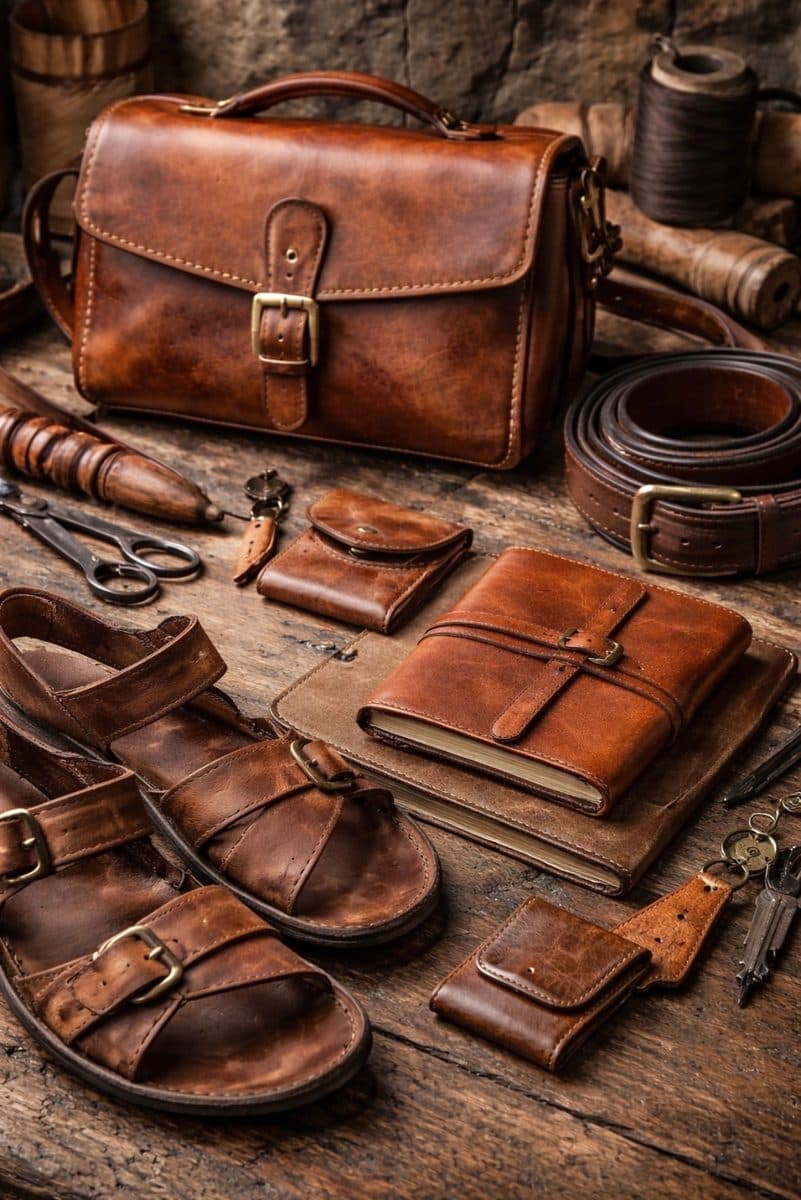
Small objects made from natural leather — belts, wallets, hand-bound notebooks, minimalist sandals, or cases — produced in Roman artisan workshops. The material is often vegetable-tanned and crafted using simple techniques: cutting, hand stitching, polishing, and finishing with natural oils. The aesthetic is understated and functional, with warm tones ranging from honey to dark brown. With use, the leather changes in appearance, softens, and gradually takes on the shape of the daily life of the person who carries it.
The roots
Origin and history
Leatherworking in Rome has ancient and practical roots. In Roman times it was essential for civil and military life: used for footwear, belts, light armor, bags, and tool bindings. During the medieval and early modern periods, workshops of leatherworkers and saddlers continued to operate in the city’s artisan quarters, producing objects for transport, work, and travel. Unlike other Italian centers more closely associated with luxury leather goods, Rome’s tradition remained largely urban and practical. Many contemporary workshops draw inspiration from this continuity of useful, robust, and minimally decorative objects.
This object carries with it the idea of a Rome meant to be lived, not only observed. It tells the story of a city of workshops, working hands, and materials that age well. It reminds us that time, when it passes over the right objects, does not ruin them but enriches them. It is a fragment of everyday Rome rather than monumental Rome.
The context
Cultural significance
Leather represents a very concrete dimension of Roman culture: that of a city experienced on foot, shaped by manual work and durable objects. Unlike decorative or monumental souvenirs, these items are created to be used every day. The patina that leather develops over time tells a personal story between object and owner. In this sense, it reflects a very Roman value: practical solidity and a preference for things that last and adapt to real life.
Content reviewed by Trouvenir against provenance and cultural-context criteria.
Where to buy
Where to find Roman artisanal leather in Rome
They can be found mainly in small artisan shops and independent workshops in historic neighborhoods such as Trastevere, Monti, or the center near Campo de’ Fiori. Some artisans work directly behind the counter, showing the cutting and stitching of the leather. It is also common to encounter family-run ateliers producing only a few pieces at a time, often customizable. In craft markets or along less touristy streets, it is easier to find truly handmade items.
Get the full verified list - map, hours, reviews - for Roman artisanal leather in Rome.
AI Scanner · Free
Not sure your Roman artisanal leather is the real deal?
Upload a photo of the Roman artisanal leather you found: the AI compares it against Trouvenir's verified souvenir database and returns origin, history and provenance.
Verify with AIFree download
Take Trouvenir with you
iOS and Android. Free.
Privacy-firstCross-device syncOffline ready