
City guide
What makes Florence's souvenirs unique
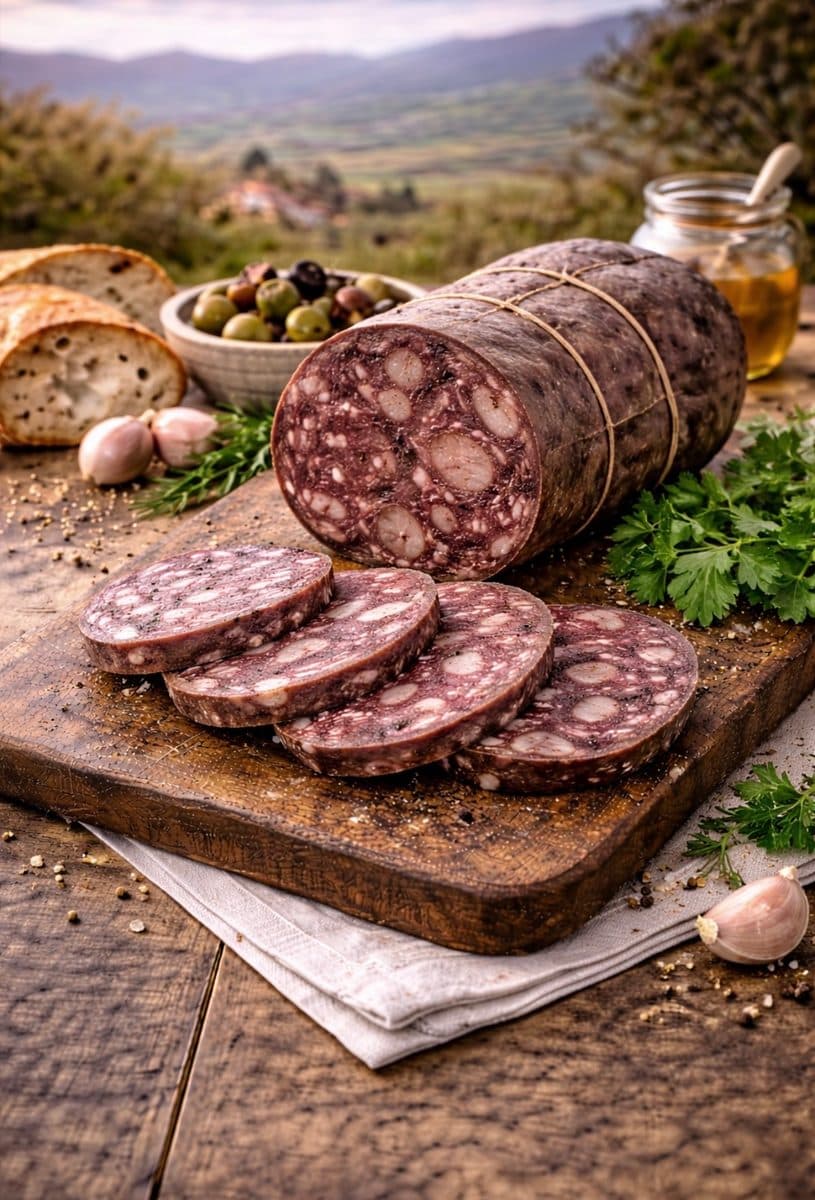
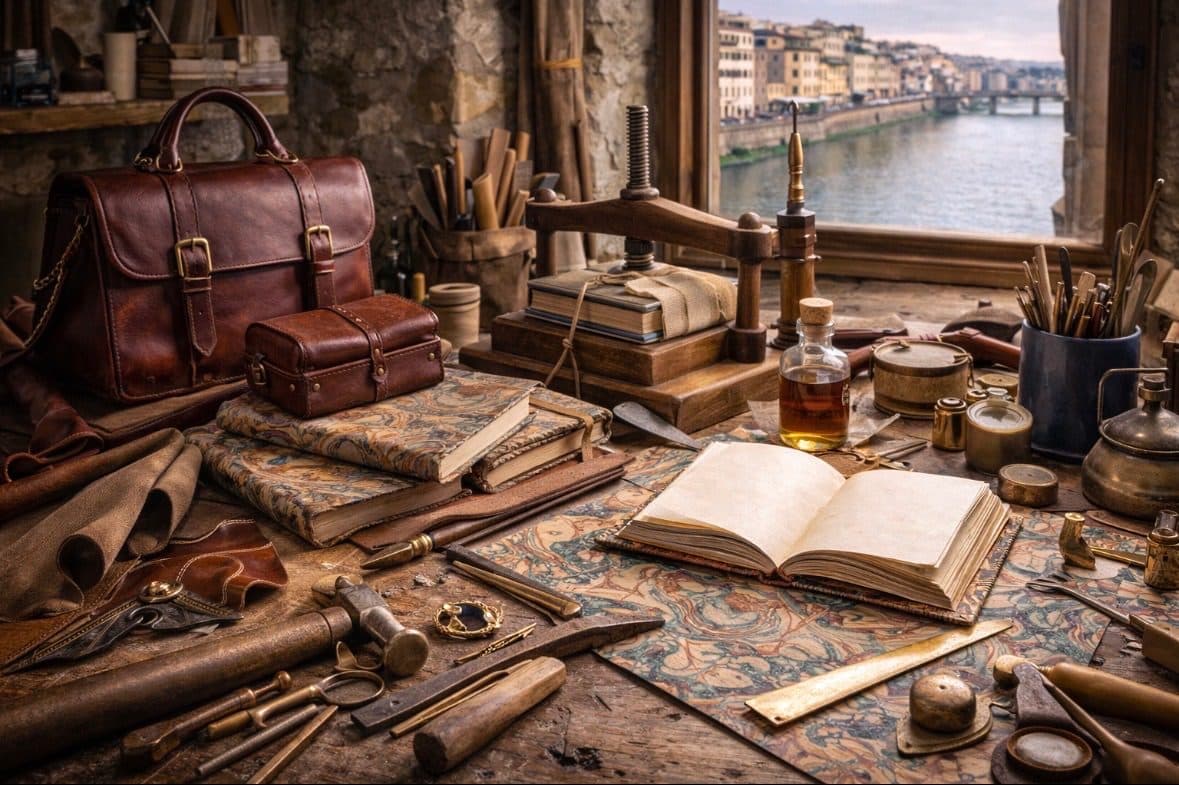
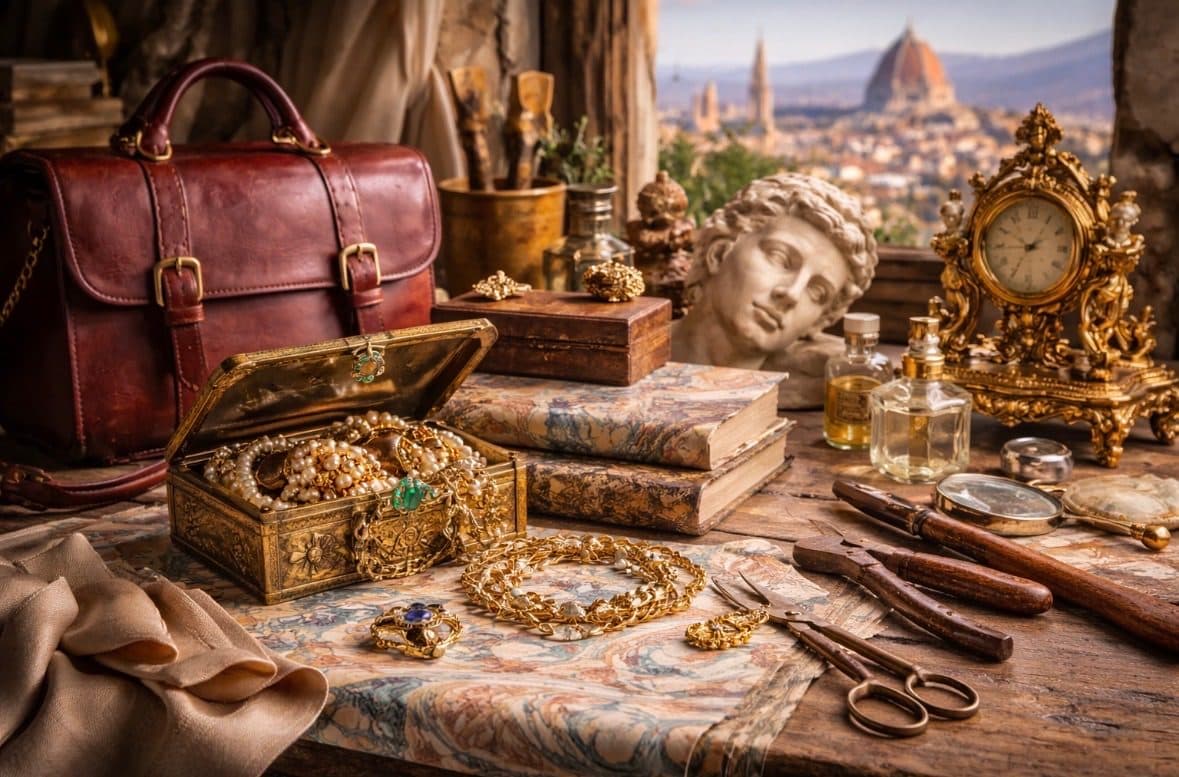
In Florence an authentic souvenir is never merely decorative: it is a matter of form and measure. The city that invented perspective applies the same discipline to the leather worked in the Santa Croce workshops, to the goldsmithing of the Ponte Vecchio, to the marbled paper born to organise beauty, and to bookbinding understood as an act of responsibility towards knowledge. The same holds at the table: Finocchiona IGP salami, Pecorino Toscano DOP cheese, the extra-virgin olive oil that here is not a condiment but the structure of the cuisine, the cantucci biscuits to dip in Vin Santo, the saltless pane sciocco bread conceived as a tool rather than a pleasure. Taking home a Florentine object means choosing something well-made rather than showy: an artisan perfume that is the memory of stone and linen, a print that reflects on what remains of the Renaissance, a bottle of Chianti that holds the meal together. It is a city that rewards those who can see the quality of the gesture.
The artisan and culinary tradition
Florence's craft vocation is rooted in the medieval guild system, the Arti that regulated wool, silk, leather and goldsmithing from the 13th century and made the city a European laboratory. The Renaissance did not interrupt this tradition; it turned it into method. The workshop became a place of apprenticeship where copying, measuring and perfecting were part of training, and where art and craft were not separate. That mindset, the world is measurable and form is governable, survives today in the tanneries of the Oltrarno, in the paper and bookbinding studios, in the goldsmiths of the Ponte Vecchio, and in the old herbalist and perfume workshops linked to the convents. Tuscan cooking, too, springs from this logic of order and no waste: rural, measured, built to last.
Telling typical from touristy
In Florence authenticity is recognised through the coherence between object and place. For leather, check the vegetable tanning, the cut of the grain, and the presence of a physical workshop in the Oltrarno or around Santa Croce: the generic genuine-leather label of tourist stalls says little. For goldsmithing and micro-work, ask who made the piece and where. For marbled paper and bookbinding, every sheet is unique: two identical sheets betray industrial printing. In the kitchen look for DOP and IGP marks (Pecorino Toscano, Finocchiona, Prosciutto Toscano) and be wary of prices below the cost of the raw material. The right Florentine souvenir almost always has a name, an address and a person behind it.
Where to find the real workshops
The artisan heart is the Oltrarno, between Santo Spirito and San Frediano: tanneries, gilders, restorers and leather workshops open to the public. Around Santa Croce the leather tradition survives, with the leather school inside the Franciscan complex. The Ponte Vecchio remains the historic reference for goldsmithing. For food, the Mercato Centrale of San Lorenzo and the Sant'Ambrogio market offer cured meats, pecorino, oil and wine with recognisable producers. Avoid the stalls closest to the Duomo, where the offer is almost always industrial and generic.
Practical buying tips
Buy the new extra-virgin olive oil between November and December, when it is freshly pressed and most intense. For DOP/IGP cured meats ask for vacuum packing: finocchiona and Tuscan ham travel well, but check customs rules if you are leaving the European Union. Cantucci and Vin Santo are the most durable, easily transported gift. For leather and goldsmithing, be wary of aggressive discounts near the attractions: handwork has a price floor. Always ask whether you can see the workshop or the artisan: in Florence, you often can.
Content verified by Trouvenir.
Souvenirs to discover
View all →

Verified typical souvenirs
What to buy in Florence: typical souvenirs


AI Scanner · Free
Found a souvenir in Florence?
Snap a photo: in 5 seconds Trouvenir's AI tells you whether it's a genuine Florence souvenir, shares its story and points you to verified shops.
Open the AI scannerRegional cuisine
What to eat in Florence


Editorial paths
Editorial paths through Florence
Themed routes: stories, stops and regional artisans, told chapter by chapter.
Members-only content
Sign in to explore the paths
Sign in to your free Trouvenir account to discover 4 editorial paths through Florence.
Free download
Take Trouvenir with you
iOS and Android. Free.
Privacy-firstCross-device syncOffline ready