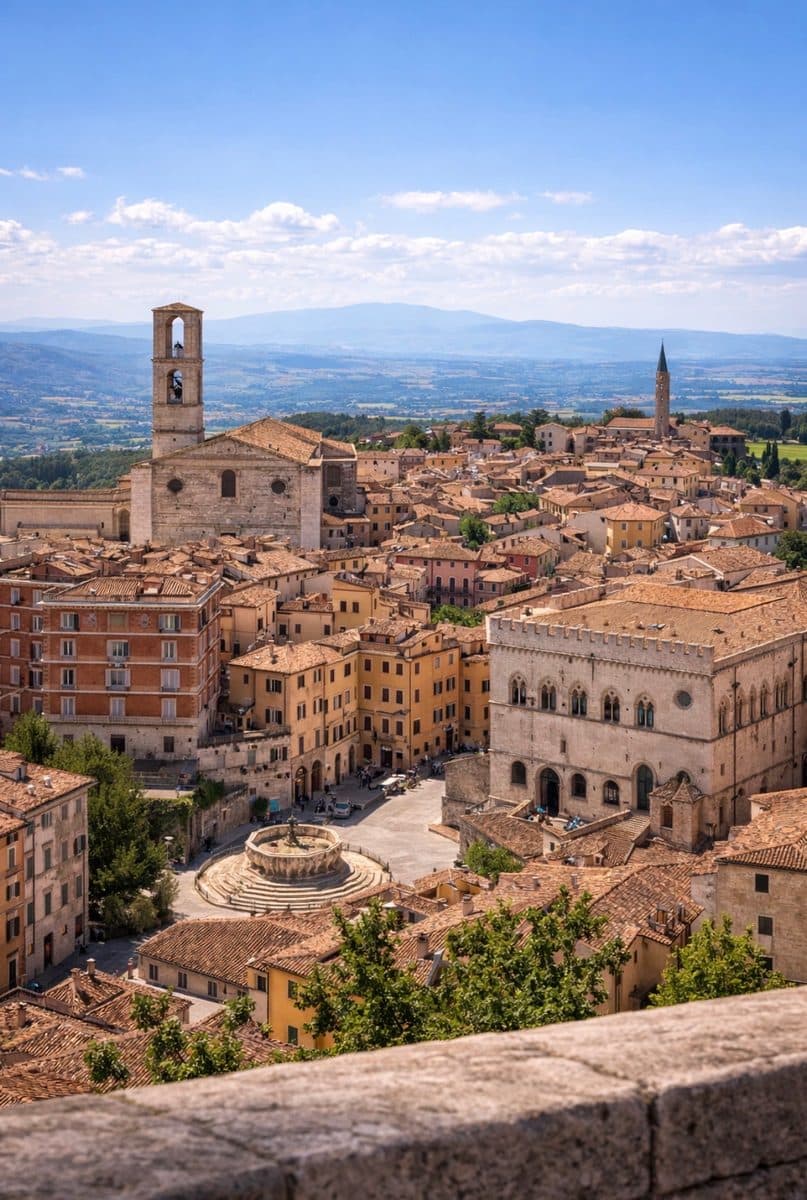
Perugia is one of Italy's destinations with the deepest artisanal and gastronomic traditions. Every product here reflects the area's history, craftsmanship, and culture — something you won't find elsewhere with the same character.
This guide collects distinctive souvenirs selected by the Trouvenir app for Perugia: distinctive objects and specialties that truly capture the soul of the city, far from tourist stalls and mass-produced items. For each souvenir you'll find cultural context, price ranges, and where to buy with confidence.
1. Everyday Umbrian maiolica (Deruta, Perugia area)
🏺 Craftsmanship
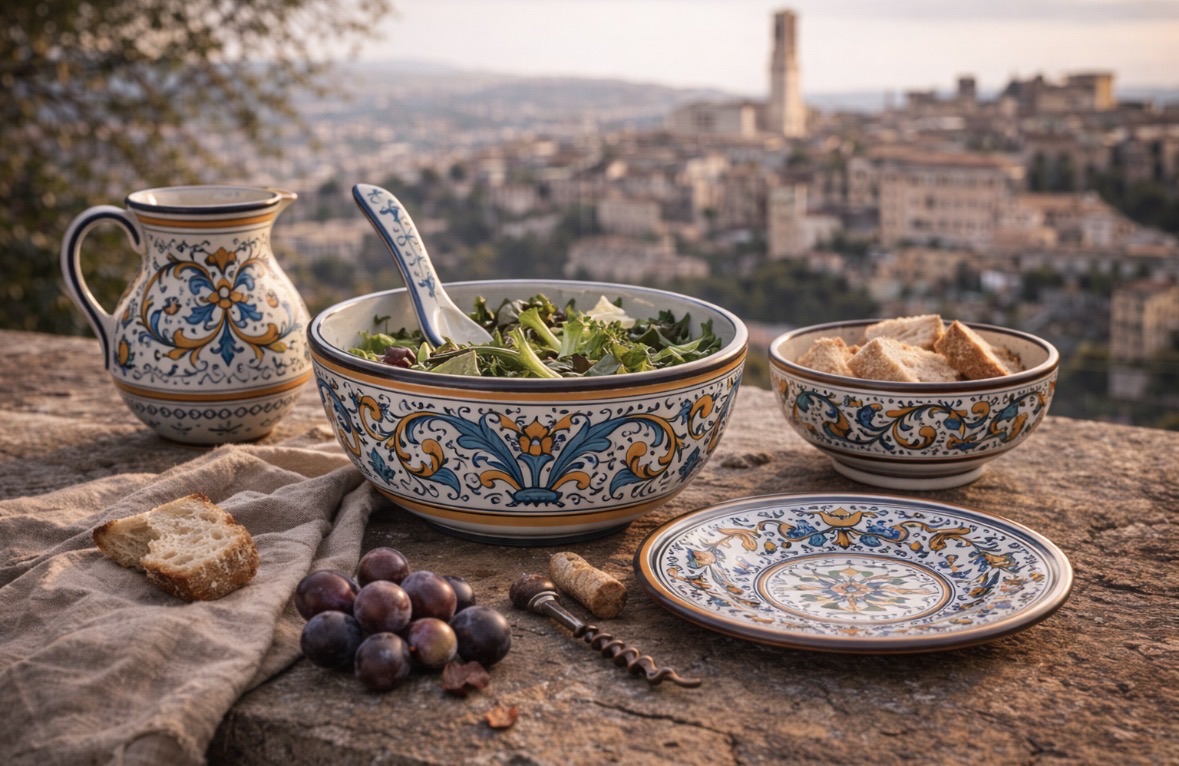
This is glazed ceramic intended for everyday use: plates, bowls, containers. The shapes are simple and functional, designed for the table and pantry. Surfaces may be decorated, but never excessively: the design accompanies use rather than overpowering it. It was born as a domestic object before becoming an ornamental one.
Why it's special
Everyday maiolica reflects a domestic culture attentive to durability. It symbolizes a Perugia that has entrusted part of its identity to the home and the table. It speaks of daily life, of repeated gestures, of beauty that accompanies use without imposing itself. In these objects lives the Umbrian idea that function comes before representation.
History
Maiolica production in the Perugia area developed between the Middle Ages and the Renaissance, with specialized centers such as Deruta. Originally, ceramics responded to practical needs: to contain, serve, and store. Over time the decoration became more refined, but domestic use remained central. This continuity has allowed Umbrian maiolica to remain closely tied to everyday life, not only to collecting.
Price
€30-€90
Where to find it
Traditional ceramic workshops Artisan settings in the Perugia area Productions connected to Umbrian functional ceramics
Discover Everyday Umbrian maiolica (Deruta, Perugia area) on Trouvenir →
2. Devotional object linked to Perugian tradition
🏺 Craftsmanship
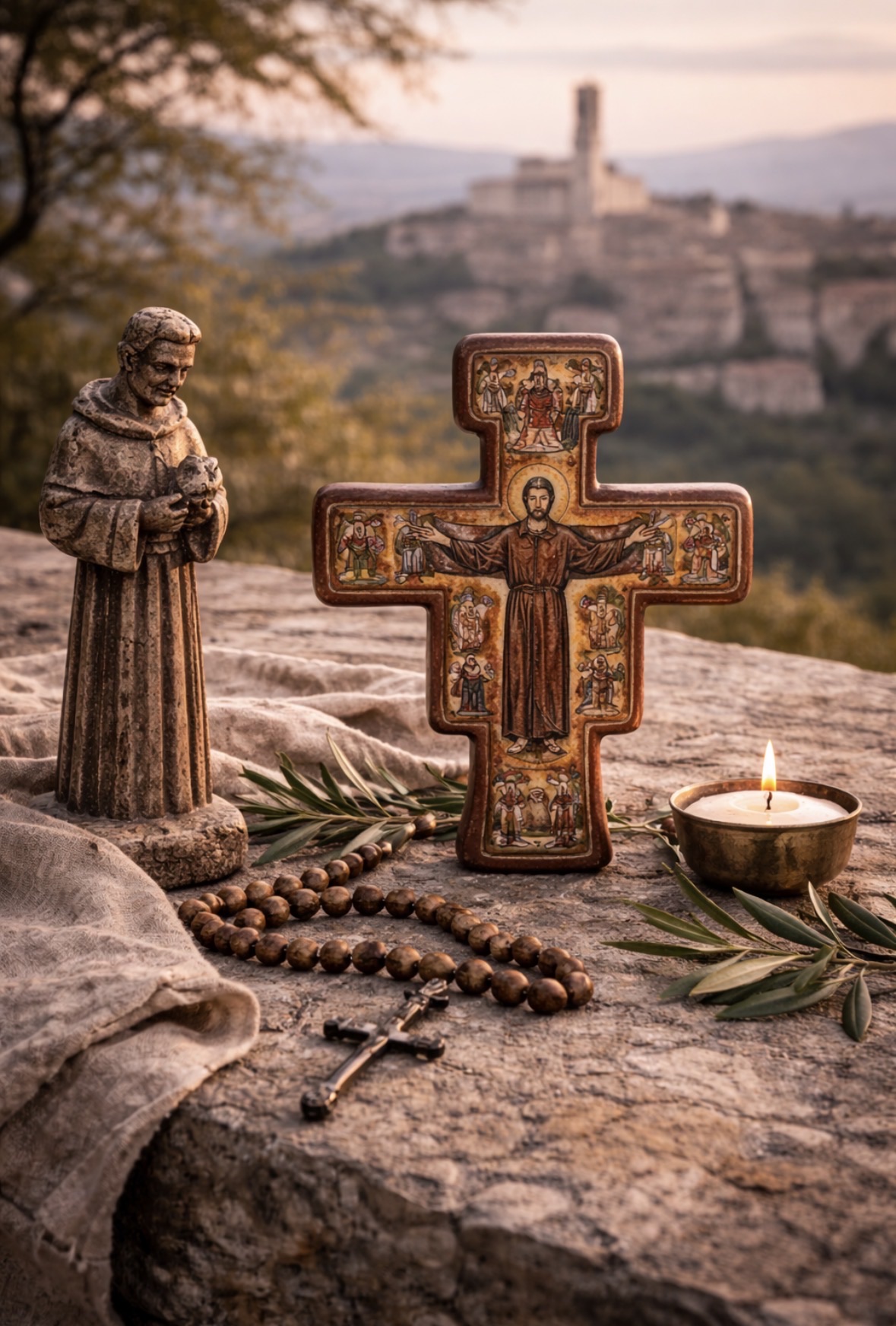
The devotional object linked to Perugian tradition is an item connected to the city’s religious practice and spiritual culture. It may take the form of small crosses, medals, sacred images, or objects made from simple materials such as metal, wood, or printed paper.
These objects have an essential structure and are intended for personal or domestic keeping. Their craftsmanship emphasizes durability and clarity of form, maintaining continuity with the regional religious tradition.
They are conceived as stable objects, meant to preserve their symbolic meaning over time.
Why it's special
The devotional object represents the connection between the city and its religious tradition. It expresses a historical continuity that has contributed to the formation of Perugian cultural identity.
It is the result of a tradition that has maintained its material presence over time.
History
Since the Middle Ages, Perugia has developed as an important religious center in central Italy. The presence of churches, confraternities, and monastic communities contributed to the spread of devotional objects intended for personal keeping.
These objects accompany everyday life and represent a tangible expression of the regional religious tradition.
Even today, they remain an integral part of the city’s cultural continuity.
Price
€8–€40
Where to find it
Devotional objects can be found in Perugia in settings connected to the regional religious tradition.
Trusted places
Religious shops in the historic center of Perugia They sell items linked to the regional spiritual tradition.
Shops near the city’s historic churches They offer traditional devotional objects.
Religious bookstores in Umbria They carry items related to devotional practice.
Discover Devotional object linked to Perugian tradition on Trouvenir →
3. Traditional wrought iron object
🏺 Craftsmanship
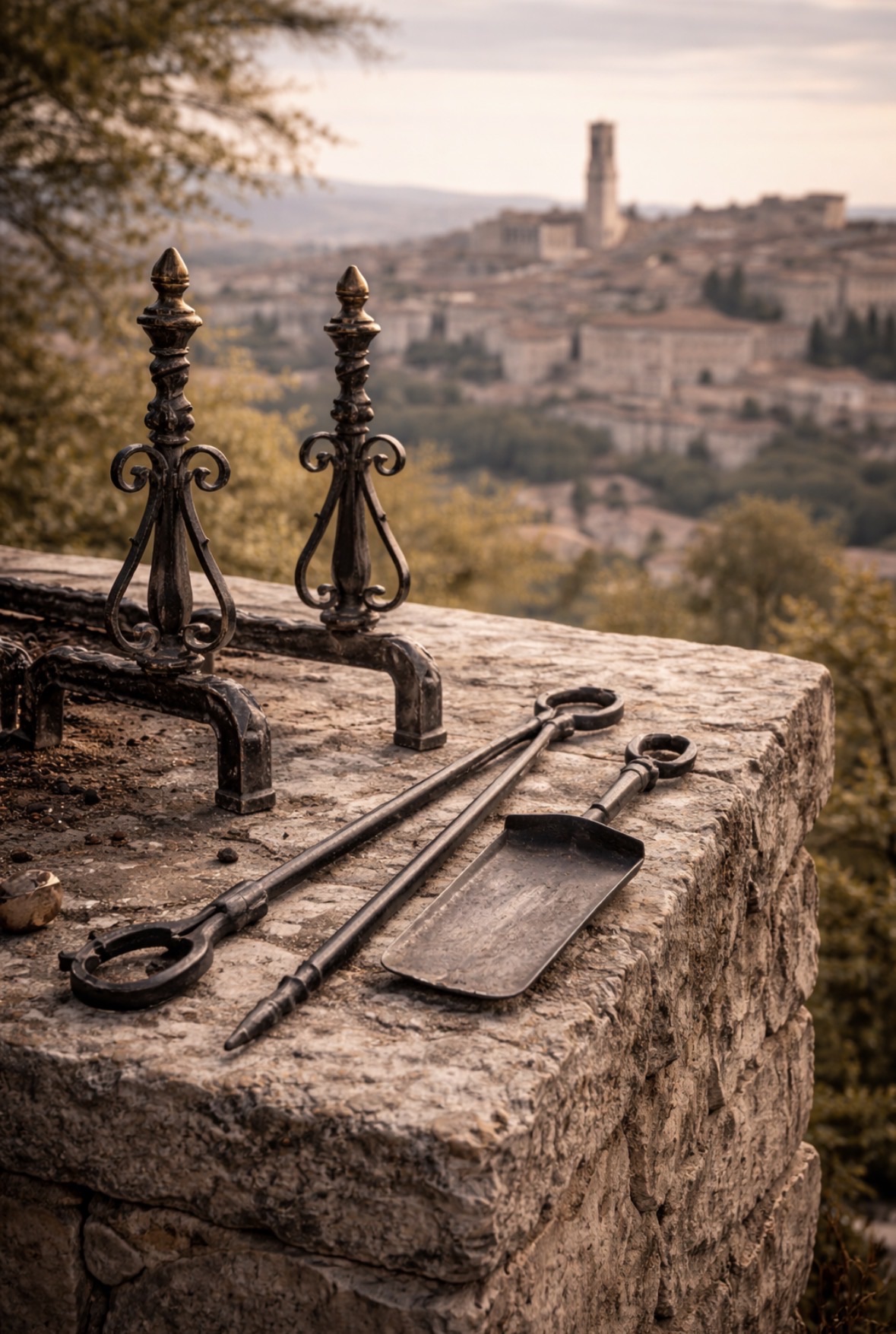
It is a small wrought iron piece: a household hook, devotional element, functional support, or everyday object. The metal is worked hot and shaped by hand, with simple forms and visible marks of the crafting process. The surface is never perfectly uniform: it carries the trace of the gesture. It is made to last, not to be replaced.
Why it's special
Wrought iron reflects a pragmatic side of Perugia, built on manual craftsmanship. It symbolizes a culture that entrusts materials with the task of enduring over time. It speaks of modest architecture, of the home, of thresholds, of protection. In these objects lives the Umbrian idea that solidity is not an aesthetic value, but a cultural necessity.
History
Ironworking in Umbria has been documented since the Middle Ages, connected to both urban and rural life. In Perugia, iron appears in household hardware, minor architectural structures, and devotional objects. The blacksmith responded to practical needs: to close, support, and protect. Over time, these forms remain essential, precisely because they were born from real functions.
Price
€40-€120
Where to find it
Artisan wrought iron workshops Contexts connected to Umbrian manufacturing traditions Functional items for domestic or devotional use
Discover Traditional wrought iron object on Trouvenir →
4. Historic Perugian print / engraving
🏺 Craftsmanship
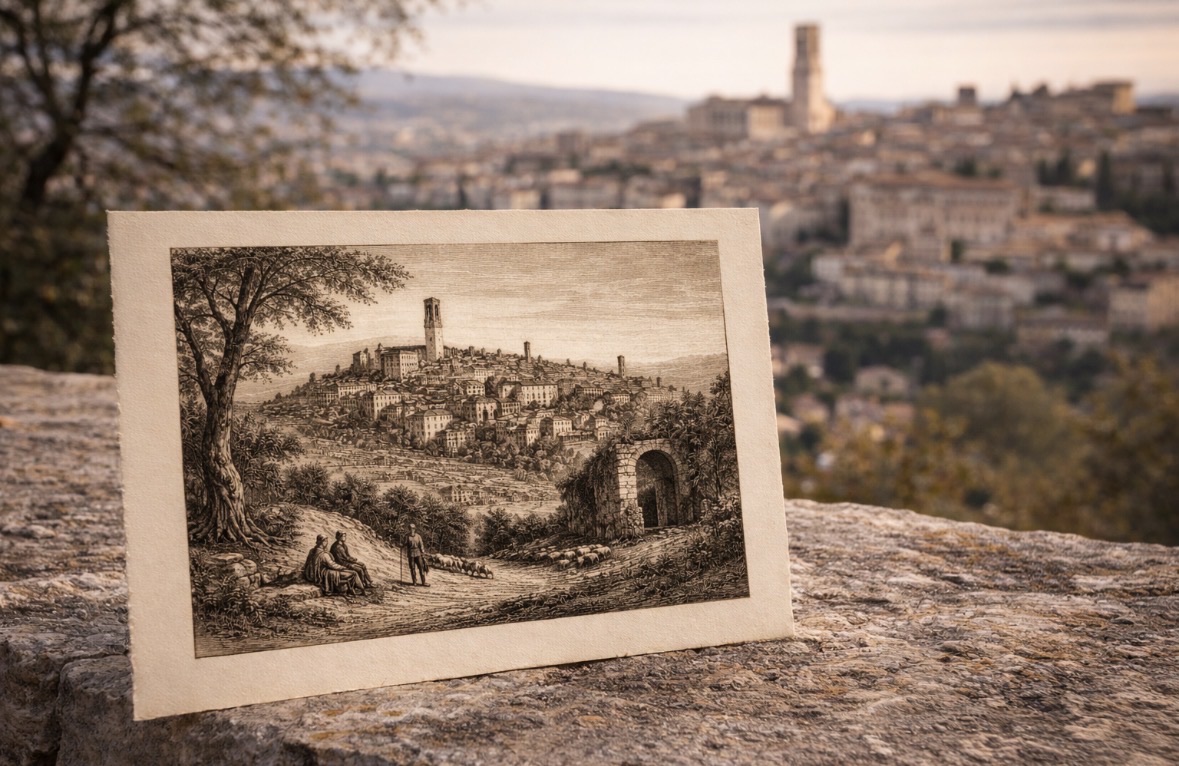
A print or paper engraving depicting urban views, civic and religious architecture, institutional symbols, or scenes of city life. The line work is precise, often monochromatic, designed to last and to be examined in detail. The paper is durable, suitable for long-term preservation. It originated as a visual document before becoming a decorative object.
Why it's special
The historic print tells the story of Perugia as a city of knowledge and representation. It symbolizes an urban culture that entrusted paper with the construction of its own memory. It speaks of the university, of administration, and of civic life observed and recorded. In these images lives the Perugian idea that a city also exists through what it chooses to preserve over time.
History
Between the Middle Ages and the early modern period, Perugia developed a strong documentary and graphic tradition. The spread of printing made it possible to record urban layouts, civic powers, and architectural transformations. Engravings became tools for knowledge, study, and the transmission of urban memory. Over time, these images turned into historical testimonies rather than simple aesthetic representations.
Price
€30-€120
Where to find it
Art print workshops Graphic archives and contexts connected to historic paper production Cultural environments dedicated to the city’s iconographic memory
Discover Historic Perugian print / engraving on Trouvenir →
5. Artisanal Perugian chocolate
🍽️ Food Specialties
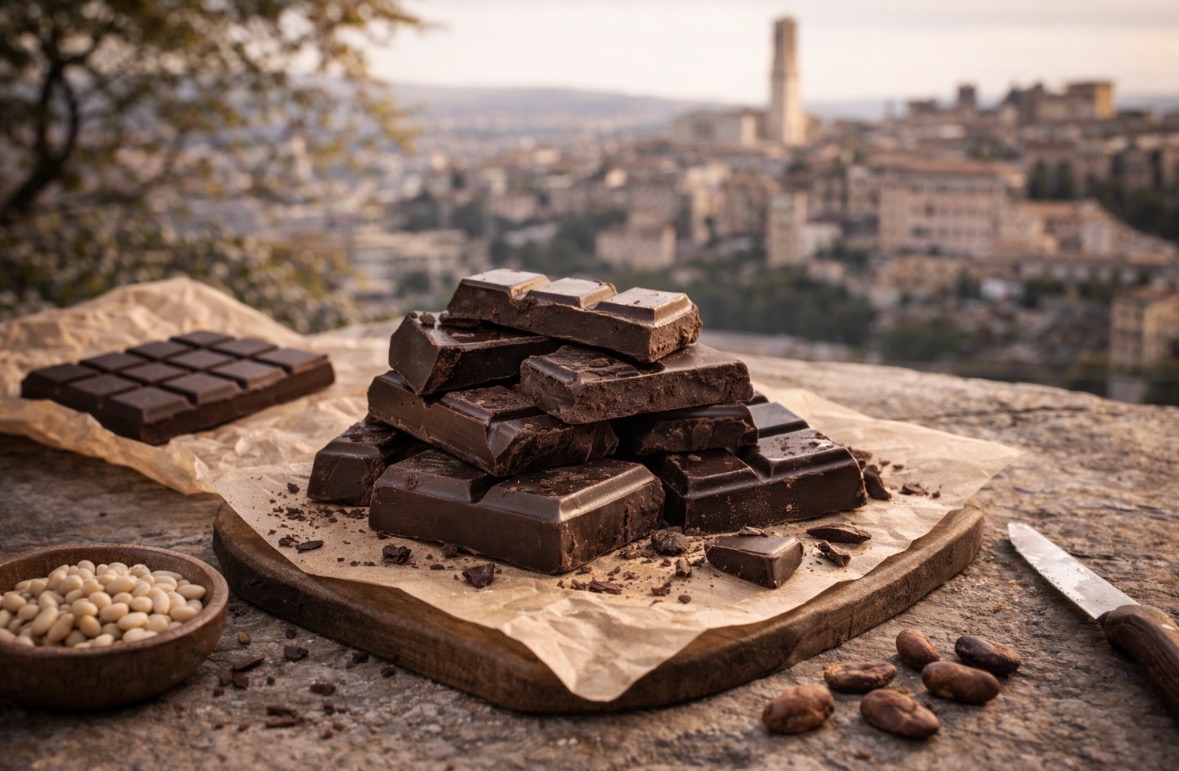
It is chocolate made from selected cocoa, transformed according to an industrial and artisanal tradition that in Perugia has deep roots. The texture is firm, the flavor balanced, free from excessive aromatic notes. It comes in bars or small shapes designed to be broken and shared. It was not created as an occasional sweet, but as a modern, urban food.
Why it's special
Chocolate tells the story of modern, industrial, and cultured Perugia. It is the symbol of a city that managed to transform an exotic ingredient into a regional identity. It speaks of work, innovation, and productive capability. Within this food lives the Perugian idea that tradition can also emerge from design and industry, not only from rural life.
History
Chocolate making in Perugia developed between the late nineteenth and early twentieth centuries, alongside the city’s industrial growth. Cocoa became a material for both technical and cultural experimentation. Over time, alongside large-scale production, an artisanal dimension survived and renewed itself. Chocolate thus entered everyday urban life, becoming part of the city’s identity.
Price
€15-€50
Where to find it
Artisanal chocolate workshops Production settings historically linked to cocoa processing Urban spaces dedicated to the Perugian confectionery tradition
Discover Artisanal Perugian chocolate on Trouvenir →
6. Extra virgin olive oil from the Perugian hills
🍽️ Food Specialties
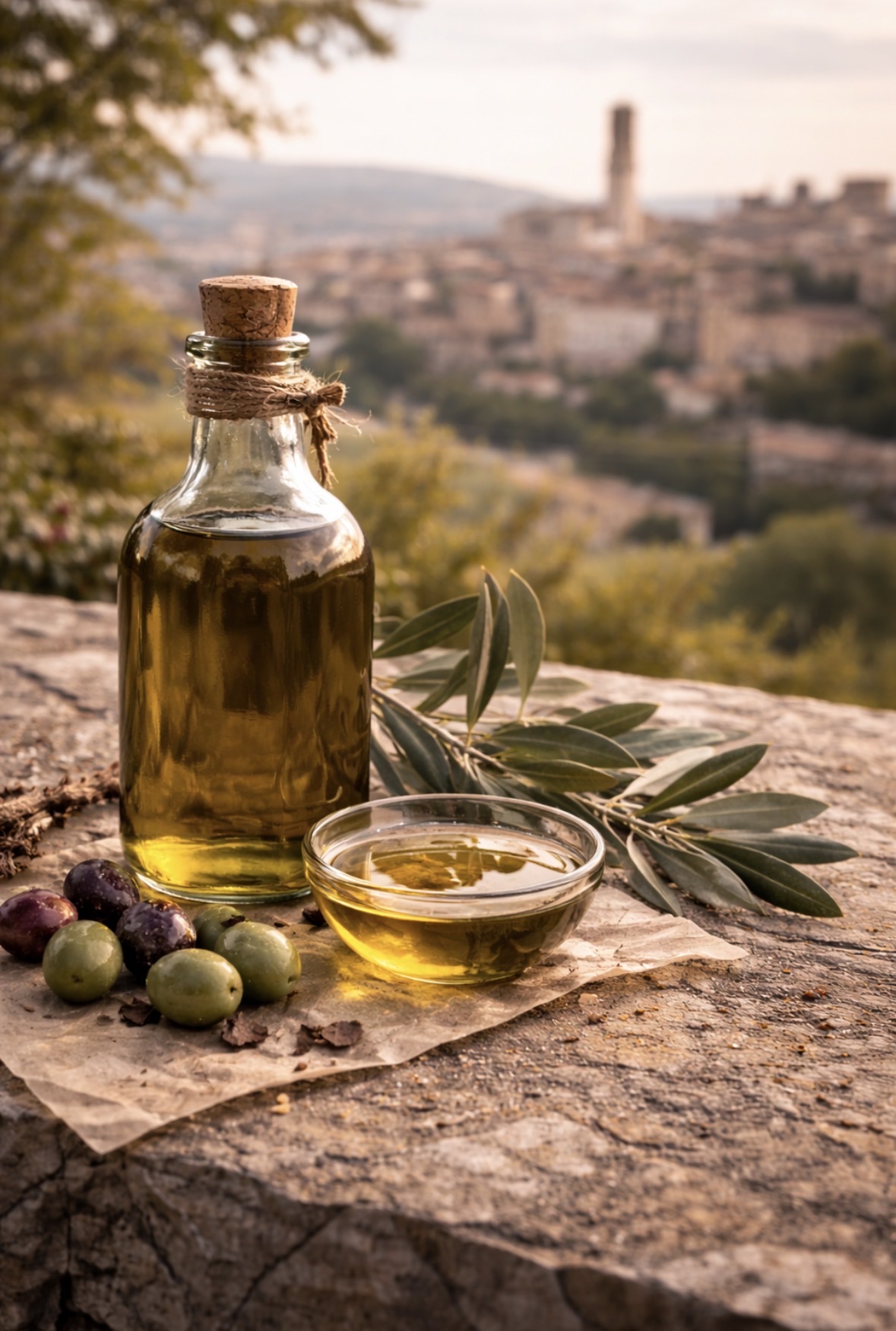
This oil is obtained from regional cultivars, cold-pressed, with a balanced profile and herbaceous notes, sometimes reminiscent of almond. Its color ranges from green to golden yellow, depending on the season and whether it has been filtered. It is meant for everyday use, not for showy tastings. It was born as a staple food, present in every kitchen.
Why it's special
The oil tells the story of Perugia living in constant relationship with its landscape. It symbolizes a culture that has built balance between city and countryside. It speaks of sobriety, of culinary continuity, of an essential cuisine. In this product lives the Perugian idea that value lies in consistency, not in exception.
History
Olive cultivation in the Perugia area has been documented since the Etruscan and Roman periods. During the Middle Ages, oil became a central element of the agricultural economy and urban diet. The hills around Perugia have maintained a fragmented, family-based production that has remained stable over time. This continuity has preserved a production model tied to quality and everyday use.
Price
€15-€40
Where to find it
Traditional frantoi Hilly agricultural settings Productions connected to the regional short supply chain
Discover Extra virgin olive oil from the Perugian hills on Trouvenir →
7. Torcolo di San Costanzo
🍽️ Food Specialties
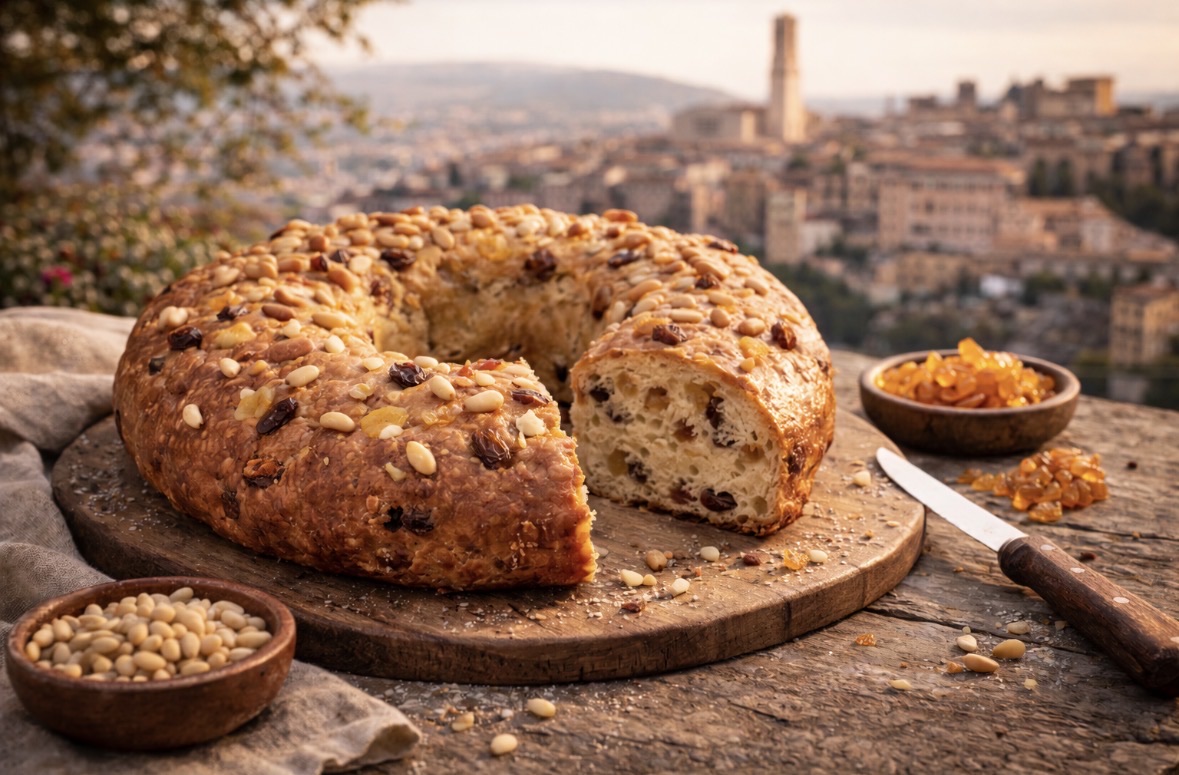
Torcolo di San Costanzo is a traditional ring-shaped cake from Perugia, made with a compact, slightly leavened dough. It is prepared with simple ingredients such as flour, sugar, eggs, butter or oil, enriched with raisins, candied fruit, and sometimes anise seeds or pine nuts.
The surface is golden and lightly scored, while the inside remains firm yet soft. Its ring shape is one of the cake’s defining features, connected to its symbolic tradition.
It is produced whole and intended to be eaten as is or kept for several days.
Why it's special
Torcolo represents the connection between religious tradition and food culture. It is the result of a practice that brings together celebration, community, and home or artisanal baking.
It reflects a regional dimension that preserves the relationship between the city and its traditions.
History
Torcolo originated as a festive preparation linked to the religious celebrations dedicated to San Costanzo, bishop and patron saint of Perugia. Its production has been documented in the city’s tradition for centuries as a cake prepared for this occasion.
Its ring shape is associated with symbolic meanings of continuity and community. Over time, torcolo has become one of the most recognizable elements of Perugian pastry tradition.
Even today it is made according to regional recipes passed down through generations.
Price
€10-€30
Where to find it
Torcolo di San Costanzo is mainly found in Perugia.
Trusted places
Artisanal pastry shops in Perugia They produce torcolo following the regional tradition.
Historic bakeries in the center of Perugia They sell torcolo made with traditional recipes.
Shops specializing in Umbrian products They offer torcolo produced by regional workshops.
Discover Torcolo di San Costanzo on Trouvenir →
8. Trasimeno Wine
🍽️ Food Specialties
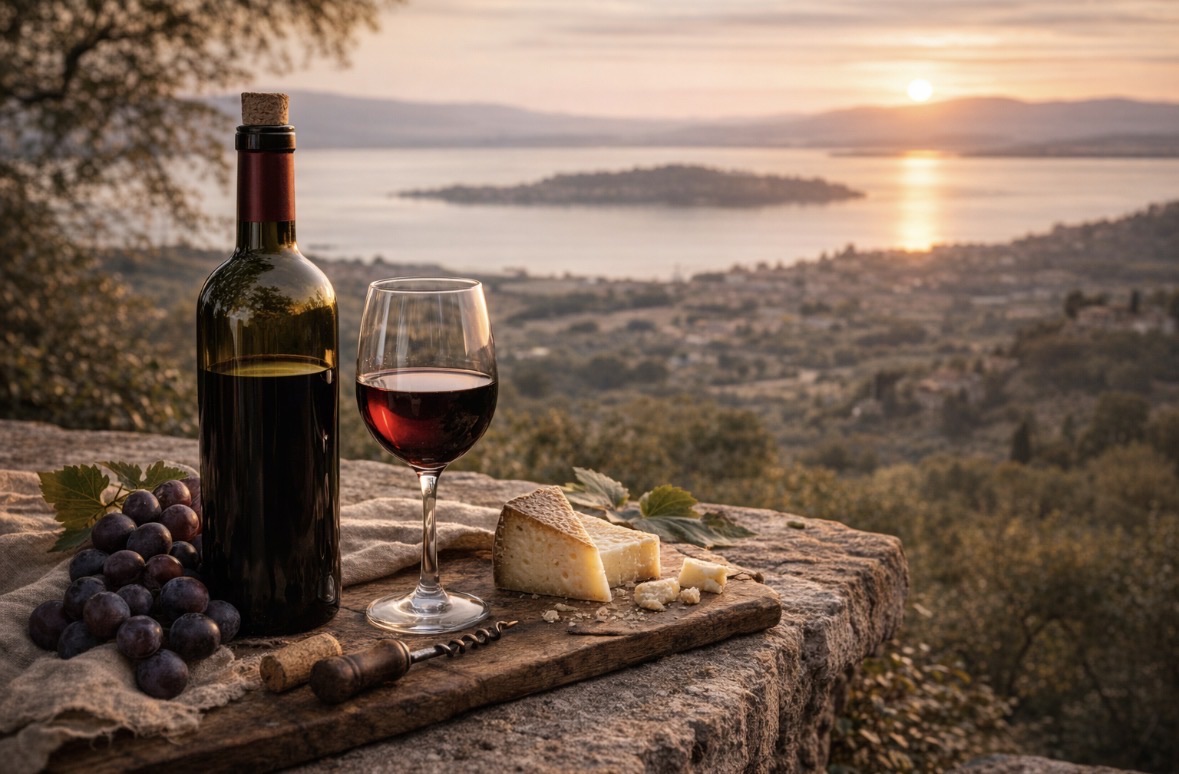
A wine produced in the hilly area surrounding Lago Trasimeno, made from regional grape varieties historically adapted to the territory. Its profile is understated and balanced, with clear aromas and measured structure. It is a wine meant to accompany a meal rather than dominate it. It emerges as a continuous agricultural expression, more than as a celebratory product.
Why it's special
Trasimeno wine tells the story of the relationship between Perugia and its agricultural landscape. It is the symbol of a city that cannot exist without the land that surrounds it. It speaks of balance, seasonal work, and productive continuity. In this wine lives the Perugian idea that quality is born from a slow adaptation to place.
History
Viticulture in the Trasimeno area has been documented since Etruscan and Roman times. In the Middle Ages, wine became an integral part of the agricultural economy that supplied the city of Perugia. For a long time production remained fragmented and family-run, tied to regional consumption. This scale helped preserve a winemaking model centered on everyday use rather than spectacle.
Price
€15-€45
Where to find it
Wineries in the Trasimeno area Settings linked to rural wine production Historic producers of the Perugian hill area
Discover Trasimeno Wine on Trouvenir →
How to recognise a typical souvenir in Perugia
Typical products from Perugia are found in artisan workshops, neighbourhood markets, and directly from producers — not in tourist shops in the city centre.
Practical rule
if a product has no indication of origin, producer, or production method, it's probably not what it seems.
Use Trouvenir to find certified workshops near you, with details on products, prices, and provenance.