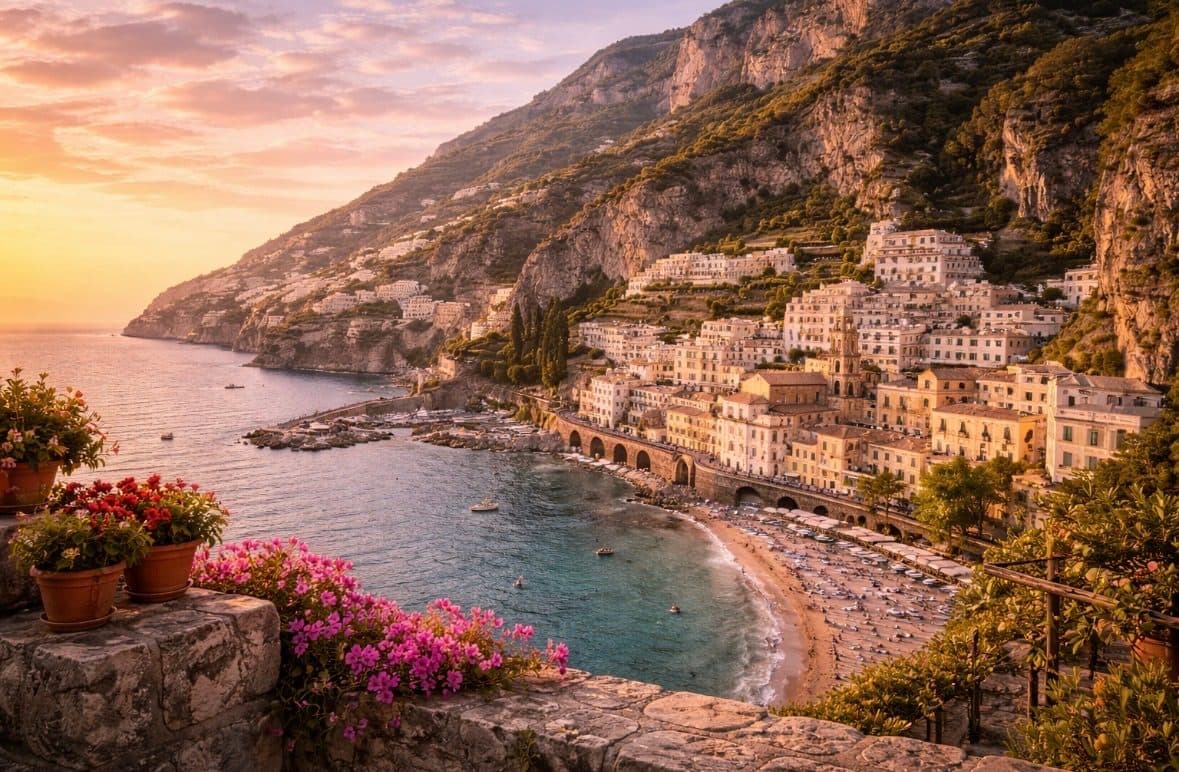
Amalfi is one of Italy's destinations with the deepest artisanal and gastronomic traditions. Every product here reflects the area's history, craftsmanship, and culture — something you won't find elsewhere with the same character.
This guide collects distinctive souvenirs selected by the Trouvenir app for Amalfi: distinctive objects and specialties that truly capture the soul of the city, far from tourist stalls and mass-produced items. For each souvenir you'll find cultural context, price ranges, and where to buy with confidence.
1. Carta di Amalfi
🏺 Craftsmanship
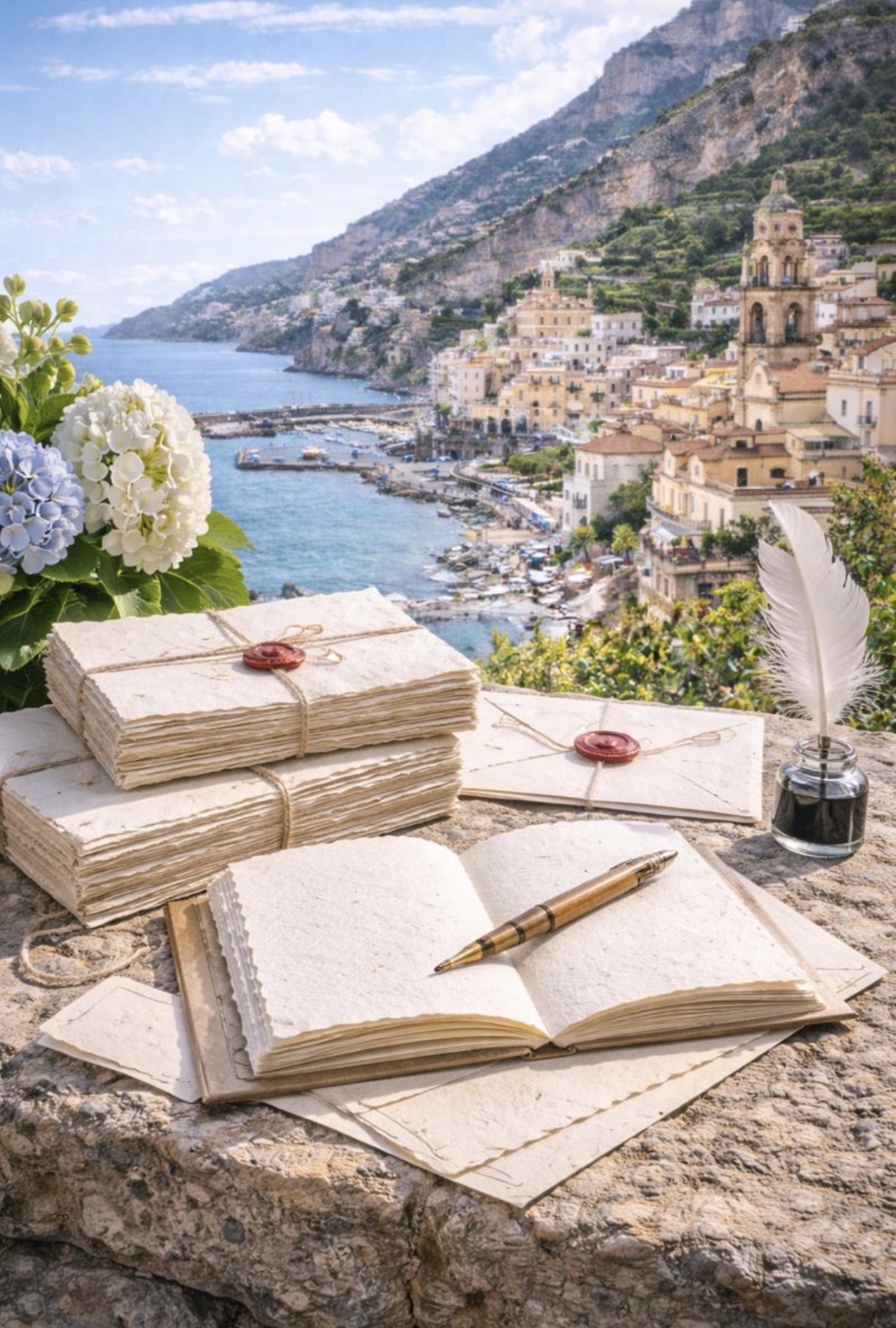
Carta di Amalfi is a handmade paper produced using natural fibers, worked through an artisanal process that defines its texture, strength, and structure. The surface has a slightly irregular texture, with a visible composition that reflects the manual craftsmanship.
Each sheet is produced individually, without industrial uniformity, and retains unique characteristics linked to the forming and drying process. The result is a sturdy paper designed to last over time and maintain its stability.
It is used for notebooks, writing sheets, prints, and handcrafted paper objects.
Why it's special
Carta di Amalfi represents the city's ability to transform simple materials into durable tools. It is the result of a tradition built on technical precision and continuity of production.
It expresses the connection between artisanal activity and the historical development of the city.
History
Paper production in Amalfi has been documented since the Middle Ages, when the city developed its own papermaking tradition linked to commercial and administrative activities.
The process took place in water mills, where fibers were transformed into sheets through manual techniques that produced a strong and durable material.
This tradition has survived over time thanks to the continuity of artisanal methods and the preservation of regional knowledge.
Even today, paper is produced in Amalfi using methods that maintain its original characteristics.
Price
€5-€40
Where to find it
Carta di Amalfi can be found exclusively in Amalfi and its immediate surrounding area.
Trusted places
Historic artisanal paper mills They produce paper using traditional methods.
Artisan workshops in the historic center They sell products made with Amalfi paper.
Regional laboratories and specialty shops They offer notebooks, sheets, and handcrafted paper items.
Discover Carta di Amalfi on Trouvenir →
2. Artistic ceramics of the Costiera (Vietri / Amalfi Coast area)
🏺 Craftsmanship
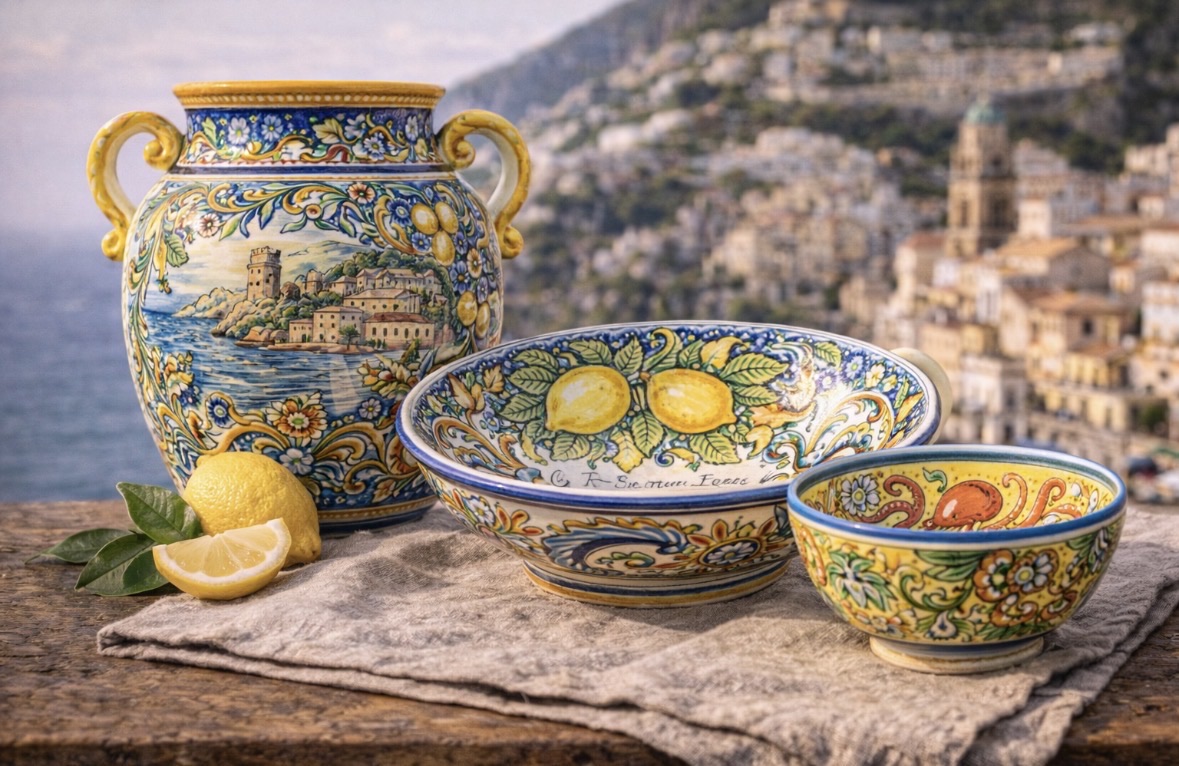
These are plates, vases, tiles, cake stands and small household objects made of glazed terracotta. The surfaces are hand‑painted with bright colors: lemon yellow, cobalt blue, copper green, orange. The most typical motifs are lemons, grapevines, fish, flowers, marine scenes and geometric arabesques. Each piece is unique, slightly irregular, marked by the passage of the brush and the kiln firing.
It is an object that carries with it the color of an entire coastline. It is chosen by travelers who recognize in materials the dialogue between sea, light and artisanal hands. It is ideal for those who want to bring home not just a decorative souvenir, but a tradition that continues to paint the Mediterranean.
Why it's special
These ceramics tell the story of the Costiera as a place of light and exchange. They are the result of a culture that has transformed everyday use into color, and the table into a landscape. They represent a seafaring civilization that learned to capture the sea on household objects. In every painted plate lives the Amalfi idea that beauty is not decoration: it is a natural part of life.
History
The ceramic tradition of Vietri sul Mare began in the medieval period and became firmly established between the 15th and 16th centuries, when the town became one of the main ceramic centers of southern Italy. Thanks to the trade networks of the Repubblica di Amalfi, Vietri tableware and majolica circulated through Mediterranean ports. In the 20th century, ceramics experienced a new season with the arrival of Italian and foreign artists who renewed motifs and colors while keeping the traditional technique of hand‑painted majolica alive. Even today Vietri is considered the ceramic capital of the Costiera Amalfitana.
Price
€40-€200
Where to find it
Artisanal ceramic workshops Historic shops in ceramic towns Exhibition spaces dedicated to artistic craftsmanship
Discover Artistic ceramics of the Costiera (Vietri / Amalfi Coast area) on Trouvenir →
3. Amalfi Lemon Perfumes
🏺 Craftsmanship
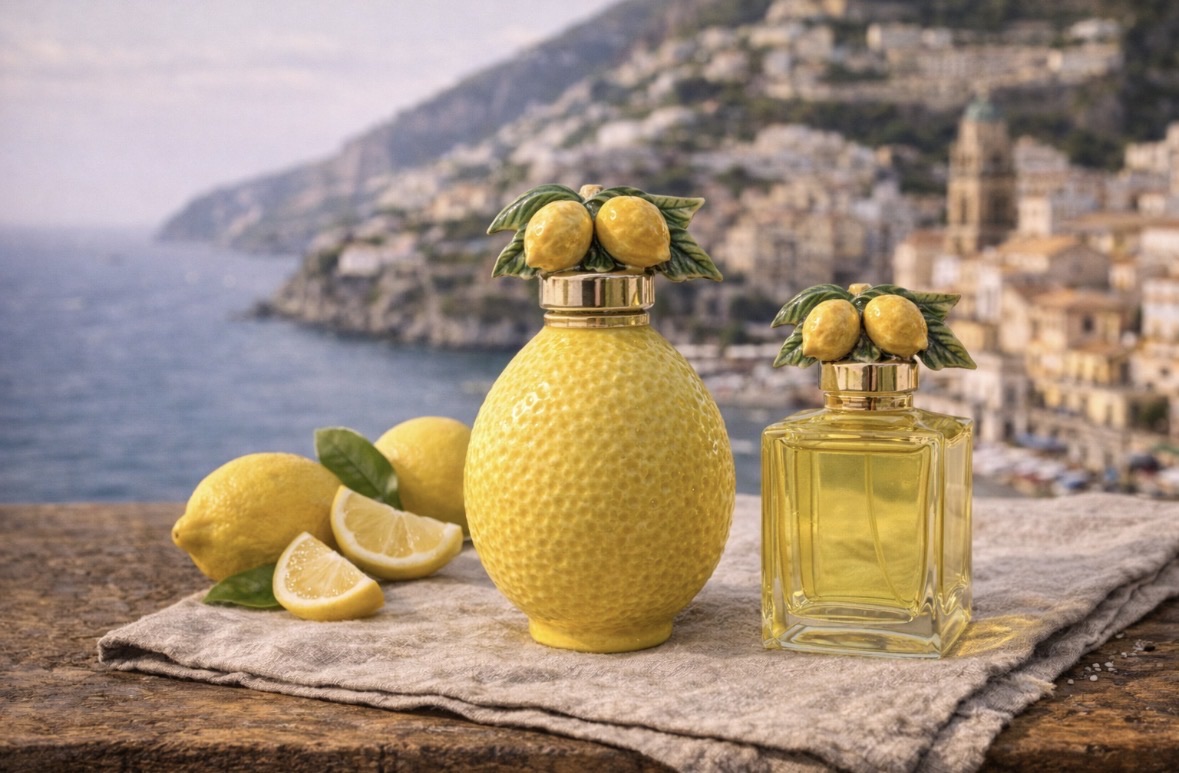
Amalfi Lemon Perfumes are artisanal fragrances inspired by the Limone Sfusato Amalfitano IGP, known for their fresh, citrusy, and luminous notes. They use natural lemon essences and regional citrus, often blended with hints of Mediterranean flowers and coastal scrub. The result is an elegant, sun-drenched fragrance that instantly evokes the identity of Amalfi.
Why it's special
These perfumes represent:
- the connection between Amalfi and lemons
- a sensory tradition tied to the landscape
- an “intangible” way to take a piece of the territory with you
They are considered a refined, non-food souvenir that is highly appreciated by visitors.
History
The perfume-making tradition in Amalfi is historically linked to the cultivation of citrus fruits and the use of natural essences. As early as the medieval period, during the time of the Repubblica Marinara, citrus fruits were used in aromatic, cosmetic, and medicinal preparations. Over time, regional workshops and artisans transformed this knowledge into handcrafted fragrances designed as a sensory expression of the territory.
Price
€18 - €45
Where to find it
- Artisanal perfumeries in Amalfi
- Shops specializing in lemon-based products
- Historic stores in the town center
- Regional cosmetic workshops
Discover Amalfi Lemon Perfumes on Trouvenir →
4. Textiles and Embroidery of the Costiera
🏺 Craftsmanship
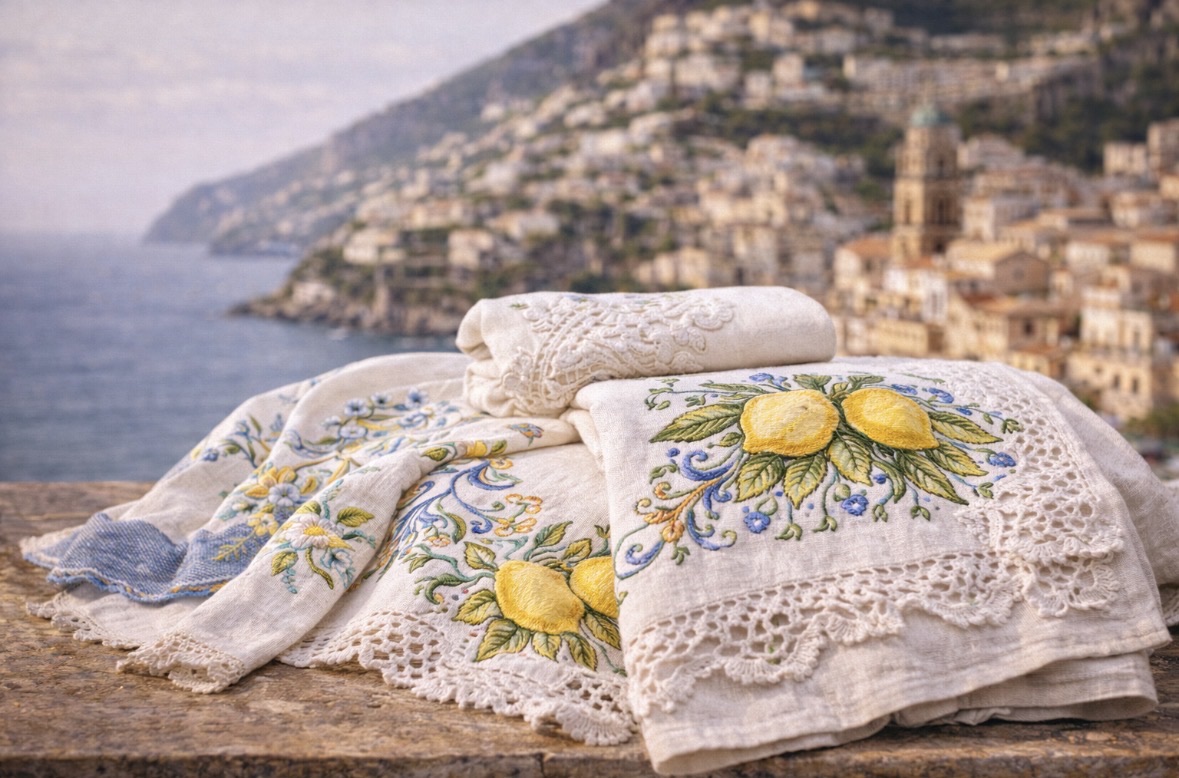
They include tablecloths, table centerpieces, bed sheets, towels, and small panels made of linen or natural cotton. The embroidery is done by hand using traditional stitches: satin stitch, shadow work, cutwork, with floral and geometric motifs. Colors are understated: white, ivory, sometimes touches of blue or green that recall the sea and citrus groves. The forms are simple, designed for everyday domestic use rather than display.
Why it's special
These textiles tell the story of the Costiera of lived-in homes, not postcards. They speak of a feminine knowledge shaped by patience, precision, and quiet care. They reflect a culture where decoration was not a luxury, but a natural part of daily life. In every embroidery lives the Amalfi idea that beauty is not meant to show off: it is built slowly, within the rooms of the home.
History
The textile and embroidery tradition of the Costiera Amalfitana developed between the Middle Ages and the Renaissance, when Amalfi was one of the great maritime republics and a hub of exchange between the eastern and western Mediterranean. In women’s convents and aristocratic homes, the art of domestic embroidery spread, used for trousseaus, altar cloths, and fine household linens. During the 19th century, with the return of bourgeois domestic life and the rise of cultured tourism, these works became a recognized form of regional craftsmanship, passed down mainly among the women of the coast. To this day, embroidery remains a living practice, tied more to home and memory than to the marketplace.
Price
€30-€80
Where to find it
Artisanal textile workshops Traditional embroidery shops Historic markets and spaces linked to women’s craftsmanship
Discover Textiles and Embroidery of the Costiera on Trouvenir →
5. Cetara Anchovies (colatura, preserves)
🍽️ Food Specialties
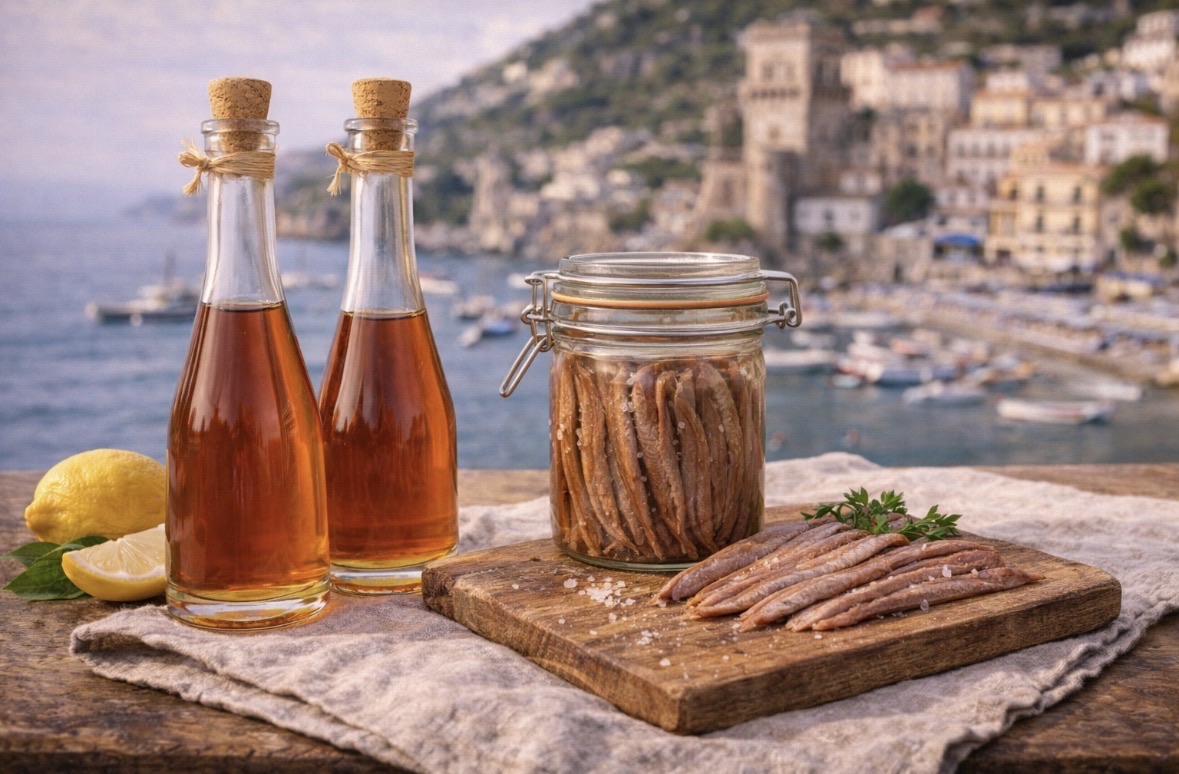
These are extremely fresh anchovies caught in the Golfo di Salerno, cleaned by hand and layered with sea salt in small wooden or terracotta containers. The aging process lasts for months, during which the fish loses moisture and its aroma and savoriness become more concentrated. The color turns pinkish-brown, and the flesh becomes firm yet tender. They are eaten whole, as fillets, or used as the base for sauces and seasonings in coastal cuisine.
It is a food that tells the story of an entire village through the sea. Travelers choose it to understand ancient trades and the everyday gestures of coastal communities. It is ideal for those seeking an essential souvenir, born from work and time rather than aesthetics.
Why it's special
Cetara’s anchovies tell the story of a maritime culture built on patience and precision. They speak of nights spent fishing, of nets pulled in by hand, of preserves created to nourish through the winter. They symbolize a village that has built its identity on the continuity of a craft without ever turning it into folklore. In every jar lives the Amalfi Coast idea that the sea is not consumed—it is preserved.
History
The processing of anchovies in Cetara is documented since at least the Middle Ages and is tied to the village’s maritime vocation, one of the main fishing centers of the Costiera Amalfitana. The salting technique descends from Roman fish-preserving practices and has remained almost unchanged over the centuries. Cetara became famous not only for salt-cured anchovies but also for colatura, the amber liquid produced during the slow maturation of the fish. This knowledge, passed down within families, is now recognized as one of the strongest gastronomic identities of the Campanian coast.
Price
€10-€40
Where to find it
Artisanal fish-preserving workshops Historic delicatessen shops in seaside villages Traditional fish markets of the Costiera
Discover Cetara Anchovies (colatura, preserves) on Trouvenir →
6. Limoncello di Amalfi
🍽️ Food Specialties
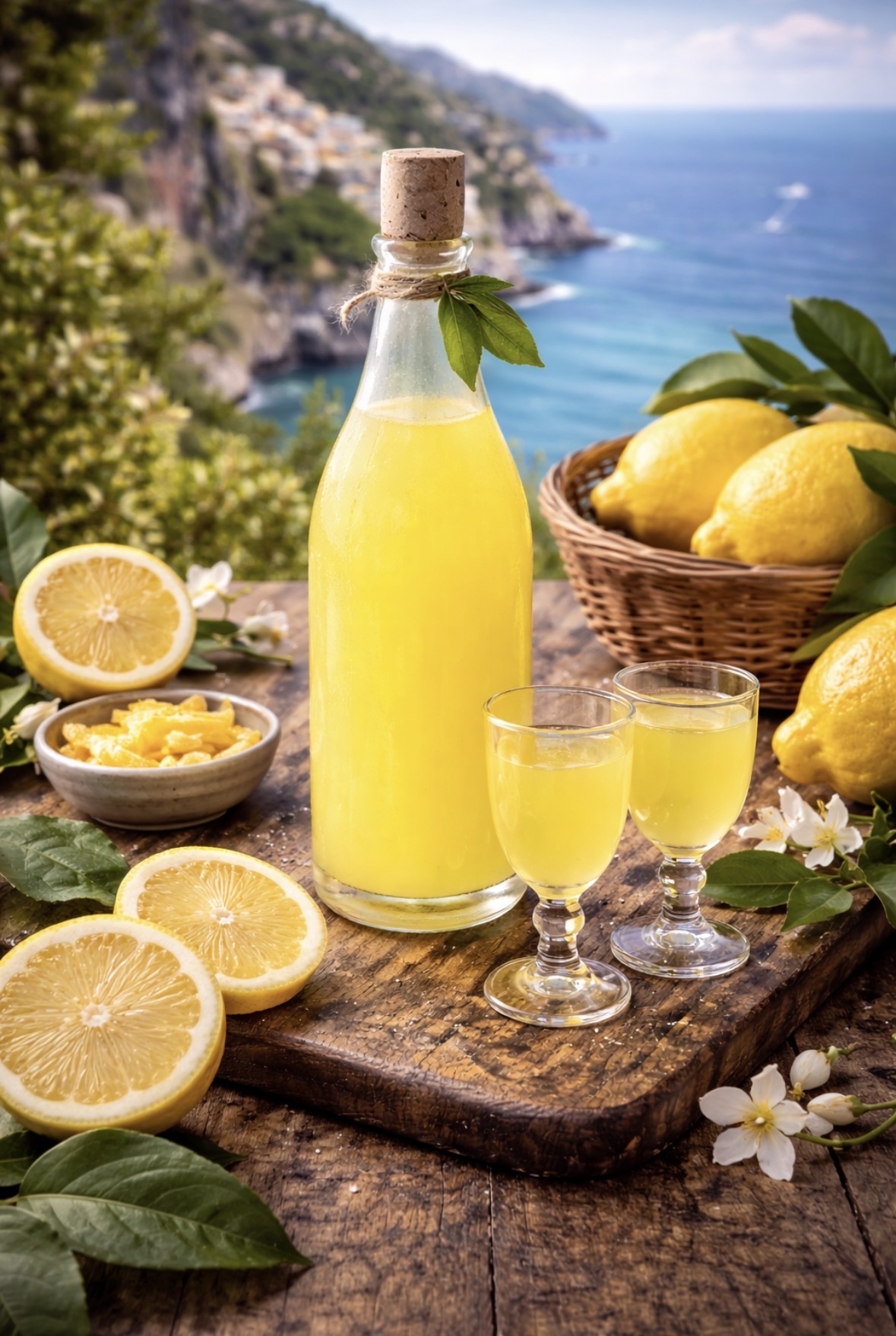
Limoncello di Amalfi is a traditional liqueur made by infusing the peels of Limone Sfusato Amalfitano IGP in pure alcohol, to which water and sugar are added. It is distinguished by its intense yellow color, a very persistent citrus aroma, and a balanced, fresh flavor that is not overly sweet. Served chilled as a digestif, it is one of the most representative gastronomic souvenirs of Amalfi.
Why it's special
Limoncello di Amalfi represents:
- the agricultural identity of the Costiera
- the connection between landscape, cultivation, and gastronomy
- the family tradition passed down through generations
It is the symbolic liqueur of Amalfi hospitality and is often offered at the end of a meal as a gesture of welcome.
History
Limoncello originated as a homemade preparation along the Costiera Amalfitana between the 19th and early 20th centuries. Amalfi families used the peels of regional lemons to create a natural digestif liqueur, making use of the abundant Sfusato Amalfitano. Over time, the artisanal recipe was refined and passed down, eventually becoming a symbol of the Amalfi territory and its agricultural and maritime culture.
Price
€10 - €25 a bottiglia
Where to find it
- Farms and lemon groves along the Costiera Amalfitana
- Artisan workshops in Amalfi
- Regional shops selling traditional products
- Specialty stores offering certified lemon-based products
Discover Limoncello di Amalfi on Trouvenir →
7. Limone Sfusato Amalfitano IGP
🍽️ Food Specialties
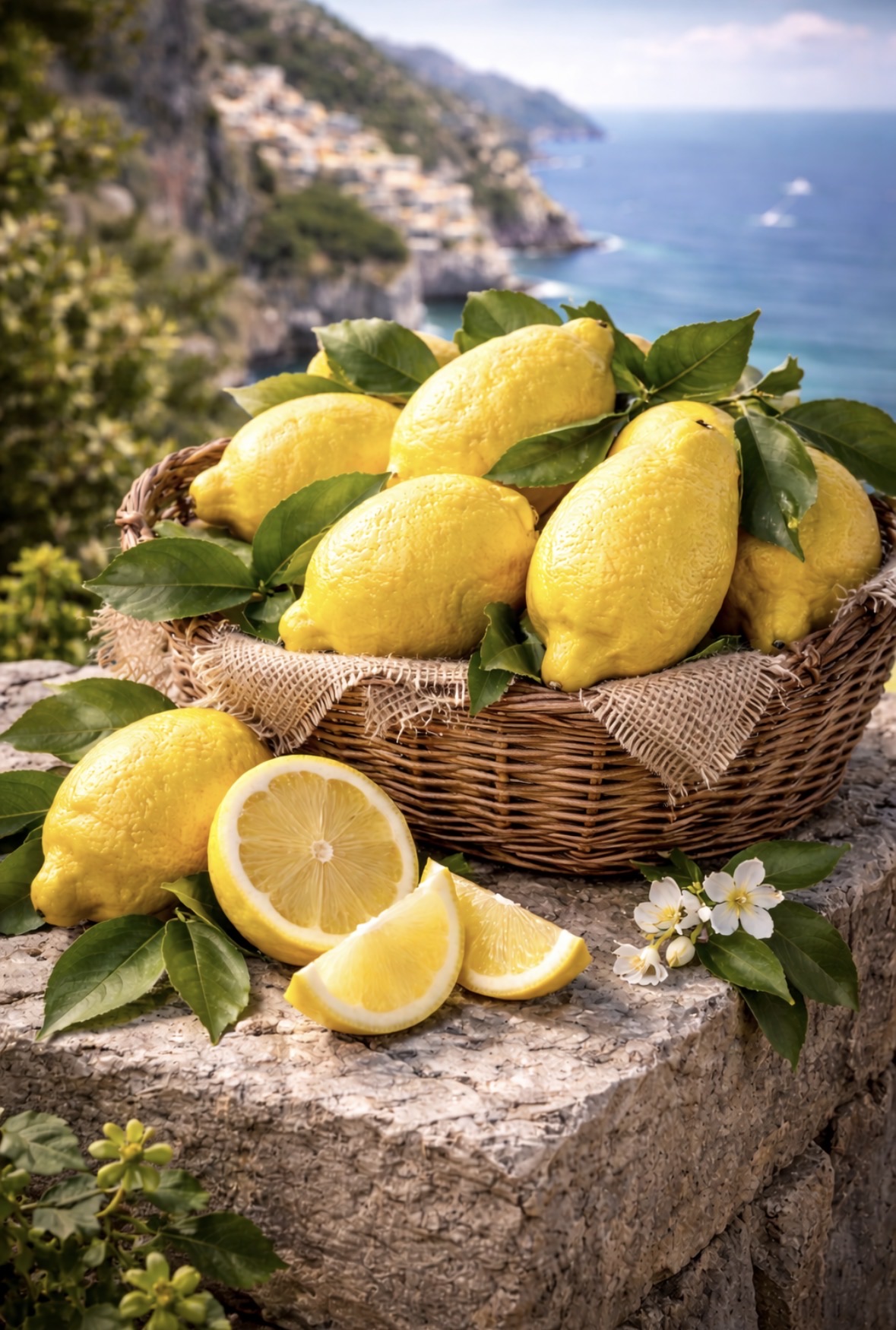
Limone Sfusato Amalfitano IGP is a native lemon variety cultivated exclusively on the terraced slopes of the Costiera Amalfitana. It is distinguished by its elongated shape (“sfusata”), its thick, highly fragrant peel rich in essential oils, and its juicy pulp, which is less acidic than other lemons. It is used both fresh and transformed into traditional products such as limoncello, marmalades, candied peels, and traditional desserts. A
Why it's special
Limone Sfusato Amalfitano is:
- the agricultural and landscape symbol of Amalfi
- an integral part of regional identity
- a central element of traditional cuisine and the regional economy
Cultivation on terraces also represents a historic landscape-preservation practice, recognized as part of the territory’s cultural heritage.
History
Lemon cultivation on the Costiera Amalfitana has been documented since the Middle Ages, when Amalfi was a powerful Repubblica Marinara. Citrus fruits were grown:
- as a food resource
- for food preservation
- to prevent scurvy during long sea voyages
Over time, the Sfusato Amalfitano adapted perfectly to the regional microclimate (sea, sun, terraces), becoming a unique and irreplaceable variety. In 2003 it received the IGP (Indicazione Geografica Protetta) recognition from the European Union.
Price
€2,50 - €5 al kg
Where to find it
- Farms along the Costiera Amalfitana
- Regional markets in Amalfi and surrounding areas
- Shops specializing in certified traditional products
- Stores specializing in IGP products
Discover Limone Sfusato Amalfitano IGP on Trouvenir →
8. Herbal liqueurs with wild fennel and regional citrus
🍽️ Food Specialties
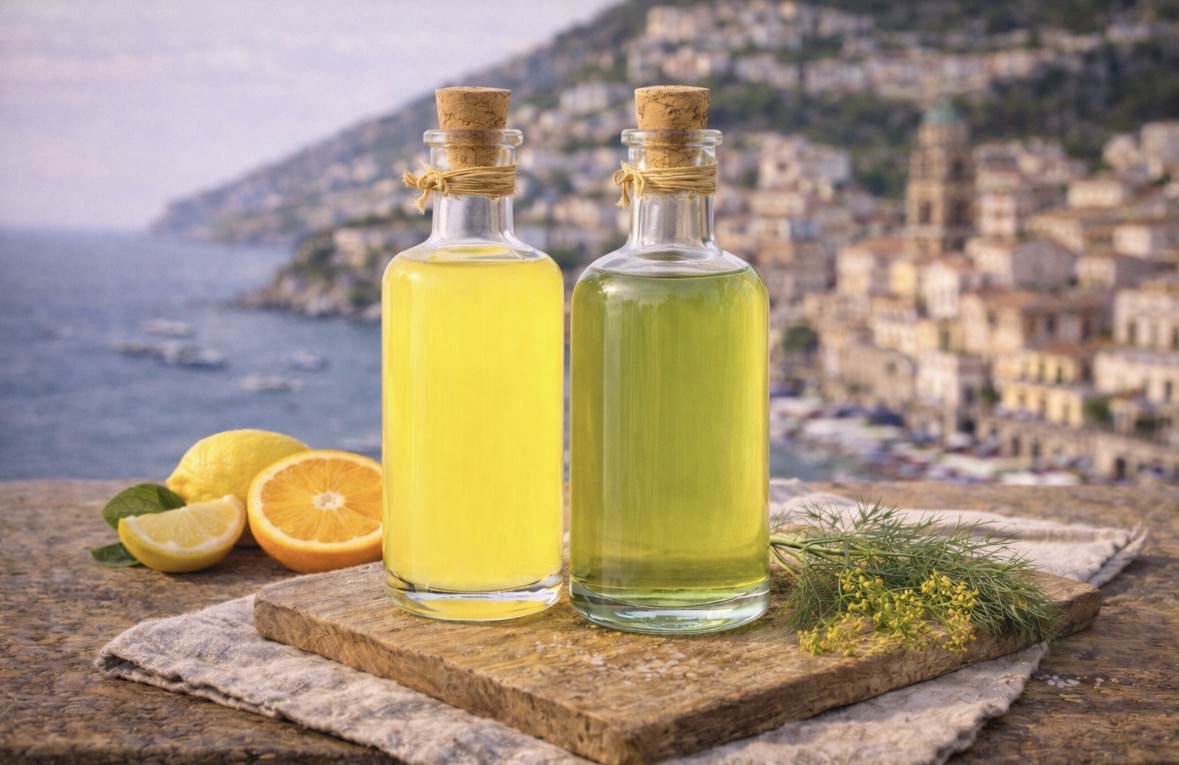
These liqueurs are made from aromatic herbs, wild fennel seeds, and the peels of regional citrus fruits, produced through slow maceration in alcohol and then balanced with sugar syrup. Their colors range from pale straw yellow to soft green, with aromas that evoke the Mediterranean: anise, wild fennel, and citrus zest. Some versions are created from more complex blends of regional herbs, while others highlight wild fennel as the main aromatic note. The liqueurs are served chilled as digestifs at the end of a meal, offering a gentle yet persistent aromatic profile.
They are a liquid memory of a land that has turned flavor into geography. They are chosen by those who seek, in after‑dinner tastes, the trace of the landscape and its ancient herbal traditions. They are ideal for anyone wanting to bring home a sensory fragment of the Costa d’Amalfi, where herbs, lemons, and sea winds meet.
Why it's special
These liqueurs tell the story of the art of caring for the body and sharing a table, traditions typical of the communities of the coast. They are not simply spirits: they express rocky landscapes, citrus groves perched above the sea, and grassy meadows that perfume the valleys behind Amalfi. Wild fennel and citrus fruits are tangible signs of regional biodiversity, transformed by skilled hands into drinks that mark the end of a meal or a moment of gathering. In their aroma lives the idea of a land where nature is not a backdrop, but an active protagonist at the table.
History
Along the Costa d’Amalfi, beyond the famous limoncello, an ancient tradition of herbal liqueurs developed, linked to wild herbs, wild fennel, and citrus fruits that grow naturally on the hills and in the valleys of the coast. Wild fennel, rich in Mediterranean aromas, was traditionally gathered for digestive infusions at the end of meals, while the use of regional citrus reflects the centuries‑old bond between maritime trade and the coastal cultivation of lemons, oranges, and other fruits. Traditions of macerating and infusing herbs and peels have been passed down among families and small workshops, becoming a gastronomic symbol of conviviality and digestive well‑being.
Price
€10-€40
Where to find it
Artisan liqueur and distillate shops Herbal workshops and regional olive mills Historic markets and specialty food shops
Discover Herbal liqueurs with wild fennel and regional citrus on Trouvenir →
9. Amalfi Lemon Marmalade (Sfusato Amalfitano IGP)
🍽️ Food Specialties
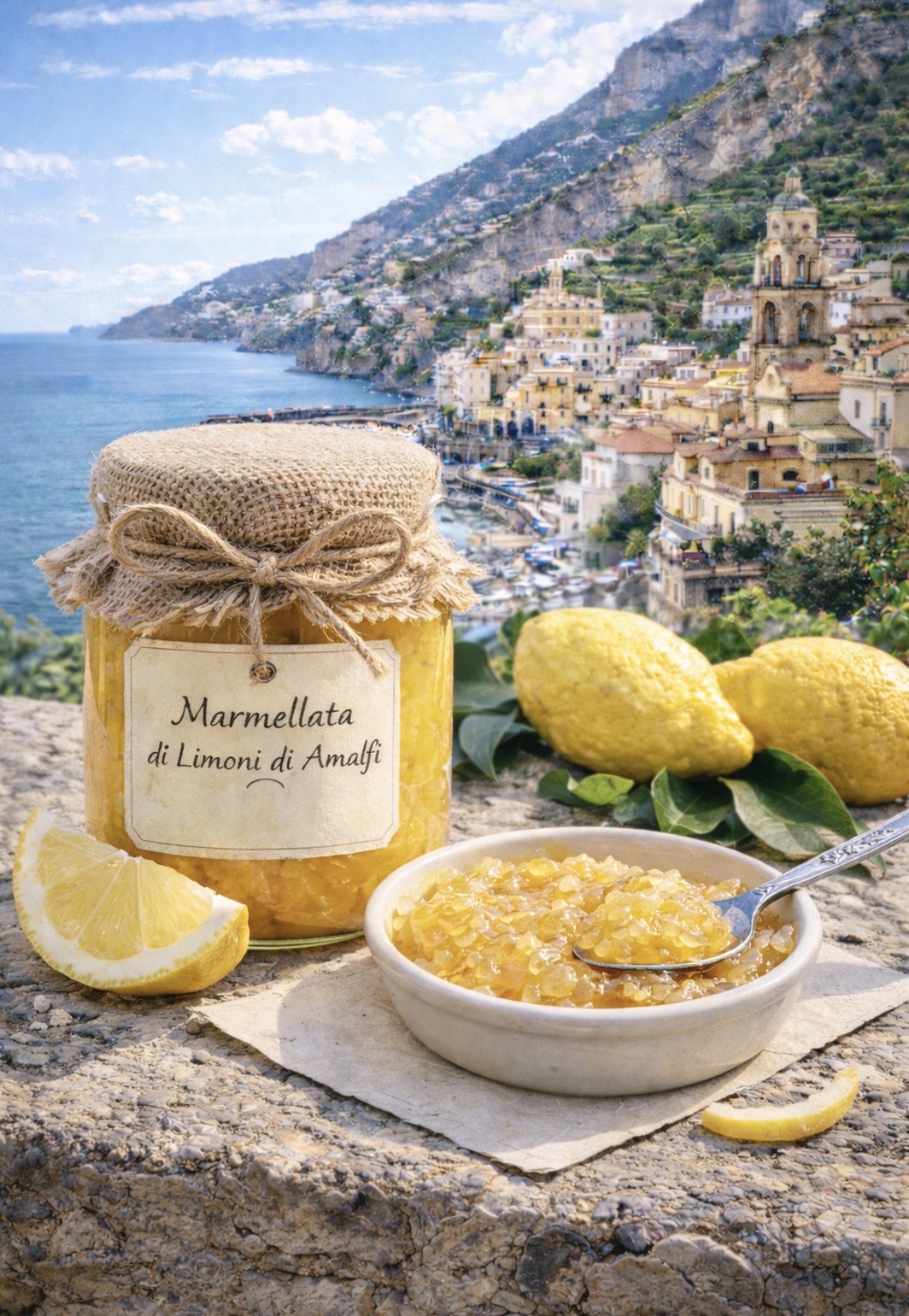
Amalfi Lemon Marmalade is an artisanal preserve made exclusively with Sfusato Amalfitano IGP lemons, sugar and, sometimes, a small amount of lemon juice. It is known for its bright yellow color, a soft yet non-gelatinous texture, and a balanced flavor that combines sweetness with fresh citrus notes, without becoming overly sour or bitter. It is traditionally enjoyed:
- on bread and toast
- as a filling for tarts and pastries
- paired with fresh cheeses or yogurt
Why it's special
Lemon marmalade represents:
- the agricultural culture of Amalfi
- the importance of the lemon as a central resource of the territory
- a tradition of simple, seasonal and sustainable cuisine
It is one of the products that best tells the story of the deep connection between landscape, agriculture and gastronomy along the Costiera Amalfitana.
History
The production of citrus marmalades in the Costiera Amalfitana originated as a traditional preservation technique, developed to make the most of the abundant lemon harvest and extend its use beyond the season. In Amalfi, lemon marmalade has long been tied to home and rural cooking, traditionally prepared by families and small artisanal workshops using the pulp and part of the fragrant peel of the Sfusato Amalfitano.
Price
€5 - €10
Where to find it
- Farms along the Costiera Amalfitana
- Shops selling traditional products in Amalfi
- Artisanal laboratories specialized in lemon-based products
- IGP-certified shops
Discover Amalfi Lemon Marmalade (Sfusato Amalfitano IGP) on Trouvenir →
10. Candied Scorze di Limone Sfusato Amalfitano
🍽️ Food Specialties
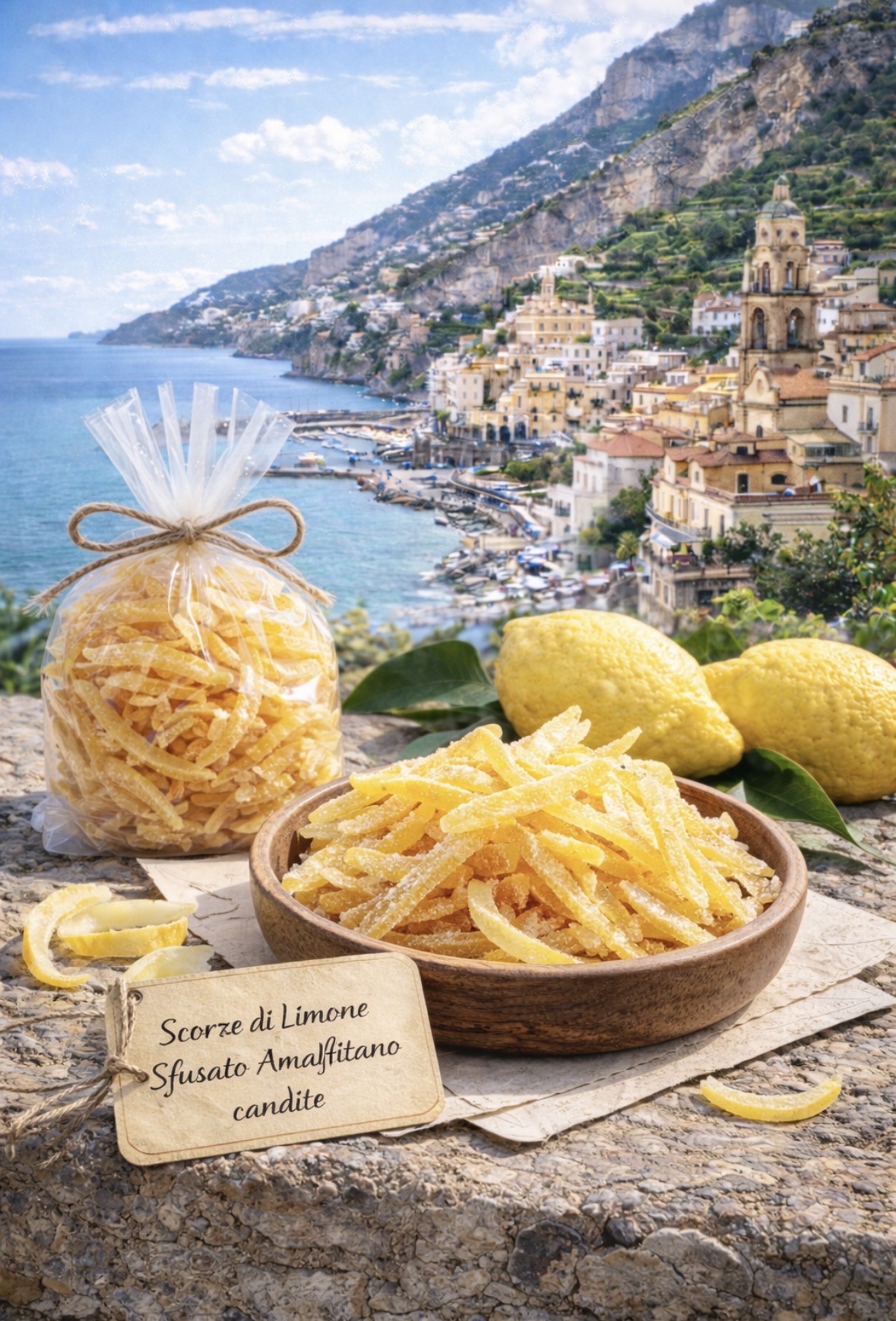
Candied Scorze di Limone Sfusato Amalfitano are a traditional confection made from the thick, intensely fragrant peel of Limone Sfusato Amalfitano IGP. The peels are cut by hand, partially stripped of their bitterness, then slowly candied in sugar syrup until they become soft, glossy, and richly aromatic. The result is a simple yet refined sweet, with a balanced flavor between sweetness and bright citrus notes.
Why it's special
Candied peels represent:
- the ingenuity of humble Amalfi Coast cuisine
- the value of the lemon as a complete resource
- a tradition tied to seasonality and handcraft
They are among the products that best tell the story of the relationship between land, agriculture, and cuisine.
History
Candying citrus peels originated as an ancient preservation technique, developed along the Costiera Amalfitana to avoid wasting any part of the lemon, a key agricultural resource of the region. As early as the medieval period, citrus peels were processed so they could be stored longer and used as:
- a sweet to enjoy on its own
- an ingredient in pastry-making
- a precious gift for travelers and merchants
In Amalfi, this practice has been passed down through farming families and small artisanal workshops, eventually becoming a regional specialty.
Price
€6 - €15
Where to find it
- Artisanal workshops in Amalfi
- Shops selling typical products of the Costiera
- Lemon-producing farms
- Specialty stores focused on lemon-based products
Discover Candied Scorze di Limone Sfusato Amalfitano on Trouvenir →
How to recognise a typical souvenir in Amalfi
Typical products from Amalfi are found in artisan workshops, neighbourhood markets, and directly from producers — not in tourist shops in the city centre.
Practical rule
if a product has no indication of origin, producer, or production method, it's probably not what it seems.
Use Trouvenir to find certified workshops near you, with details on products, prices, and provenance.