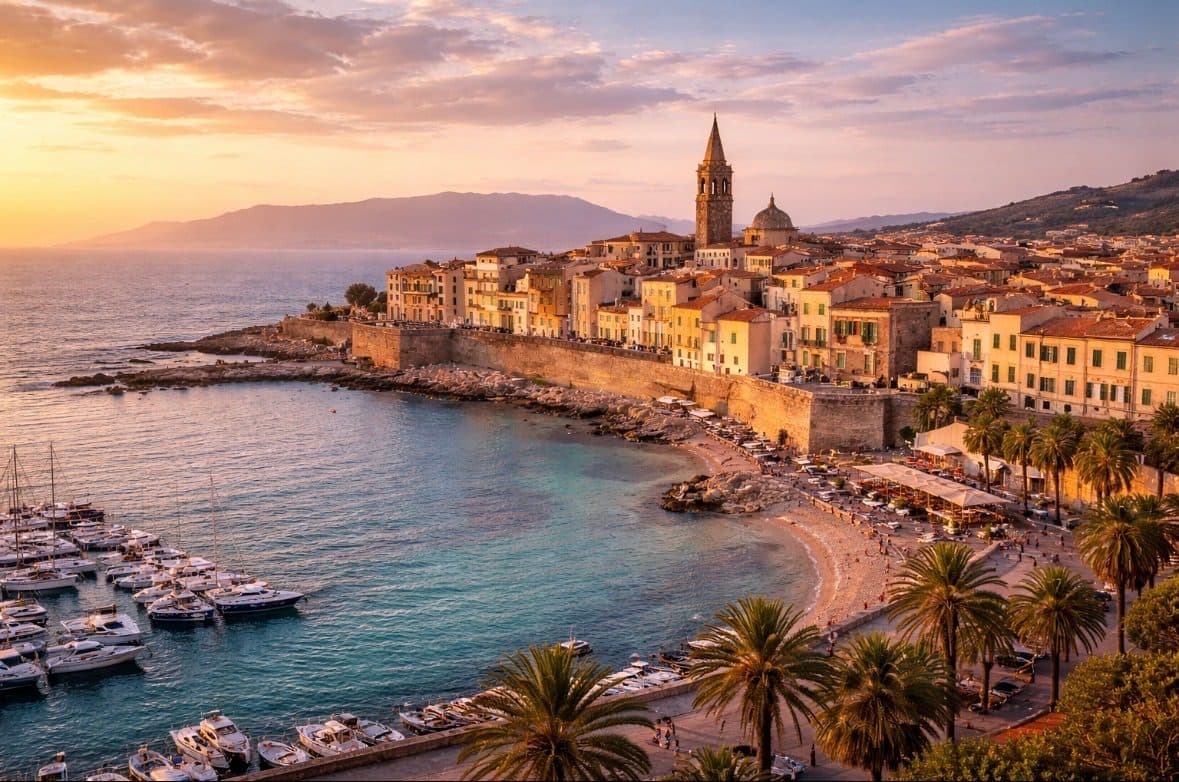
Alghero is one of Italy's destinations with the deepest artisanal and gastronomic traditions. Every product here reflects the area's history, craftsmanship, and culture — something you won't find elsewhere with the same character.
This guide collects distinctive souvenirs selected by the Trouvenir app for Alghero: distinctive objects and specialties that truly capture the soul of the city, far from tourist stalls and mass-produced items. For each souvenir you'll find cultural context, price ranges, and where to buy with confidence.
1. Red Coral of Alghero
🏺 Craftsmanship
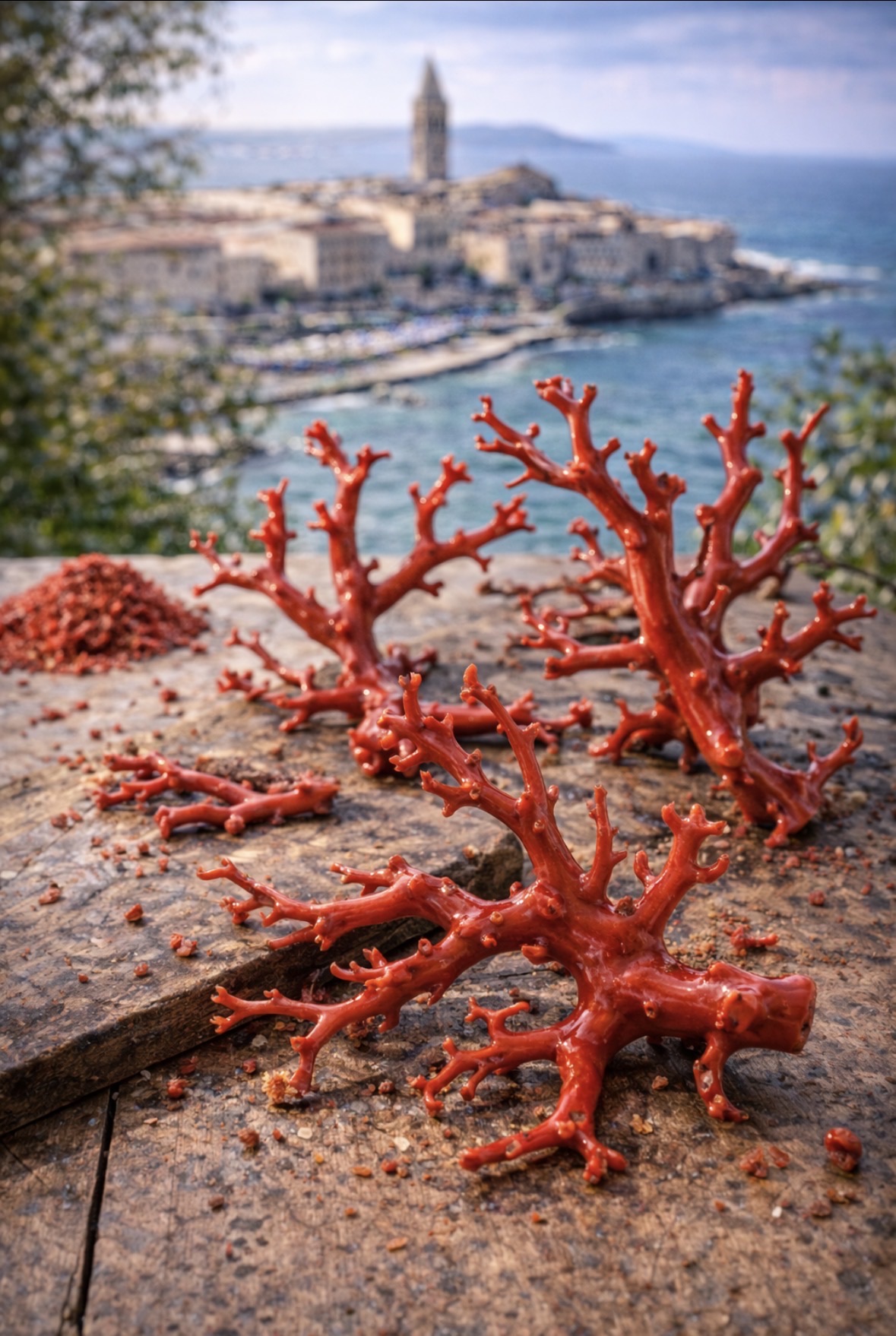
The Mediterranean red coral (Corallium rubrum) crafted in Alghero is considered among the finest in the world for its:
- intense, natural color, ranging from bright red to deep red
- density
- surface quality
- jewelry (necklaces, rings, bracelets, rosaries)
- cameos
- small decorative objects
It is transformed into:
It is often set in gold, silver, or traditional Sardinian filigree.
Why it's special
In Alghero, coral represents:
- regional identity
- maritime tradition
- high-quality craftsmanship
- one of the official symbols of the city
It is so important that:
- it frequently appears in the city’s tourist imagery
- it gives its name to the coastline
- it is displayed in historic jewelry shops and artisan workshops
History
The connection between Alghero and coral dates back centuries. As early as the Middle Ages, the seabed along the stretch of coast between Alghero and Capo Caccia was known as one of the richest coral areas in the Mediterranean. This is also where the name “Riviera del Corallo” comes from.
Over the centuries:
- coral harvesting was regulated as early as the Aragonese period
- it became a crucial source of income for the city
- a regional artisan tradition of master coral craftsmen developed
- in the 20th century it became firmly established as a true symbol of Alghero’s identity
Even today, the city protects it as part of its cultural heritage.
Price
40–800 € a seconda di dimensione e montatura
Where to find it
- Historic jewelry shops in Alghero
- Regional artisan workshops
- Specialty craft shops in the historic center
- Certified businesses recognized by the municipality
Discover Red Coral of Alghero on Trouvenir →
2. Red coral from Alghero and handcrafted coral jewelry
🏺 Craftsmanship
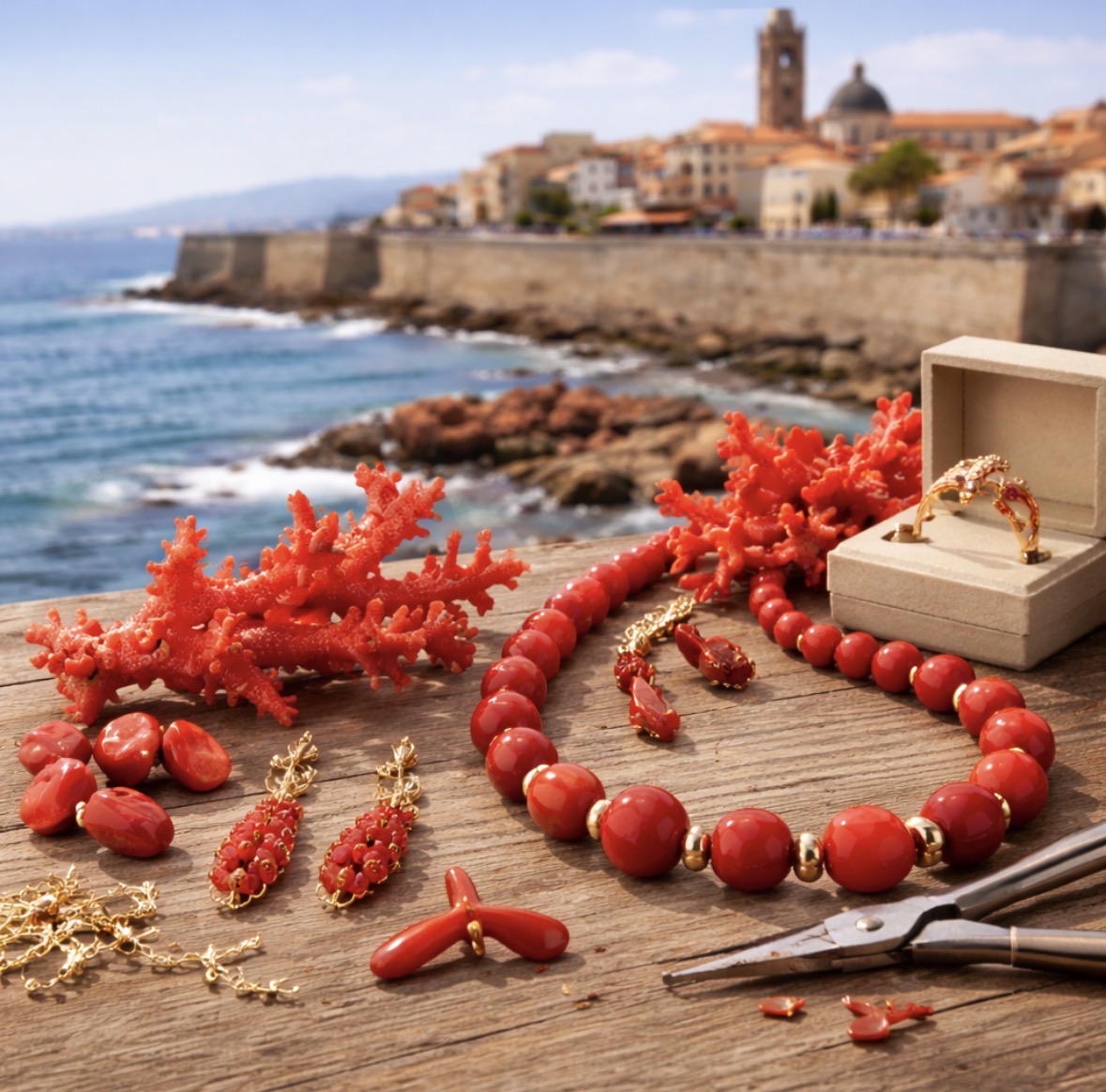
The red coral of Alghero is a natural material of marine origin, characterized by a compact structure and a color that ranges from deep red to soft pink. After harvesting, it is shaped through manual processes that define its form without altering its natural nature.
The surface may be polished or left slightly irregular, depending on the craftsmanship. Each piece shows unique variations, determined by the coral’s natural growth and the artisan’s direct intervention.
It is used to create jewelry and small decorative objects while preserving the material’s original characteristics.
Why it's special
Coral represents the direct link between the city and the sea. It is a material that reflects the continuity between the natural environment and human intervention, transformed without losing its original identity.
It expresses a tradition built on deep knowledge of marine resources.
History
Coral harvesting in the waters of Alghero has been documented since the medieval period, when the city developed a direct relationship with marine resources. Over time, coral working became one of the most distinctive artisanal activities of the area.
The continuity of this tradition has helped make Alghero one of the main Mediterranean centers for red coral craftsmanship.
Even today, coral is worked by regional artisans who maintain established techniques.
Price
30–500+ € a seconda di dimensione, qualità e montatura
Where to find it
Red coral can be found exclusively in Alghero, where there is a long-established tradition of artisanal craftsmanship.
Trusted places
Artisan workshops in the historic center They sell coral crafted regionally.
Workshops specialized in coral craftsmanship They produce jewelry and objects using traditional techniques.
Certified regional craft shops They offer pieces made through regional craftsmanship.
Discover Red coral from Alghero and handcrafted coral jewelry on Trouvenir →
3. Traditional embroidered filet from Alghero
🏺 Craftsmanship
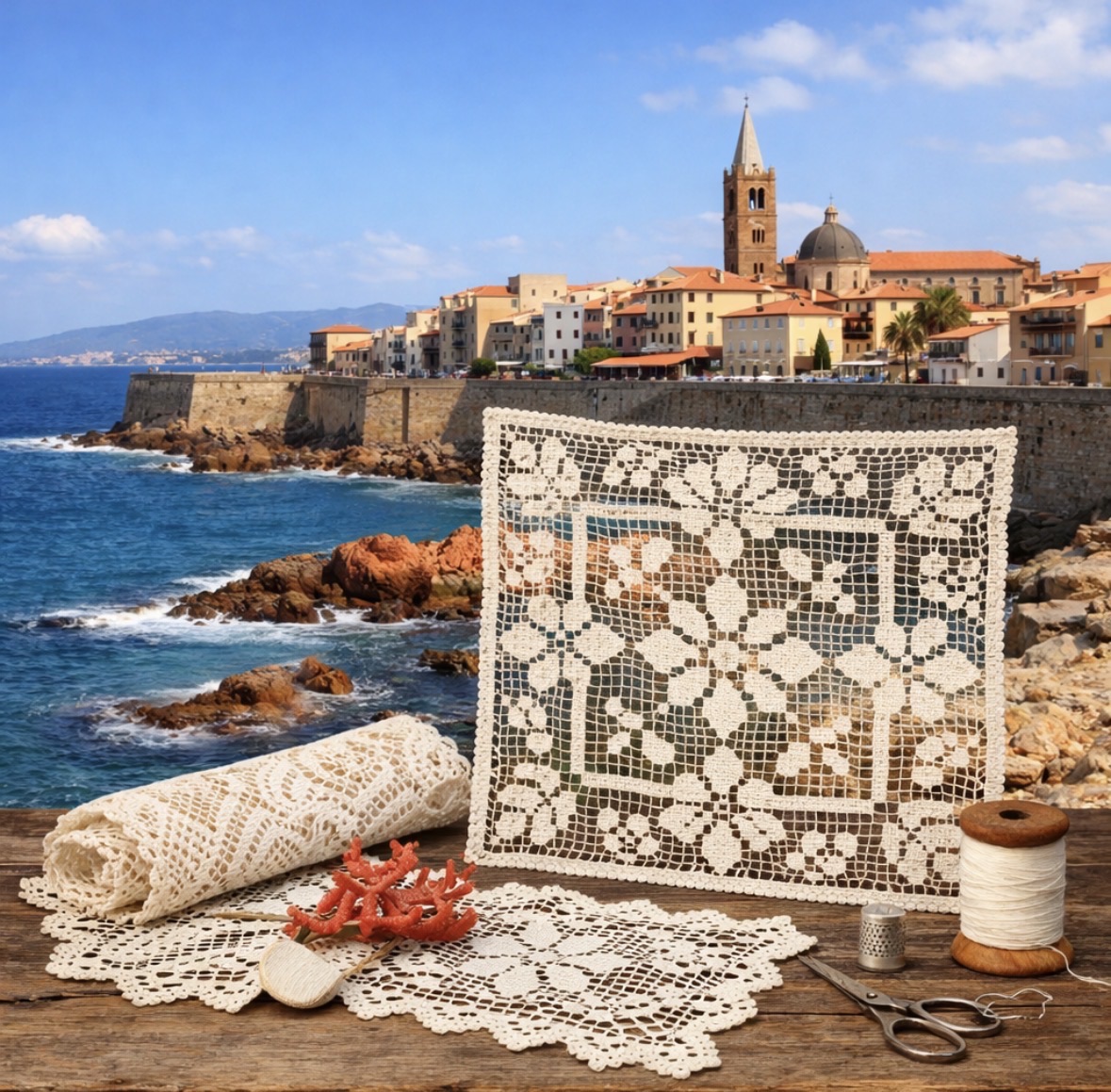
Filet is an embroidered textile created on a regular mesh of interlaced threads, on which decorative patterns are built through patient handwork. The structure is light yet durable, with designs emerging from the weave through the contrast between filled and open spaces.
It is made mainly with natural cotton threads, worked using traditional techniques that require precision and continuity of movement. Each piece shows slight variations, a direct sign of its handcrafted production.
It can take the form of doilies, borders, small cloths, or decorative elements intended for domestic use.
Why it's special
Filet represents the relationship between time, material, and gesture. It is the result of a slow and intentional process in which every element is carefully constructed.
It expresses a culture that recognizes the value of continuity in manual practices and the ability to transform a simple material into a lasting form.
History
Filet spread in Alghero over the centuries as part of domestic textile practices connected to producing items for the home. The city, with its history and Mediterranean connections, developed its own continuity in textile and embroidery craftsmanship.
This technique has endured over time thanks to the direct transmission of knowledge between generations, becoming one of the expressions of the regional artisanal identity.
Even today, filet is produced in artisanal settings, preserving the original characteristics of handcrafting.
Price
€15-€120 a seconda di dimensione e complessità
Where to find it
Traditional filet can be found in Alghero, especially in the historic center and in places connected to regional craftsmanship.
Trusted places
Artisan workshops in the historic center They sell filet pieces made by regional artisans.
Artisanal textile studios They produce unique pieces using traditional techniques.
Regional craft shops They offer selections of filet sourced from the area's artisanal production.
Discover Traditional embroidered filet from Alghero on Trouvenir →
4. Bottarga del Nord Sardegna
🍽️ Food Specialties
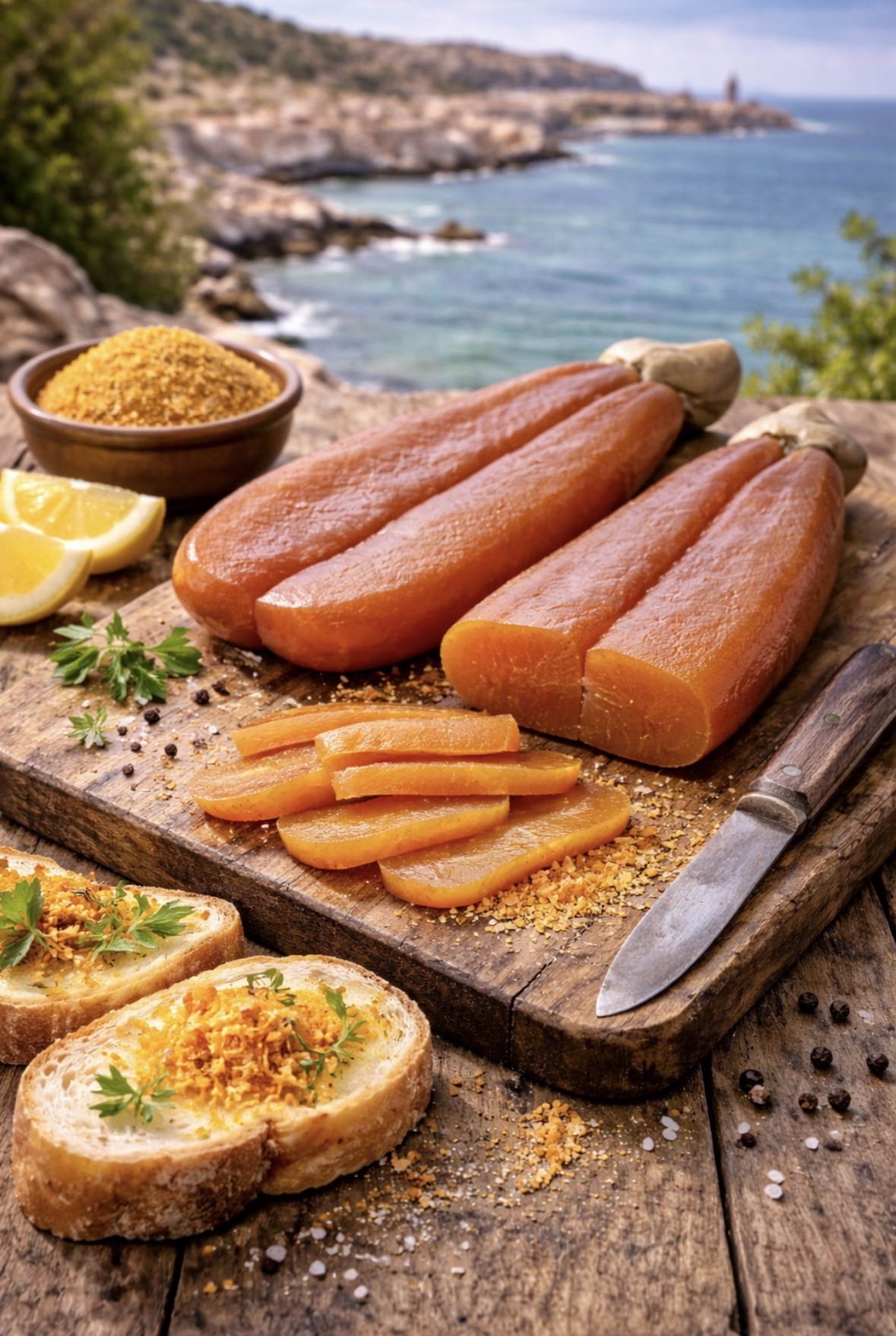
One of the gastronomic excellences of northern Sardegna. It consists of mullet or tuna roe that is salted, pressed, and dried, with an amber color and an intense, marine, and refined flavor. It is enjoyed thinly sliced on pane carasau with extra virgin olive oil, or grated over pasta and seafood dishes.
Why it's special
It represents:
- the seafaring tradition of northern Sardegna
- the connection with fishing and historic tuna fisheries
- a prestigious food, often associated with celebrations and important meals
It is one of the most recognized gastronomic symbols of the area, also highly appreciated as a high‑quality gourmet souvenir.
History
Bottarga originated as an ancient method for preserving fish. In Sardegna it has been documented for centuries thanks to the strong tradition of mullet and tuna fishing along the northern coasts. The Alghero area and the north of the island have kept this production alive, still largely artisanal today, following traditional techniques passed down over time.
Price
€12 - €60
Where to find it
One of the gastronomic excellences of northern Sardegna. It consists of mullet or tuna roe that is salted, pressed, and dried, with an amber color and an intense, marine, and refined flavor. It is enjoyed thinly sliced on pane carasau with extra virgin olive oil, or grated over pasta and seafood dishes.
Discover Bottarga del Nord Sardegna on Trouvenir →
5. Crema bruciata di Alghero
🍽️ Food Specialties
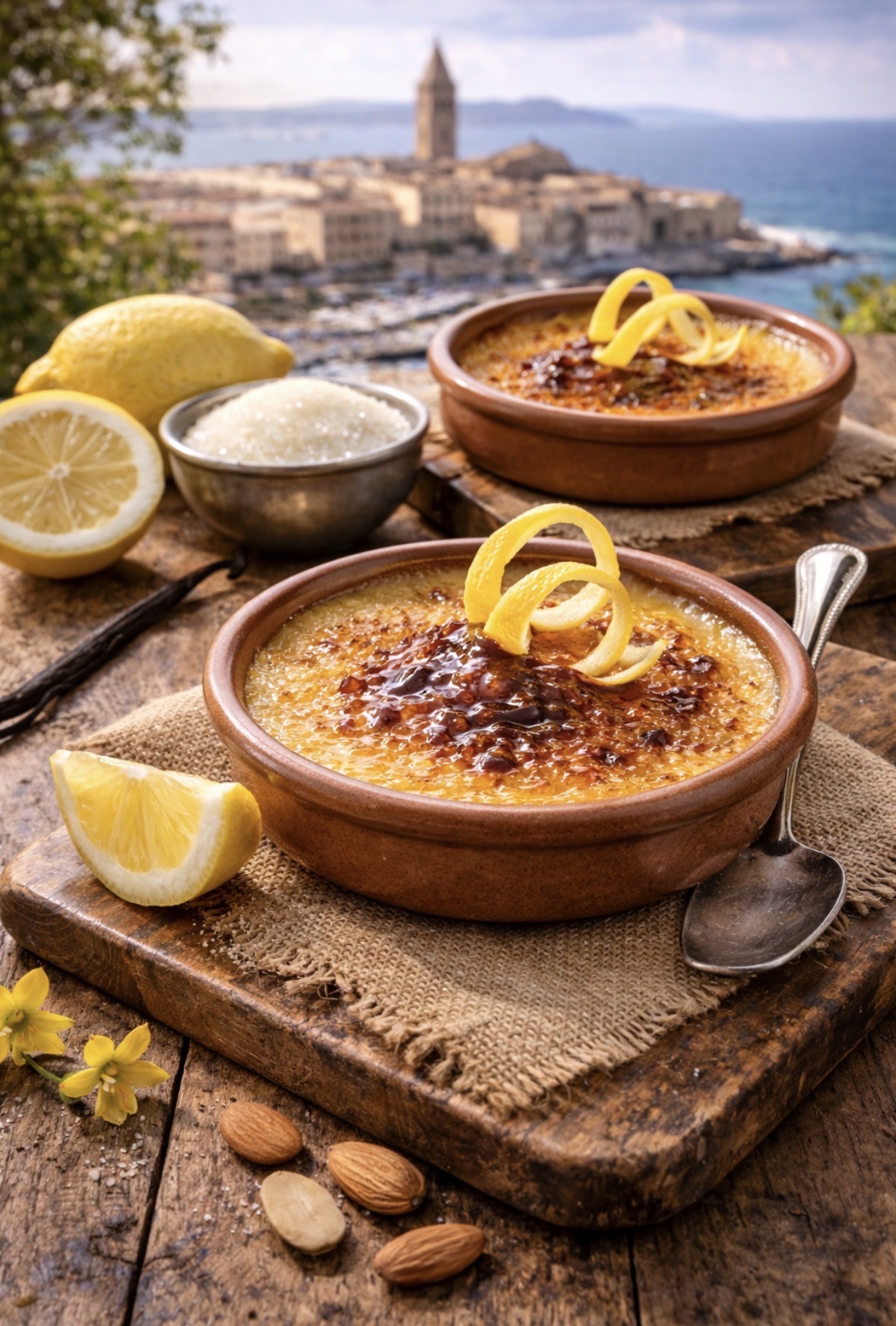
Crema bruciata di Alghero is a spoon dessert similar to crema catalana, made with a soft, velvety custard base flavored with citrus and vanilla, topped with a crunchy layer of caramelized sugar “burned” on the surface. It is served in small cups and enjoyed cold, with the characteristic contrast between the crisp top and the creamy interior.
Why it's special
Crema bruciata represents:
- Alghero’s connection to Catalan culture
- the gastronomic continuity between past and present
- one of the “identity” desserts offered to visitors alongside seafood specialties and regional wines
It is one of the most requested desserts in the historic restaurants of the city center.
History
Crema bruciata is deeply tied to the historical identity of Alghero. The city is known as the “Barceloneta sarda” due to the Catalan domination (14th–15th century), which left strong linguistic, cultural, and gastronomic influences.
From this heritage comes this dessert, derived from the traditional crema catalana and gradually adapted to the regional cuisine of Alghero. Today it is one of the symbols of the city’s traditional pastry-making, served in typical restaurants and historic pastry shops.
Price
€4-€8
Where to find it
- Traditional restaurants in the historic center of Alghero
- Regional artisanal pastry shops
- Trattorie and typical venues connected to Catalan‑Alghero cuisine
Discover Crema bruciata di Alghero on Trouvenir →
6. Mirto
🍽️ Food Specialties
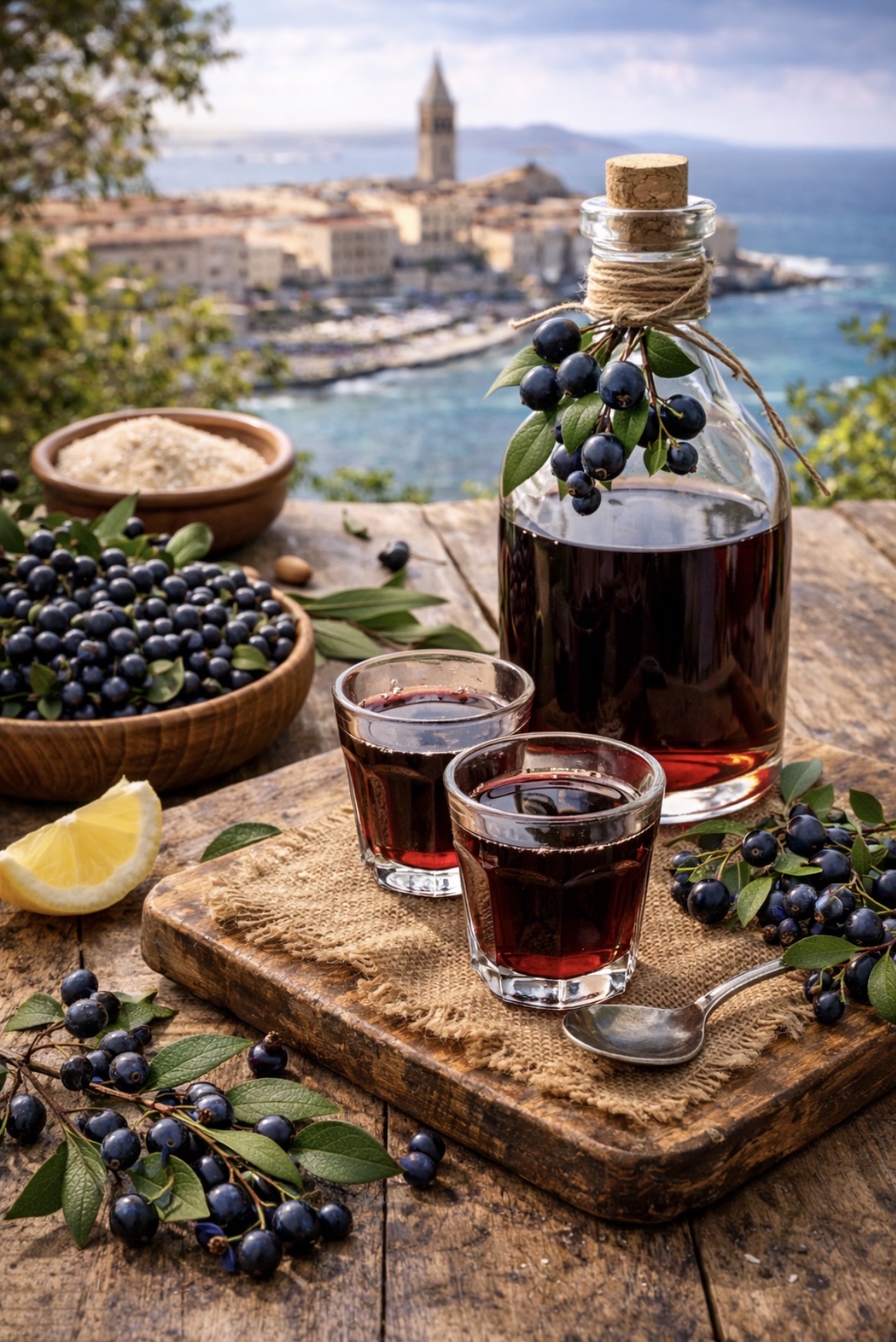
Mirto is the iconic liqueur of Sardegna, and in the Alghero area it carries a particularly strong sense of regional identity. It is made by infusing wild myrtle berries in alcohol, followed by the addition of sugar or honey. The result is a deep ruby-red liqueur, highly aromatic, with an intense, balsamic and slightly sweet flavor—perfect as a digestif or as a distinctive reminder of the region.
Why it's special
Mirto represents rural and timeless Sardegna: it is the liqueur of conviviality, enjoyed after family meals, during celebrations, and within regional traditions. In the Alghero area it is closely tied to the surrounding Mediterranean scrubland and to the gathering of the berries, often still done by hand. It is widely seen as one of the signature products of Sardinian identity.
History
The use of myrtle in Sardegna dates back to ancient times, already during the Nuragic and later Roman periods, when the plant was considered sacred and used for both medicinal and culinary purposes. The liqueur as we know it today spread between the 19th and early 20th centuries, first made in rural homes and later by artisanal distilleries. The Alghero area, thanks to the abundance of wild myrtle and its strong gastronomic traditions, is one of the places most closely associated with this product.
Price
€10-€30 a bottiglia, a seconda della dimensione e del produttore
Where to find it
- Traditional shops and Sardinian specialty stores in Alghero
- Regional artisanal producers
- Wine shops and delicatessens in the area
- Traditional markets and quality souvenir shops
7. Menjar Blanc of Alghero
🍽️ Food Specialties
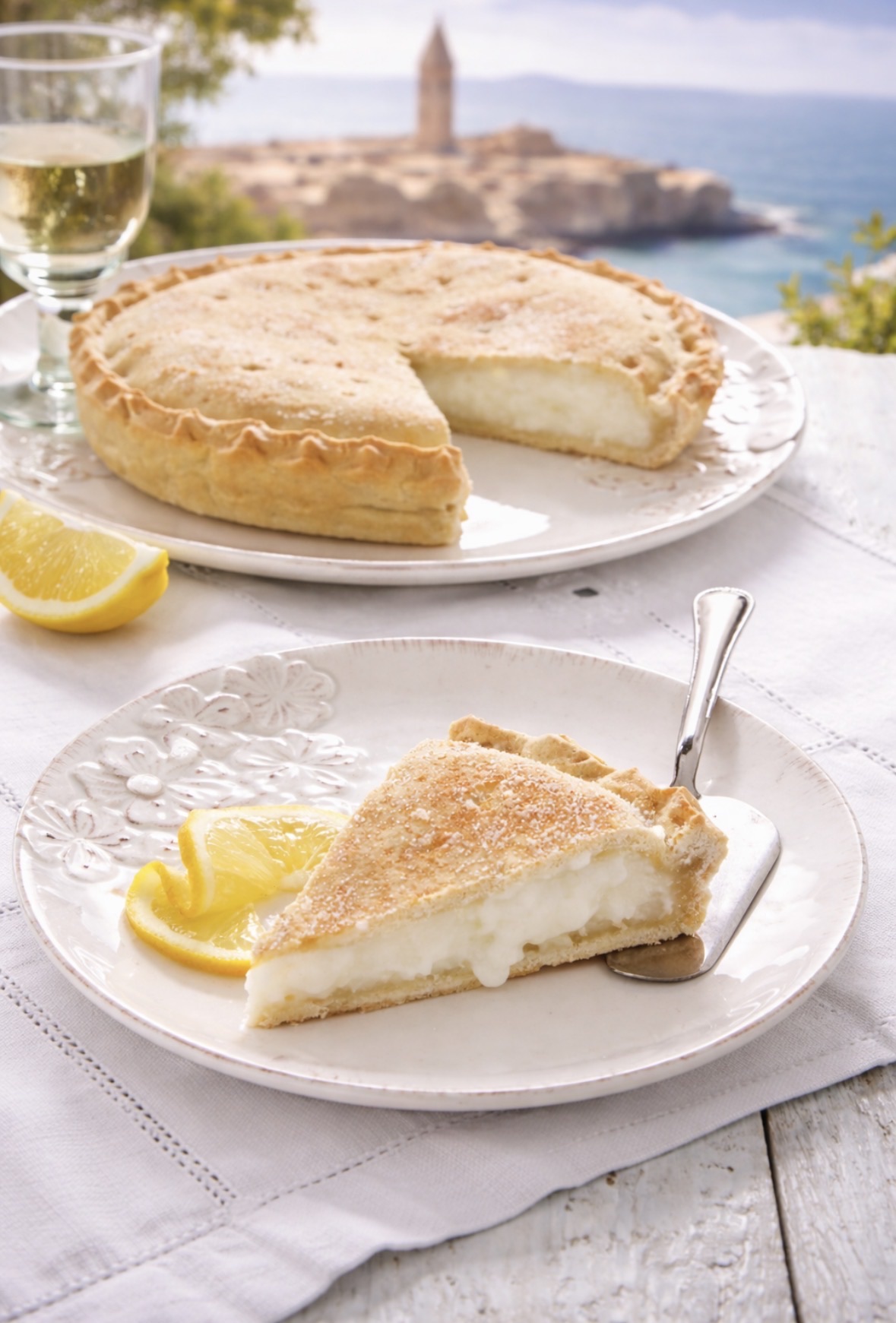
Menjar Blanc of Alghero is a traditional Algherese dessert of ancient Catalan origin. It appears as a smooth, delicate white cream made with milk, sugar, and natural flavorings, with an elegant and slightly citrusy taste. In Alghero it is prepared both as a spoon dessert and in the distinctive pie version, enclosed in a pastry shell (puff pastry or shortcrust), a regional variation that clearly sets it apart from other blancmange-style desserts found across the Mediterranean.
Why it's special
Menjar Blanc represents:
- the city’s Catalan‑Algherese heritage
- the continuity between medieval cuisine and modern tradition
- one of the very few desserts truly born in, and still uniquely tied to, Alghero
It is considered a “memory dessert,” associated with celebrations, family occasions, and the city’s historic cuisine.
History
Menjar Blanc arrived in Alghero during Catalan rule (14th century), when the city was repopulated by settlers from Catalonia and became an important center of the Crown of Aragon. The name itself derives from the Catalan “menjar blanc” (white food), a noble dessert once served in medieval Catalan courts. Over time, the recipe was adopted and reinterpreted exclusively in Alghero, where it became an integral part of the regional pastry tradition while preserving a direct link to the city’s Catalan identity.
Price
€4 - €25
Where to find it
- Artisan pastry shops in Alghero
- Traditional restaurants in the historic center
- Restaurants specializing in Algherese and Catalan cuisine
It is not an industrial product: it is found almost exclusively in artisanal settings or regional restaurants.
Discover Menjar Blanc of Alghero on Trouvenir →
8. Artisanal pane carasau from the Sardinian tradition
🍽️ Food Specialties
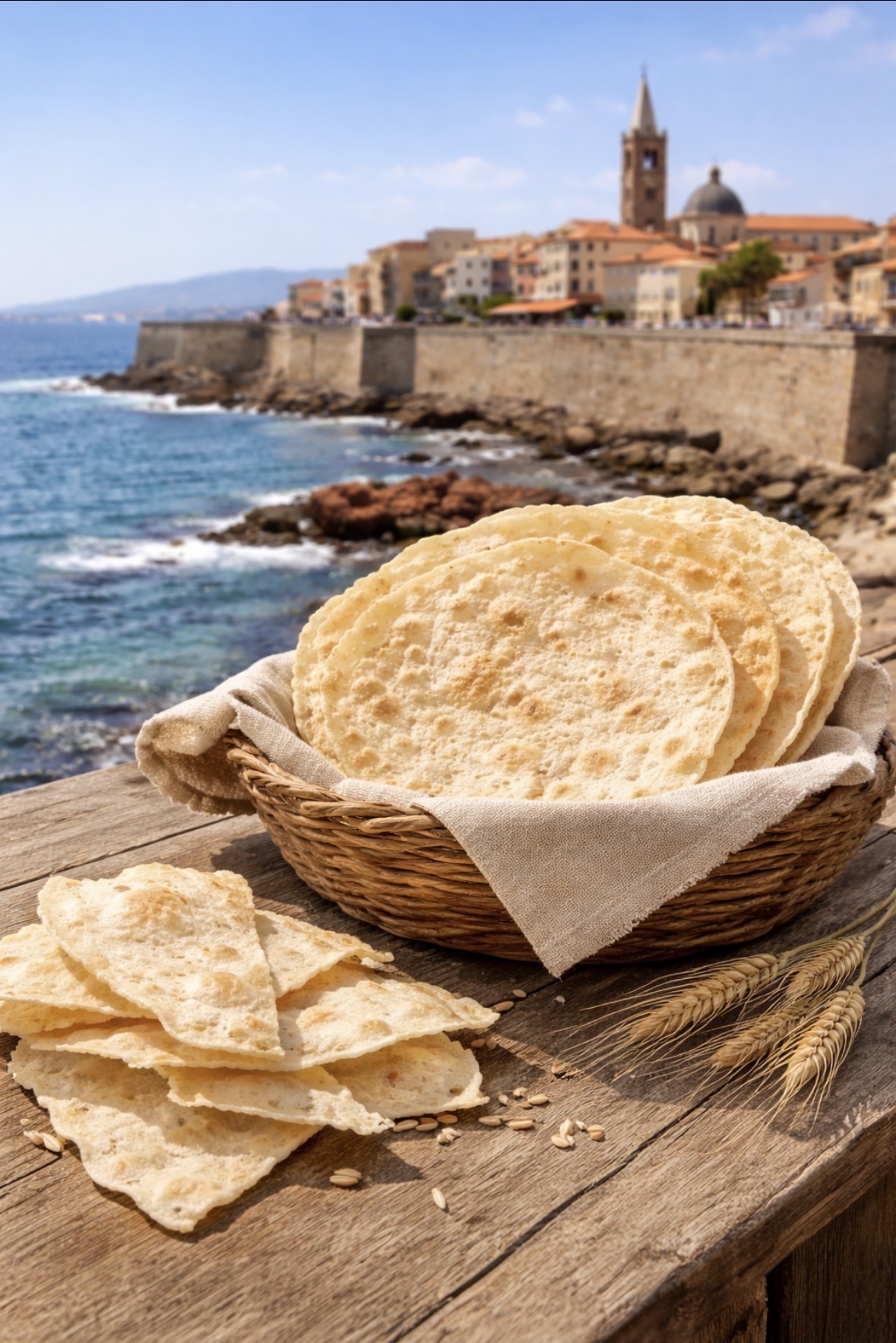
Pane carasau is a thin, crispy bread made from a simple dough of durum wheat semolina, water, yeast, and salt. After an initial baking, it is split into thin sheets and baked a second time, which removes all moisture and makes it extremely dry and long-lasting.
Its surface is golden and slightly irregular, with a delicate texture that remains highly stable during storage. Its thin structure allows it to stay intact for long periods without alteration.
It is sold in thin, lightweight sheets that are easy to transport.
Why it's special
Pane carasau reflects a culture that values durability and practicality. It is the result of a tradition that developed food solutions suited to the conditions of the territory.
It expresses a direct relationship between necessity, raw materials, and technical knowledge.
History
Pane carasau originated in the pastoral communities of Sardegna, where it was produced to ensure long preservation during travel and activities far from inhabited centers.
The double baking process completely removes moisture, allowing the bread to keep for long periods without spoiling. This characteristic made it one of the most durable foods in the Sardinian tradition.
In Alghero, it continues to be produced and consumed as an integral part of the regional food culture.
Price
€6–€12 al kg
Where to find it
Pane carasau can be easily found in Alghero, especially in places connected with traditional food production.
Trusted places
Traditional bakeries They produce pane carasau using traditional techniques.
Regional food shops They sell pane carasau produced in the region.
Gastronomie and artisanal shops They offer artisanal versions sourced from regional producers.
Discover Artisanal pane carasau from the Sardinian tradition on Trouvenir →
9. Tonno sott’olio from Alghero
🍽️ Food Specialties
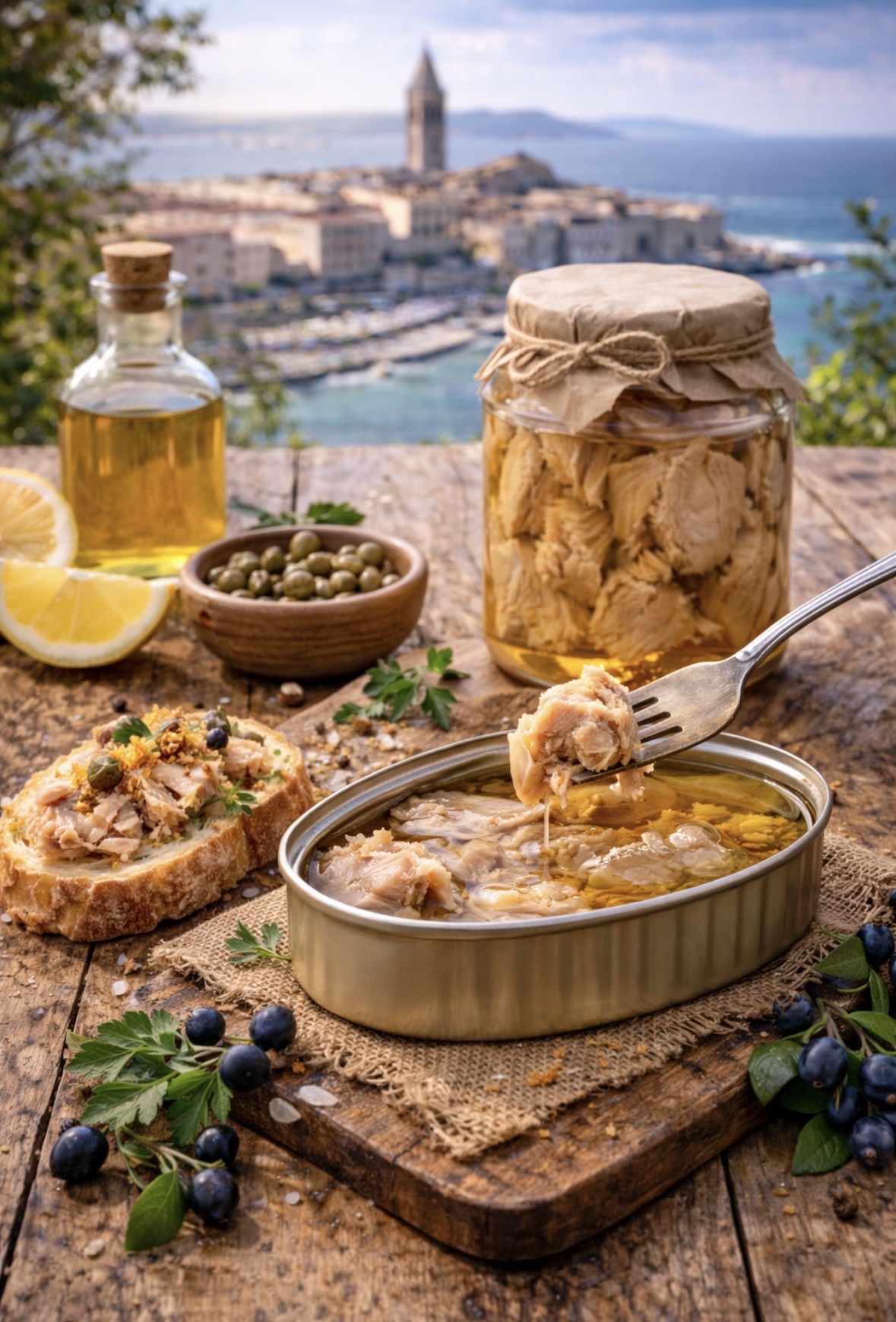
Tonno sott’olio from Alghero is one of the most representative gastronomic specialties of the regional seafaring tradition. It is prepared artisanally, cut into compact fillets and preserved in extra virgin olive oil, which enhances its flavor, tender texture, and distinctive aroma of the sea. It is a high-quality product, carefully crafted in every detail and often packaged in elegant jars, making it perfect as a gastronomic souvenir.
Why it's special
This product represents:
- the maritime culture of Alghero
- the connection to Sardinian culinary tradition
- the promotion of regional artisanal production
It is highly appreciated both as an ingredient in cooking and as a symbolic product of the region.
History
The history of tuna in Alghero is tied to its longstanding identity as a coastal city. Since the past, fishing has been essential to the regional economy, and preserving fish in salt or oil was a way to enjoy it throughout the year. Today, traditional processing techniques passed down from generation to generation combine ancient knowledge with artisanal care, making this tuna an iconic product of the northwestern Sardinian coast.
Price
€8-€20 a vasetto, a seconda della qualità e del formato
Where to find it
- Traditional delicatessens in Alghero
- Shops selling regional products and food-and-wine souvenirs
- Artisanal food shops along the coastal area
Discover Tonno sott’olio from Alghero on Trouvenir →
10. Torbato di Alghero
🍽️ Food Specialties
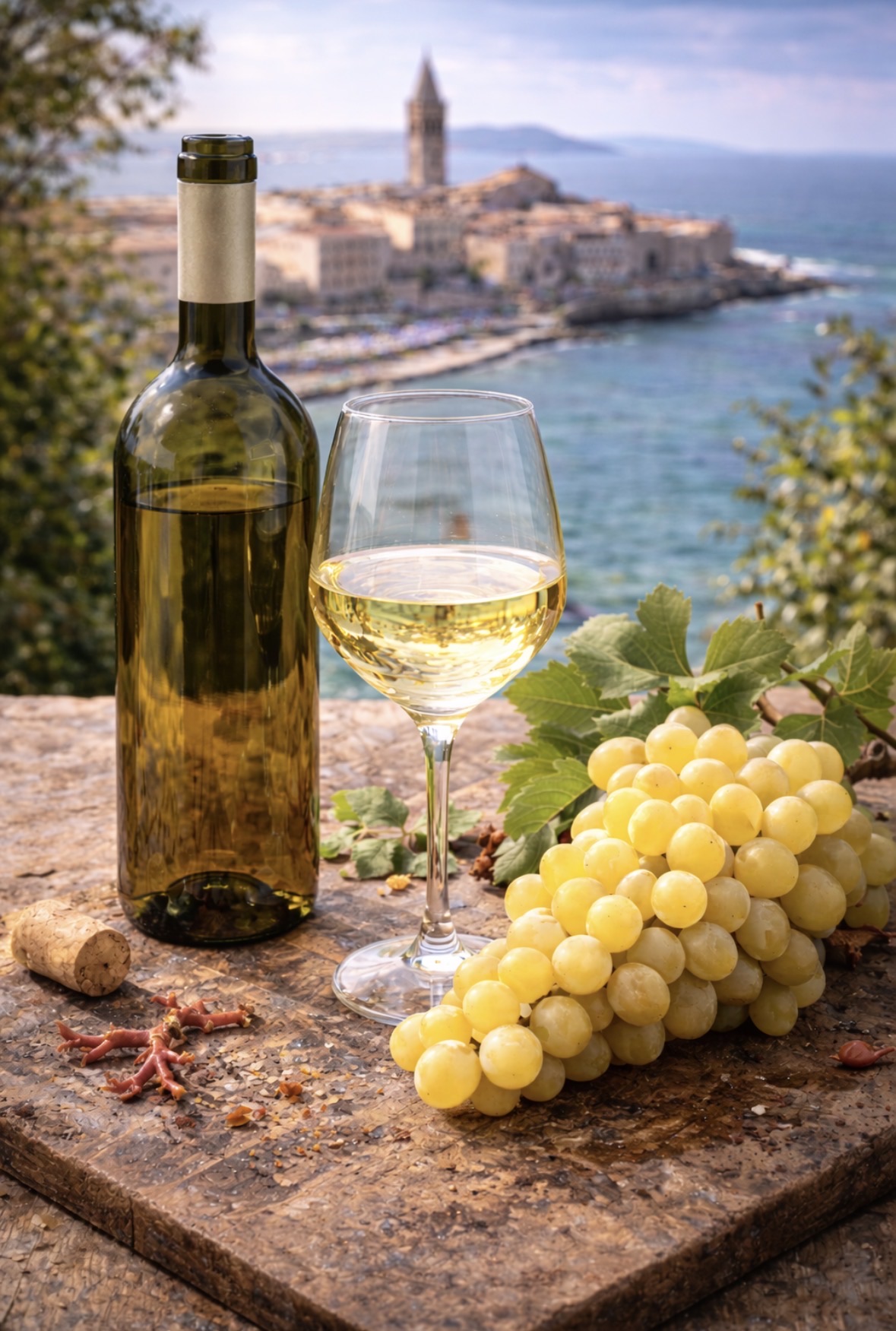
Torbato di Alghero is a rare and precious white wine produced almost exclusively in the area of Alghero. It comes from an ancient and little-known grape variety capable of producing an elegant, aromatic, and mineral wine, with notes of white flowers, citrus, and Mediterranean scrub. Available in still, sparkling, and classic-method sparkling versions, it is considered one of the wines that best expresses the identity of the city.
Why it's special
Torbato represents:
- the historical connection between Alghero and Catalan culture
- the agricultural identity of the territory
- a rare and distinctive product found almost only here
It is one of the most prestigious food-and-wine souvenirs to take home as a distinctive memory of the city.
History
The Torbato grape variety was introduced to the Alghero area during the Catalan-Aragonese period, likely from Spain or the Franco-Iberian region, and found its ideal habitat in this part of Sardegna thanks to:
- limestone soils
- windy climate
- proximity to the sea
Over time it has become a wine closely tied to the city’s identity, to the point that today Torbato is considered a unique specialty of Alghero and northwestern Sardegna.
Price
€12 - €35
Where to find it
- Wine shops in the historic center of Alghero
- Regional wineries in the Alghero area and its surroundings
- Shops specializing in quality Sardinian specialty products
Discover Torbato di Alghero on Trouvenir →
How to recognise a typical souvenir in Alghero
Typical products from Alghero are found in artisan workshops, neighbourhood markets, and directly from producers — not in tourist shops in the city centre.
Practical rule
if a product has no indication of origin, producer, or production method, it's probably not what it seems.
Use Trouvenir to find certified workshops near you, with details on products, prices, and provenance.