Historia♛ Premium
Reggio Calabria, A journey among citrus groves, sea, and mountains
Materials researcher
Introduction — The Perspective of the Material Researcher
The material researcher observes a city starting from concrete objects: raw materials, production techniques, and products that emerge from the meeting of the natural environment and human activity.
In the territory of Reggio Calabria, this perspective makes it possible to clearly read the landscape. The province of Reggio Calabria includes three very different environments: • the Ionian coast, characterized by citrus cultivation • the inland hills, where local food traditions develop • the Aspromonte mountains, rich in plant resources used in craftsmanship.
Through three objects — bergamot essence, Mammola stockfish, and the Aspromonte basket — it is possible to follow a path that shows how the territory has influenced agricultural, food, and artisanal activities.
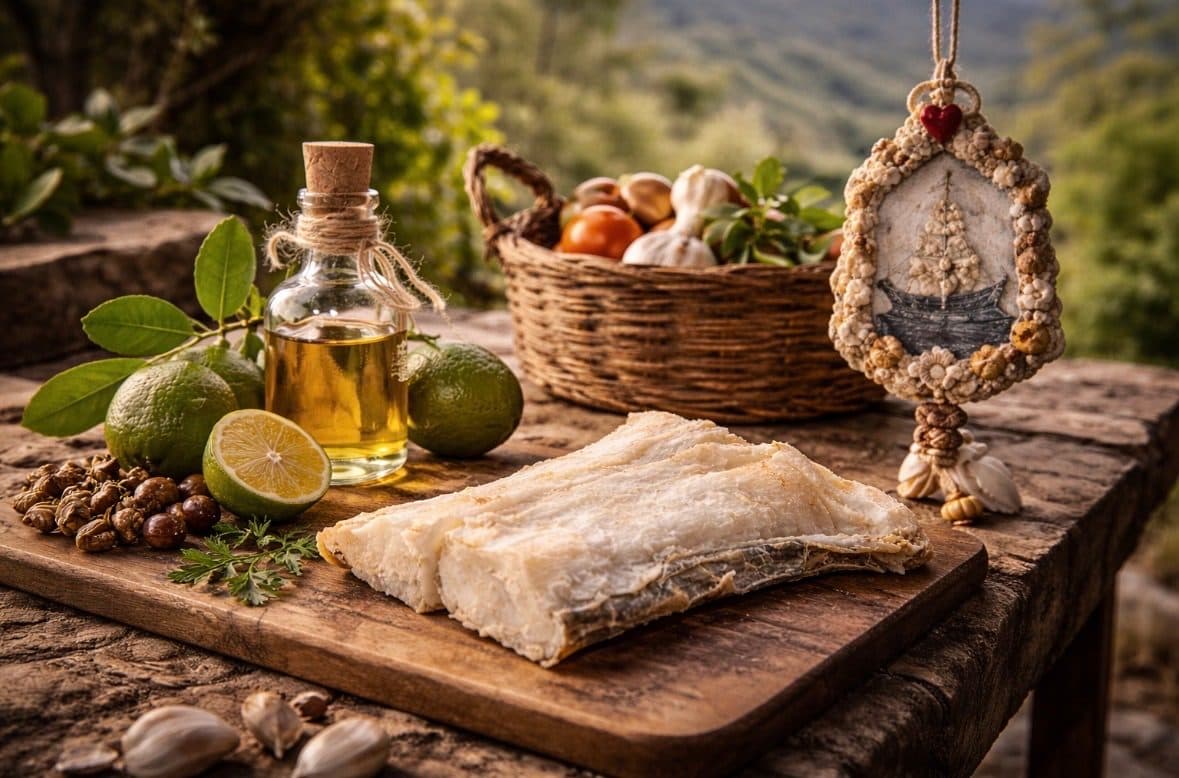
A Northern fish in the cuisine of Aspromonte: Mammola stockfish
Mammola stockfish shows how a product from far away can become firmly rooted in local cuisine.
Stockfish is dried cod, traditionally produced in the countries of Northern Europe. Thanks to its long shelf life, this fish easily reached Mediterranean ports through commercial trade routes.
In the town of Mammola, in the inland area of Reggio Calabria, a specific culinary tradition developed: 1. the fish is soaked in water for a long time to rehydrate it 2. it is then cleaned and cut 3. it is cooked with ingredients typical of Calabrian cuisine such as tomato, olives, and potatoes.
This preparation has become a recognized local specialty, so much so that it has been included by Slow Food in the Ark of Taste, which gathers traditional products that should be preserved.
The citrus landscape: the essence of bergamot
Bergamot is the agricultural product most closely associated with the Reggio area.
Its cultivation is concentrated along a narrow coastal strip of the province of Reggio Calabria, where the mild climate and exposure to the sea create particularly favorable conditions for the plant.
From the fruit, the essential oil contained in the peel is extracted through mechanical processes that break the cells of the rind. This essence is highly sought after by the international perfume industry, where it is used as an aromatic component in numerous fragrances.
For this reason, bergamot cultivation developed especially between the 18th and 19th centuries in the Reggio area, transforming local agriculture and creating an economic supply chain that is still active today.
Mountain craftsmanship: the Aspromonte basket
Moving inland, you encounter the Aspromonte massif, where rural communities have developed forms of craftsmanship based on the natural resources available.
Among these activities is the weaving of baskets made from plant fibers, a technique passed down through the mountain areas of Calabria.
Artisans gather local materials such as rush and broom, which are: • cut • left to dry • hand-woven.
The result is sturdy containers used in everyday agricultural work, for example for harvesting olives or transporting produce from the fields.
This object shows how the communities of Aspromonte have transformed the territory’s plant resources into tools useful for agricultural life.
Conclusion
Looking at Reggio Calabria through these objects reveals a tangible geography of the territory. • Bergamot tells the story of the specialized agriculture of the Ionian coast. • The stocco of Mammola shows how Mediterranean trade routes influenced the cuisine of the inland areas. • The Aspromonte basket documents the craftsmanship linked to the plant resources of the mountains.
Together, these objects show how the sea, agriculture, and the mountain landscape have contributed to shaping the material culture of the province of Reggio Calabria.
Contenido editorial elaborado con ayuda de la inteligencia artificial y revisado por Trouvenir. Puede contener imprecisiones.
Descarga gratis
Lleva Trouvenir contigo
iOS y Android. Gratis.
Privacidad primeroSincronización entre dispositivosFunciona sin conexión