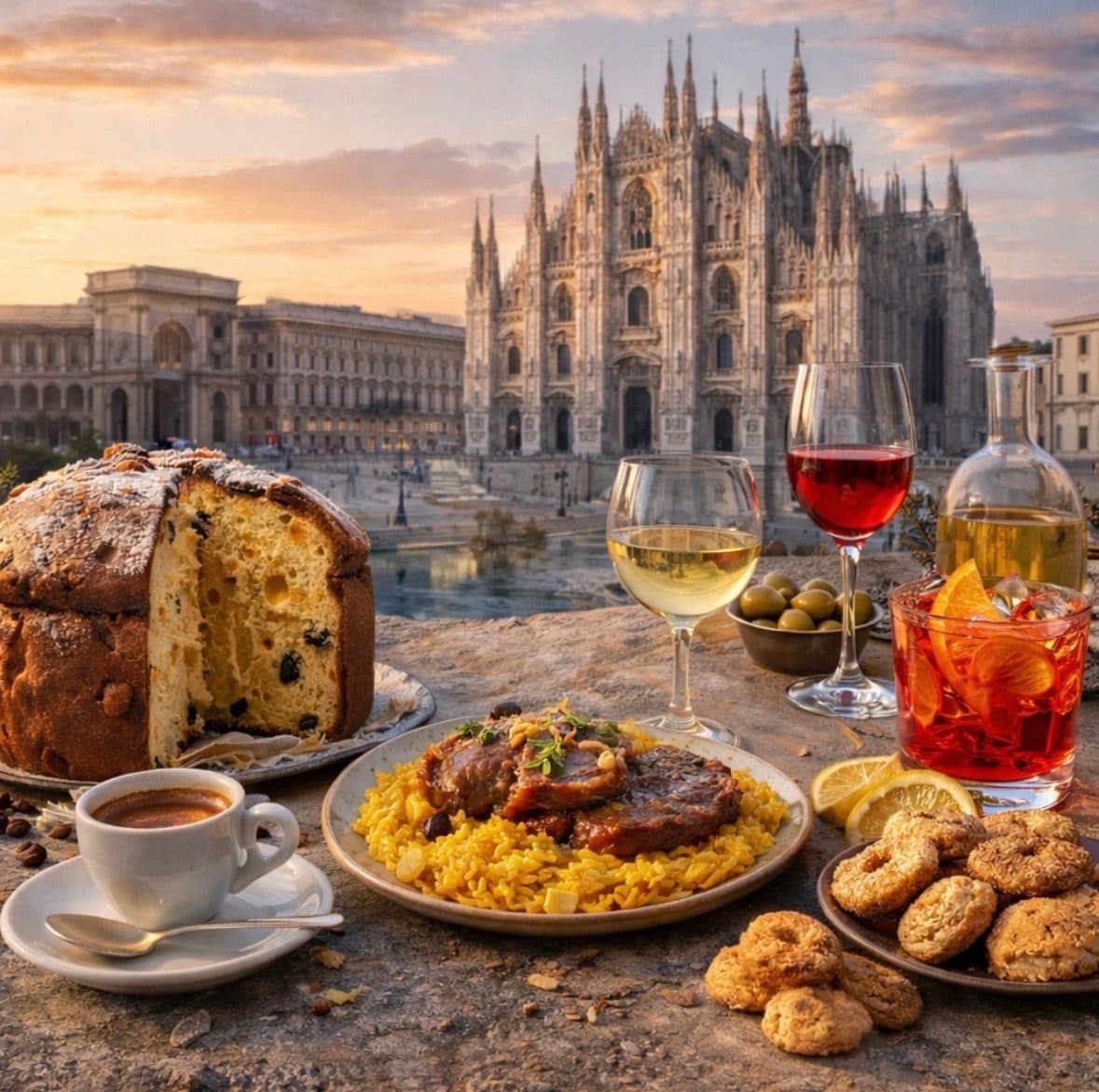
The Cultural Gastronomist’s Perspective
The cultural gastronomist looks at a city through what people eat.
This type of traveler wants to understand: • which ingredients are produced in the local area • how they are cooked • when and why certain dishes are eaten.
In Milan’s case, the cuisine reflects the history of a city that has been at the same time: • a European commercial hub • the agricultural capital of the Po Valley • a place of cultural and social encounters.
Milanese dishes above all tell the story of three fundamental elements: • rice and grains from the Lombard plain • meats from local farms • the urban tradition of pastry shops and cafés.
Rice of the Plains
Related souvenirs • Milanese risotto • Ossobuco
The Po Valley is one of the main rice‑growing areas in Europe. The rice fields of Lombardy developed between the 15th and 16th centuries thanks to irrigation systems.
Milanese risotto is prepared with: • rice • butter • meat broth • Parmesan • saffron.
Saffron gives the dish its characteristic yellow color.
The risotto is often served with ossobuco, a veal shank slowly cooked with white wine, broth, and vegetables.
At the end of cooking, gremolada is added, a mixture of chopped parsley, garlic, and lemon zest.
This dish reflects the local availability of rice and beef, two ingredients that are central to Lombard cuisine.
Meat Cuisine
Related souvenirs • Milanese veal cutlet • Cassoeula • Mondeghili
The Milanese veal cutlet is a bone-in veal chop, breaded and fried in clarified butter.
The dish appears in Lombard cookbooks from the 19th century and has become one of the city’s most famous preparations.
Cassoeula, on the other hand, is a stew of Savoy cabbage and pork cooked during the winter months. It was common in rural cooking because it used different parts of the pig after slaughter.
Mondeghili represent traditional Milanese home cooking: they are meatballs made with leftover boiled meat, bread soaked in milk, and cheese.
The name comes from the Spanish word albóndiga, which was transformed in the Milanese dialect during the period of Spanish rule.
Bread and sweets of the city
Related souvenirs • Michetta • Pan de mej • Panettone
Michetta is the typical Milanese bread. Its shape derives from the Austrian Kaisersemmel introduced in the 18th century during Habsburg rule in Lombardy.
Milanese bakers modified the recipe, creating a very light bread that is hollow inside.
Pan de mej is a traditional dessert made with corn flour and elderflowers. It was prepared during the spring festivals dedicated to Saint George.
Panettone, on the other hand, is the quintessential Milanese Christmas cake. Its production developed in the city’s pastry shops between the 19th and 20th centuries.
Coffee and aperitivo
Related souvenirs • Barbajada • Milanese coffee • Aperitivo
In the 19th century, Milan was rich in historic cafés frequented by artists and intellectuals.
Barbajada was a very popular hot drink made with coffee, milk, and chocolate.
Over time, the social life of cafés evolved into the tradition of the Milanese aperitivo.
This custom is also linked to the spread of Italian bitters, including Campari, which was created in Milan in 1860.
What These Dishes Reveal About Milan
Looking at these dishes together, a clear picture of Milan’s gastronomic culture emerges. • Rice tells the story of the agricultural heritage of the Po Valley. • Meat dishes stem from rural traditions and Lombard livestock farming. • Bread and sweets show the influence of European history on the city. • Coffee and aperitivo reflect the social and urban dimension of Milan.
Through these culinary elements, it becomes clear that Milanese cuisine is the result of centuries of agriculture, trade, and urban life.
Editorial content produced with AI assistance and reviewed by our editors. It may contain inaccuracies.
Free download
Take Trouvenir with you
iOS and Android. Free.
Privacy-firstCross-device syncOffline ready