Introduction — The Cultural Gastronomist’s Perspective
The cultural gastronomist explores a city through its dishes and ingredients.
They are not just looking for flavors: they want to understand why a food originates precisely in that place.
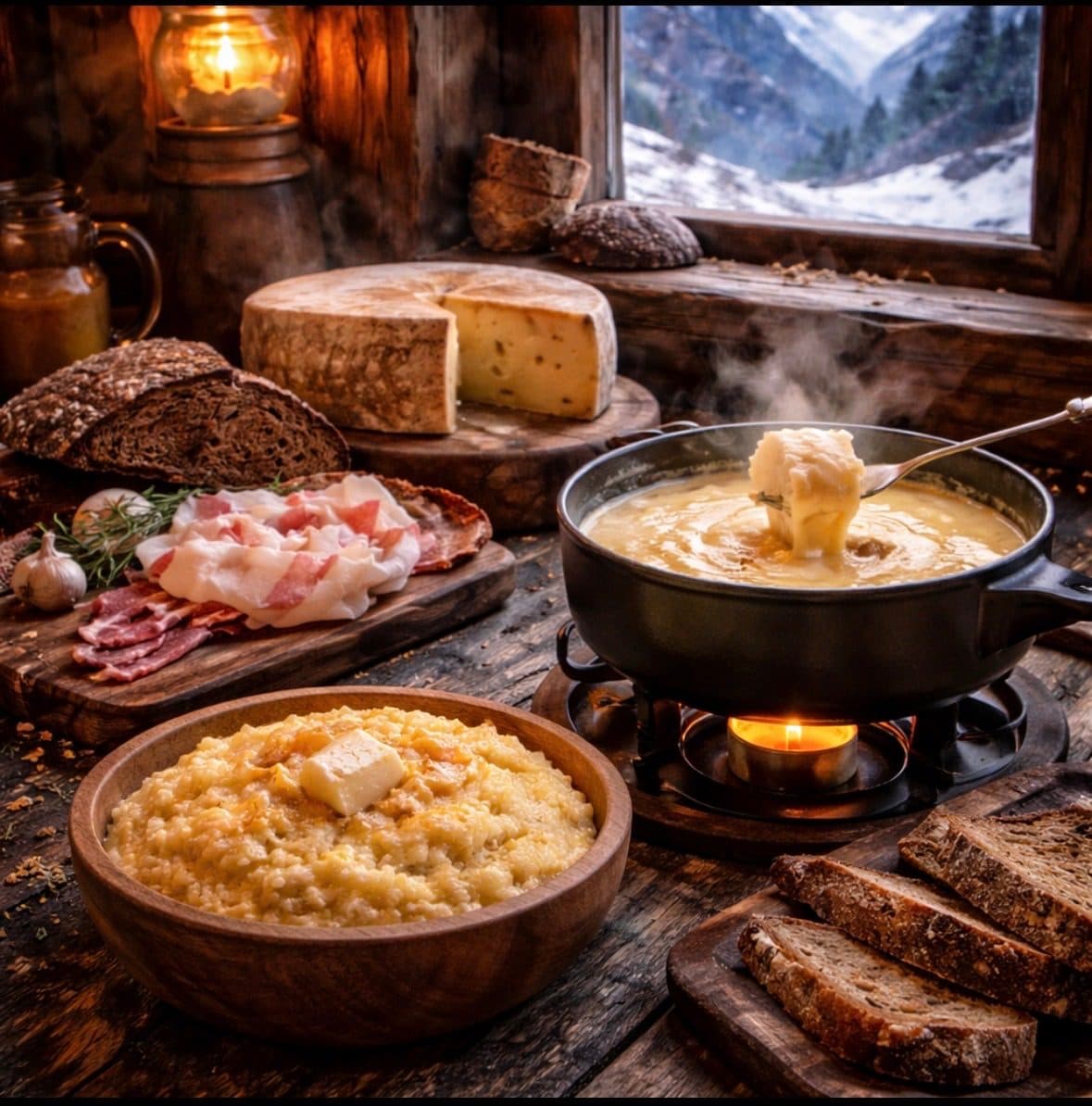
In Aosta and the Aosta Valley, cuisine is deeply connected to life in the Alps: • high-altitude pastures • long winters • the need to preserve food • mountain livestock raising and agriculture
Gastronomic souvenirs from the Aosta Valley therefore tell the story of how Alpine communities have transformed milk, cereals, meat, and honey into food suited to mountain life.
The Cheese of the Alps: Fontina
Related souvenirs • Fontina • Fondue • Polenta concia
Fontina DOP is the most representative cheese of the Aosta Valley.
It is produced only in this region using whole raw milk from cows raised in Alpine pastures. 
During the summer the herds are taken to high mountain pastures, where they feed on alpine herbs and flowers. This aromatic milk forms the base of the cheese. 
Its production is documented as early as 1270, and in the 15th century it also appears in frescoes in the castle of Issogne. 
Fontina is the main ingredient in some iconic dishes:
Valdostana fondue
Main ingredients: • Fontina DOP • milk • egg yolks • butter
The cheese is slowly melted and served hot with bread or polenta.
Polenta concia
It is a polenta enriched with: • mountain butter • Fontina or other Alpine cheeses
These dishes originated because cheese was one of the most important food resources in Alpine communities.
Preserving Meat in the Mountains
Related souvenirs • Lardo di Arnad • Motzetta
In the Alps, winter made it difficult to obtain fresh meat. For this reason, preservation techniques were developed.
Lardo di Arnad DOP
Lardo di Arnad is a DOP product originating from the town of Arnad, in the lower Aosta Valley.
It is made from the pig’s back fat and aged in doils, ancient containers made of chestnut or oak wood. 
During the aging process, the following are added: • salt • garlic • rosemary • Alpine aromatic herbs
This technique has been documented in local archives since at least the 18th century. 
Motzetta
Motzetta is dried meat typical of the Alpine valleys.
Traditionally it is prepared with: • beef • salt • spices • mountain herbs
The meat is pressed and dried in the cold mountain air.
This method allowed families to preserve protein during the winter months.
Mountain bread
Related souvenir • Dark rye bread
Dark rye bread comes from Alpine agriculture.
In high-altitude areas, wheat grows with difficulty, while rye is more resistant to the cold.
For this reason, villages in the Aosta Valley produced bread using rye flour.
Historically it was baked in the communal village ovens only a few times a year. Families made large quantities of bread, which was then dried and stored for months.
Even today, this bread accompanies many regional dishes, especially with: • cheeses • lardo • honey
Alpine honey
Related souvenir • Valle d'Aosta mountain honey
Beekeeping in the Aosta Valley is closely linked to Alpine flora.
Bees collect nectar from mountain plants such as: • rhododendron • chestnut • alpine herbs • meadow flowers
This biodiversity produces honeys with very different characteristics.
Honey was not only a food: in Alpine communities it was one of the main sources of natural sugar before the spread of industrial sugar.
Conclusion
Through these gastronomic souvenirs, a fundamental characteristic of the Aosta Valley emerges.
The local cuisine was born from alpine living conditions: • high-altitude pastures → Fontina • meat preservation → Lardo di Arnad and Motzetta • cold-resistant grains → rye bread • biodiversity of mountain meadows → alpine honey
Each product exists here because the alpine territory imposed specific food solutions.
By following these items, the visitor does not only discover what people eat in Aosta: they understand how mountain communities built their cuisine over the centuries.
本编辑内容在人工智能辅助下制作并经编辑团队审核,可能存在不准确之处。