Gastronomía♛ Premium
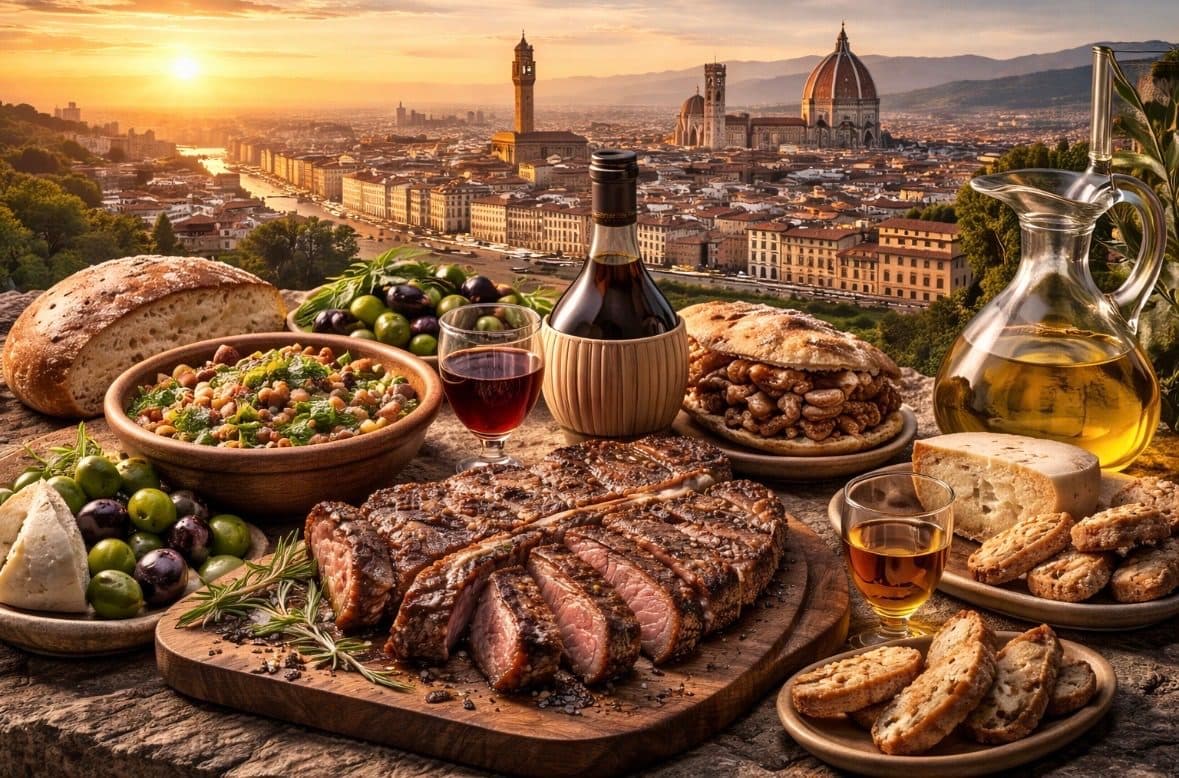
Florence through food: bread, meat and traditional sweets
Cultural gastronome
The Cultural Gastronome’s Perspective
The cultural gastronome visits a city starting from its food.
They are not simply looking for good dishes: they want to understand why they exist precisely there.
In Florence, this means observing three elements that have shaped the local cuisine: • Tuscan saltless bread • the full use of pork and beef • the agricultural production of the Florentine countryside and the Chianti area.
Many dishes come from rural or humble urban cooking, while others originated at the aristocratic tables of the Renaissance.
By following these products, you discover how the city transformed simple ingredients into a gastronomic tradition recognized throughout Italy.
Unsalted bread and the cuisine of reuse
Related souvenirs • Unsalted Tuscan bread • Ribollita • Pappa al pomodoro
Tuscan bread stands out because it contains no salt.
According to many historical sources, this characteristic spread during the Middle Ages, when salt was very expensive and subject to taxes or trade restrictions. Neutral bread kept well and could accompany very flavorful foods.
Today this bread is protected as Pane Toscano DOP.
In traditional Florentine home cooking, stale bread was reused in many recipes.
Two of the best known are:
Ribollita • black cabbage soup • cannellini beans • vegetables • stale bread
The name comes from the fact that it was reheated the following day.
Pappa al pomodoro • stale bread • tomato • garlic • basil • extra virgin olive oil.
It is a recipe that originated in the 19th century with the spread of tomatoes in Italian cuisine.
The tradition of cured meats
Related souvenirs • Finocchiona IGP • Prosciutto Toscano DOP • Florentine rigatino • Buristo
In the countryside around Florence, pig farming was for centuries a fundamental resource.
During the winter, pigs were slaughtered at home, from which numerous cured meats were produced.
Finocchiona IGP
It is a salami flavored with fennel seeds. This spice grows wild in the Tuscan countryside and was traditionally used to season meat.
Prosciutto Toscano DOP
It stands out for • intense salting • aromas of pepper, garlic, and herbs.
Rigatino
It is a cured pancetta often used in home cooking.
Buristo
It is a sausage made with pork meat and blood, a testament to the rural tradition of wasting no part of the animal.
Meat and street food: the Florence of the butchers
Related souvenirs • Florentine steak • Lampredotto
Two dishes tell the historical story of Florence’s relationship with meat.
Florentine steak
It is a thick cut of beef taken from the loin.
Traditionally it comes from Chianina cattle.
The steak is: • grilled over embers • without marinade • served very rare.
According to several historical sources, the name “bistecca” spread in Florence in the 18th century during the celebrations of San Lorenzo, when English travelers called these cuts of meat “beef steak”.
Lampredotto
It is one of the most characteristic dishes of traditional Florentine cuisine.
It is one of the four stomachs of the cow, slowly cooked in broth and often served in a sandwich with green sauce.
Street vendors, called lampredottai, can be found in the city’s markets and squares.
Cheeses and countryside around Florence
Related souvenirs • Pecorino Toscano DOP • Marzolino • Caciotta del Mugello • Raviggiolo • Peloso dell’Impruneta
The hills around Florence have been a land of pastoralism and small-scale livestock farming for centuries.
This has encouraged a great variety of cheeses.
Pecorino Toscano DOP
Sheep’s milk cheese produced since the Middle Ages.
It can be: • fresh • aged.
Marzolino
Its name comes from the month of March, the time when it was traditionally produced with the milk of sheep after lambing.
Caciotta del Mugello
A cow’s milk or mixed-milk cheese from the Mugello valley, an agricultural area historically linked to the city.
Raviggiolo
An extremely fresh cheese, eaten just a few days after production. It is protected as a Slow Food Presidio.
Peloso dell’Impruneta
A goat’s milk cheese produced in the Impruneta area, a historic village south of Florence.
Sweets and wines of the Florentine tradition
Related souvenirs • Chianti DOCG • Vin Santo • Zuccotto • Florentine schiacciata • Berlingozzo • Rice fritters
The hills of Chianti, between Florence and Siena, produce one of Italy’s best-known wines.
Chianti DOCG
It is made mainly from Sangiovese grapes and represents one of Tuscany’s main wine productions.
Vin Santo
A passito wine made from dried grapes and traditionally served with cantucci.
Among Florentine desserts, the following stand out:
Zuccotto
A dessert of Renaissance origin, probably linked to the cuisine of the Medici court.
Florentine schiacciata
A soft cake flavored with orange, typical of Carnival.
Berlingozzo
A traditional ring-shaped cake from the Carnival period.
Rice fritters
A preparation associated with the feast of Saint Joseph on March 19.
Conclusion
By exploring these products, it becomes clear that Florentine cuisine was born from the meeting of: • simple bread and resourceful leftover cooking • the rural tradition of butchery • the pastoral culture of the Tuscan hills • the winemaking of Chianti
Many dishes now considered symbols of the city — such as ribollita or lampredotto — were born from the practical needs of everyday life.
Others, like zuccotto or Vin Santo, instead tell the story of courtly and festive cuisine.
Through these gastronomic products, Florence appears not only as a city of art, but also as an agricultural and culinary landscape deeply rooted in the history of Tuscany.
Contenido editorial elaborado con ayuda de la inteligencia artificial y revisado por Trouvenir. Puede contener imprecisiones.
Descarga gratis
Lleva Trouvenir contigo
iOS y Android. Gratis.
Privacidad primeroSincronización entre dispositivosFunciona sin conexión