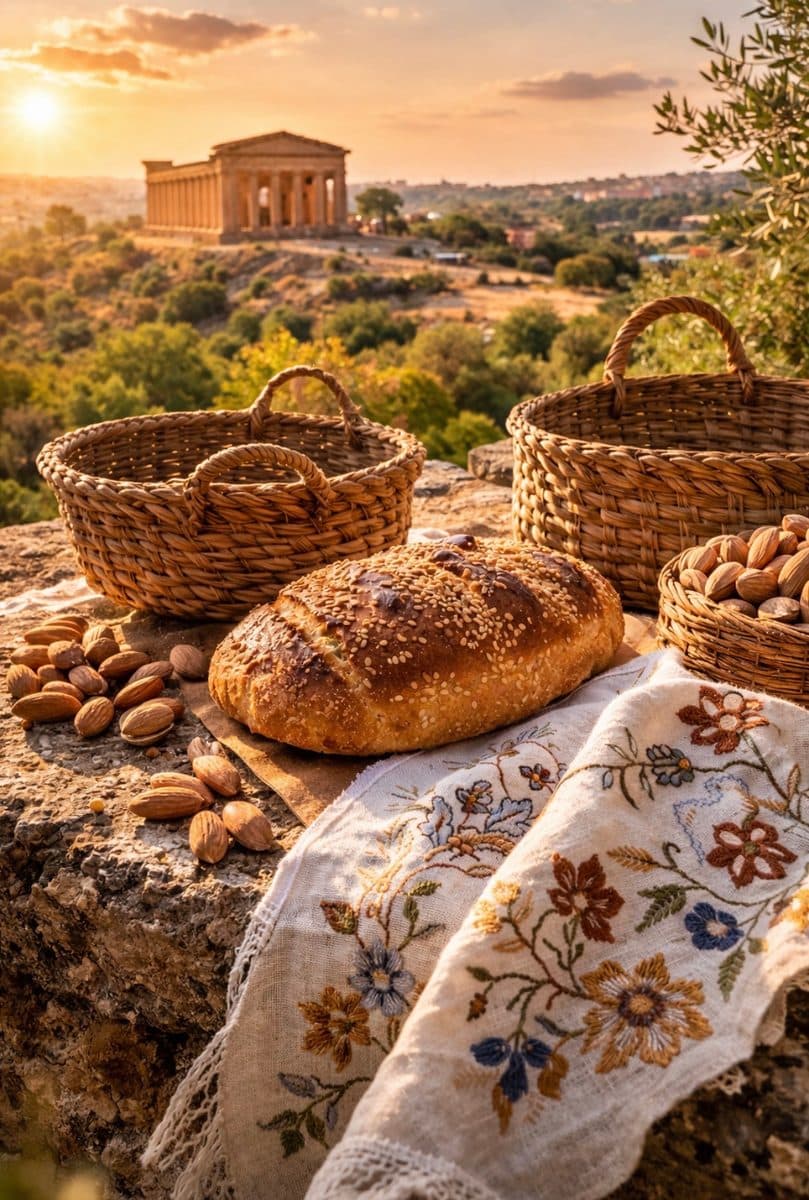
Introduction — The gaze of the symbolic explorer
The symbolic explorer observes a city through objects that tell the story of its true identity. They are not looking for generic souvenirs, but for products that exist precisely in that place because they are tied to the land, agriculture, or traditional crafts.
In the case of Agrigento, many objects tell a simple yet powerful story: a city built among wheat fields, almond groves, and rural communities that for centuries have worked the land and transformed its products into food and everyday objects.
This journey passes through four tangible symbols of the Agrigento area: almonds, bread, woven baskets, and household embroidery.
The Almond Landscape
Souvenir: Agrigento Almond
The landscape around Agrigento has long been linked to almond cultivation. The Mediterranean climate, limestone soils, and abundant sunshine favor the growth of this tree, which thrives in dry, well‑drained ground. 
For this reason, the province of Agrigento was for a long time one of the main centers of almond production in the Mediterranean and, at the beginning of the twentieth century, one of the most important areas in the world for this crop. 
The presence of almond trees is so deeply rooted in the area that every year the city celebrates the Almond Blossom Festival, an event that marks the beginning of spring and attracts folk groups from many countries around the world. 
The almond is not just an agricultural product: it is the fruit that has shaped the landscape and the local economy.
The Bread of the Countryside
Souvenir: Pane di Favara (Chichireddu)
Chichireddu is a traditional bread made with durum wheat semolina, typical of the Sicilian hard-dough bread tradition. 
Its horseshoe shape and dough made with little water allow it to last longer than other types of bread. This was important in rural communities, where bread was baked in domestic ovens and needed to last for several days. 
The spread of this bread is linked to Sicily’s agricultural history. Since ancient times, the island has been one of the Mediterranean’s main grain-producing regions, and during the Roman era it was considered the “granary of Rome.” 
Chichireddu therefore tells a very concrete story: the central role of wheat and bread in the lives of the communities of the Agrigento area.
Baskets of agricultural work
Souvenir: Giummarre (woven baskets)
In the Sicilian countryside, woven baskets were essential tools for everyday work. They were made with flexible branches or reeds gathered near rivers or in the fields, left to dry and then woven by hand.
These containers were used to carry agricultural products such as almonds, olives, and vegetables. Their sturdy yet lightweight structure made them ideal for use during harvesting and transport in the fields.
Giummarre exist in this area because the local economy was long based on agriculture: objects were designed to meet practical needs connected to work in the fields.
Embroidery in the homes of Agrigento
Souvenir: Handmade embroidery from the Agrigento area
Embroidery is a domestic tradition widespread in many parts of Sicily. In the past it was taught to young women within families and in religious boarding schools, and it was part of preparing a bridal trousseau.
Embroidered tablecloths, bed sheets, and fabrics were important objects in family life: they were prepared for weddings and passed down from generation to generation.
This type of craftsmanship exists in areas such as the Agrigento region because local culture has always valued manual domestic work and the creation of long‑lasting household items.
Conclusion — What These Objects Say About Agrigento
Seen together, these souvenirs paint a clear picture of the history of the area. • The almond tells the story of the Mediterranean agricultural landscape. • Favara bread recalls the central role of wheat in the history of Sicily. • Giummarre baskets show the tools of rural life. • Domestic embroidery preserves the family traditions of local communities.
Through these objects, it becomes clear that Agrigento is not only the city of Greek temples. It is also an agricultural and artisanal land where the everyday culture of its people has left tangible traces in the objects that are still produced today and taken home as souvenirs.
Contenido editorial elaborado con ayuda de la inteligencia artificial y revisado por Trouvenir. Puede contener imprecisiones.
Descarga gratis
Lleva Trouvenir contigo
iOS y Android. Gratis.
Privacidad primeroSincronización entre dispositivosFunciona sin conexión