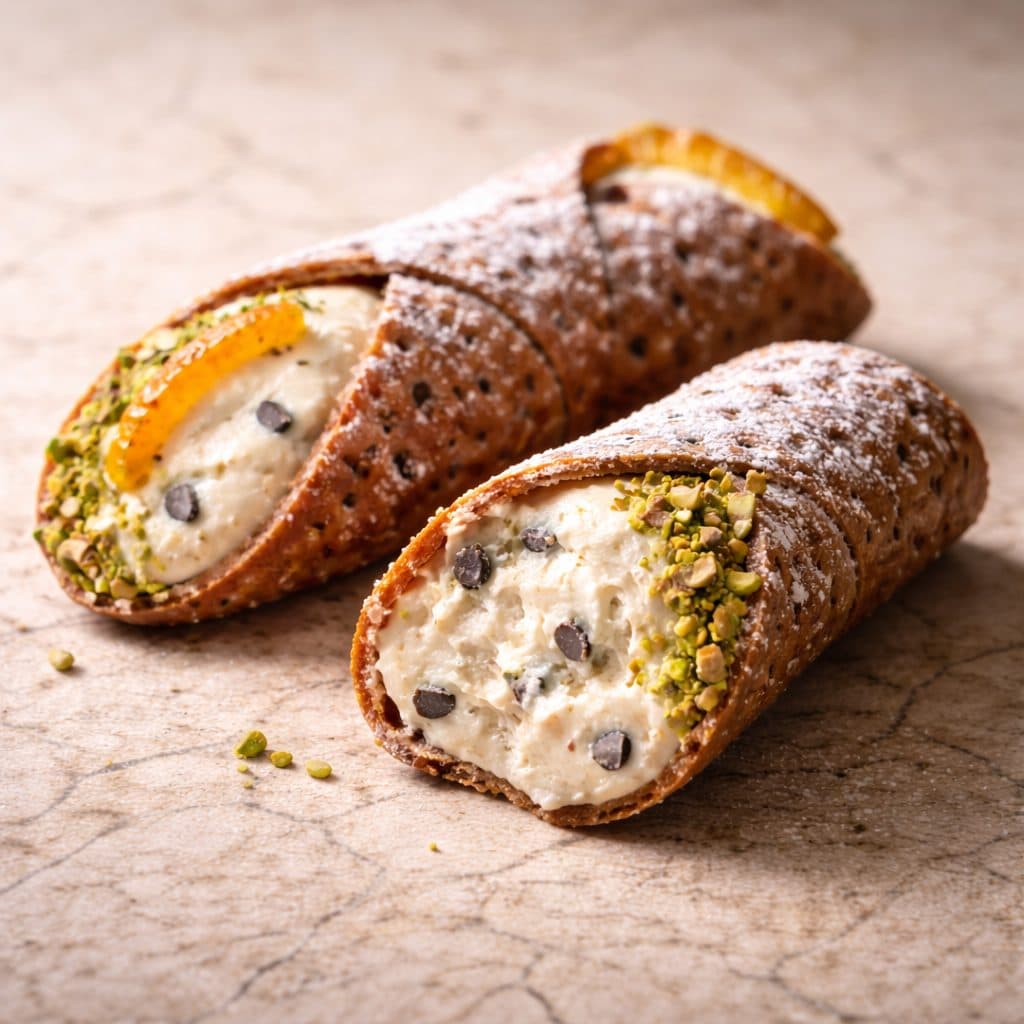
 €15–€40
Sicilian cassata in Palermo
AI summary
Sicilian cassata is one of the great symbols of Palermo’s pastry tradition: a sumptuous cake where sheep’s milk Ricotta, sponge cake, marzipan, and candied fruit meet in a rich and spectacular balance. Its origins tell centuries of Mediterranean history, from the Arab legacy of sugar and almonds to the elaborate creations of Sicilian monasteries. Colorful, generous, and festive, it has long been the dessert of special occasions. Bringing one home means sharing a piece of Palermo’s culture, made of intense flavors, conviviality, and tradition.
- Da assaggiare
- Tradizione secolare
- Da condividere
- Specialità siciliana
Editorially verifiedgastronomia
Verified shops arrive in the app
More gastronomy from Palermo


The product
What Sicilian cassata is
Sicilian cassata is a rich and visually striking cake made with soaked sponge cake, sweetened sheep’s milk Ricotta cream, green pasta reale (marzipan), sugar glaze, and candied fruit. The surface is often decorated with cherries, orange peel, candied pumpkin (zuccata), and other brightly colored candied fruits. The contrast between the softness of the Ricotta, the sweetness of the marzipan, and the shine of the glaze creates a dessert that is both intense and unmistakable. In Palermo it is considered one of the symbols of the city’s historic pastry tradition.
The roots
Origin and history
The origins of cassata are generally traced back to the period of Arab rule in Sicily (9th–11th century), when the spread of sugar, almonds, and citrus profoundly transformed local cuisine. According to a widely shared tradition, an early version of the dessert emerged from the combination of sweetened Ricotta and almond paste. Over time—especially in Sicilian monasteries between the 17th and 18th centuries—the recipe became richer with the addition of sponge cake, glaze, and candied fruit decorations. The modern version, elaborate and colorful, took shape above all in Palermo and within its pastry-making tradition.
Bringing home a cassata means telling the story of Palermo through its culinary history shaped by cultural encounters. The dessert shows how ingredients introduced in different eras became part of a shared tradition. It also carries a message of celebration and generosity: cassata is meant to be shared, cut at the center of the table. More than a simple dessert, it expresses the Mediterranean idea of hospitality and abundance.
The context
Cultural significance
Cassata is one of the most representative desserts in the gastronomic history of Palermo and reflects the island’s layered cultural influences. Its ingredients and techniques recall the meeting of Arab traditions—who introduced sugar, citrus fruits, and almond paste preparations—with later Norman and monastic influences. For centuries it has been associated with major religious celebrations, especially Easter, when rich desserts marked the end of fasting periods. Even today cassata is perceived as a celebratory cake, linked to moments of festivity and conviviality.
Content reviewed by Trouvenir against provenance and cultural-context criteria.
Where to buy
Where to find Sicilian cassata in Palermo
In Palermo it can be found mainly in historic pastry shops and artisan bakeries in the city center, especially around the traditional markets and major squares. Many pastry shops sell both whole cassate and ready-cut individual slices. During religious holidays, particularly Easter, its presence in shop windows becomes even more prominent. For taking it home, many pastry shops offer sturdy travel packaging or slightly more compact versions designed for transport.
Get the full verified list - map, hours, reviews - for Sicilian cassata in Palermo.
AI Scanner · Free
Not sure your Sicilian cassata is the real deal?
Upload a photo of the Sicilian cassata you found: the AI compares it against Trouvenir's verified souvenir database and returns origin, history and provenance.
Verify with AIFree download
Take Trouvenir with you
iOS and Android. Free.
Privacy-firstCross-device syncOffline ready