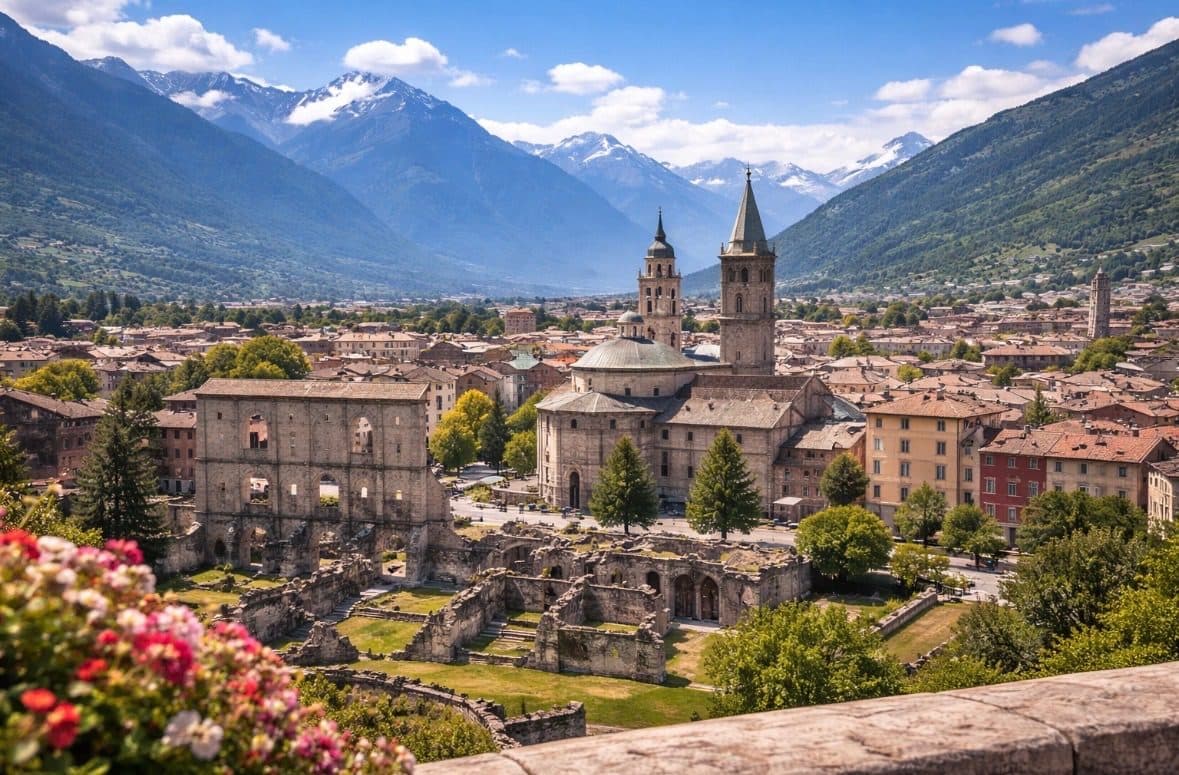
Aosta is one of Italy's destinations with the deepest artisanal and gastronomic traditions. Every product here reflects the area's history, craftsmanship, and culture — something you won't find elsewhere with the same character.
This guide collects distinctive souvenirs selected by the Trouvenir app for Aosta: distinctive objects and specialties that truly capture the soul of the city, far from tourist stalls and mass-produced items. For each souvenir you'll find cultural context, price ranges, and where to buy with confidence.
1. Campanaccio pastorale
🏺 Craftsmanship
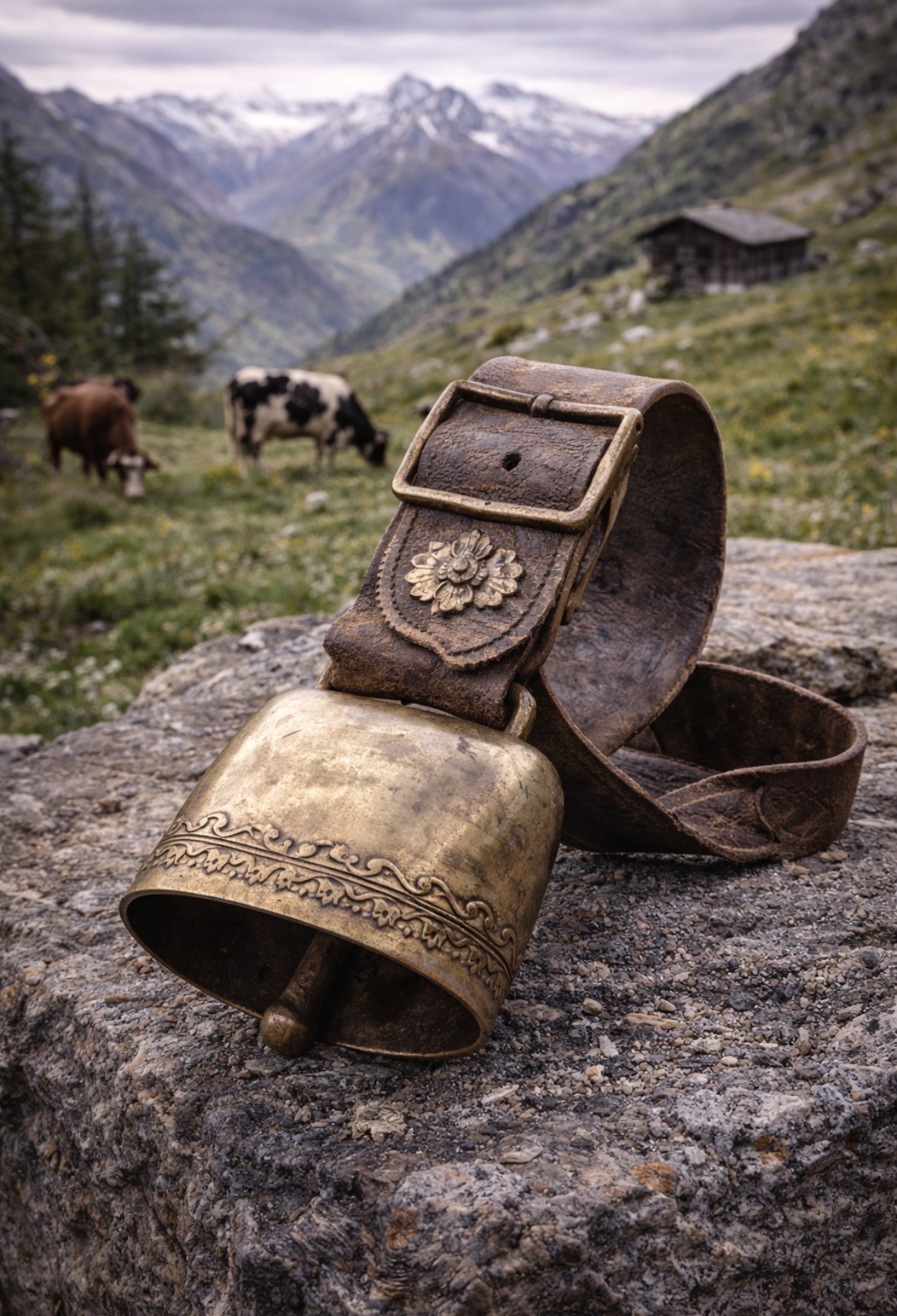
It is a metal bell, forged to be durable and audible from a distance. Its shape is simple and functional, free of superfluous decoration. The sound is full, deep, and easily recognizable across open spaces. It was born as a working tool, not as an ornamental object.
Why it's special
The campanaccio tells the story of a mountain landscape that is lived in and traversed. It symbolizes a pastoral culture that orients itself through sound. It speaks of movement, remote control of the herd, and a constant relationship with the land. Within this object lives the Valdostan idea that open space should be inhabited with attention and listening.
History
The use of campanacci in Alpine pastoralism has been documented for centuries. They were used to locate livestock while grazing and to maintain an acoustic link with the herd. Their shape and tone were adapted to the terrain and to regional needs. In the area around Aosta, the campanaccio became an integral part of the mountain soundscape.
Price
€25-€70
Where to find it
Contexts linked to Alpine pastoralism Traditional artisanal production Regional Valdostan supply chain
Discover Campanaccio pastorale on Trouvenir →
2. Grolletta / Coppa dell’amicizia
🏺 Craftsmanship
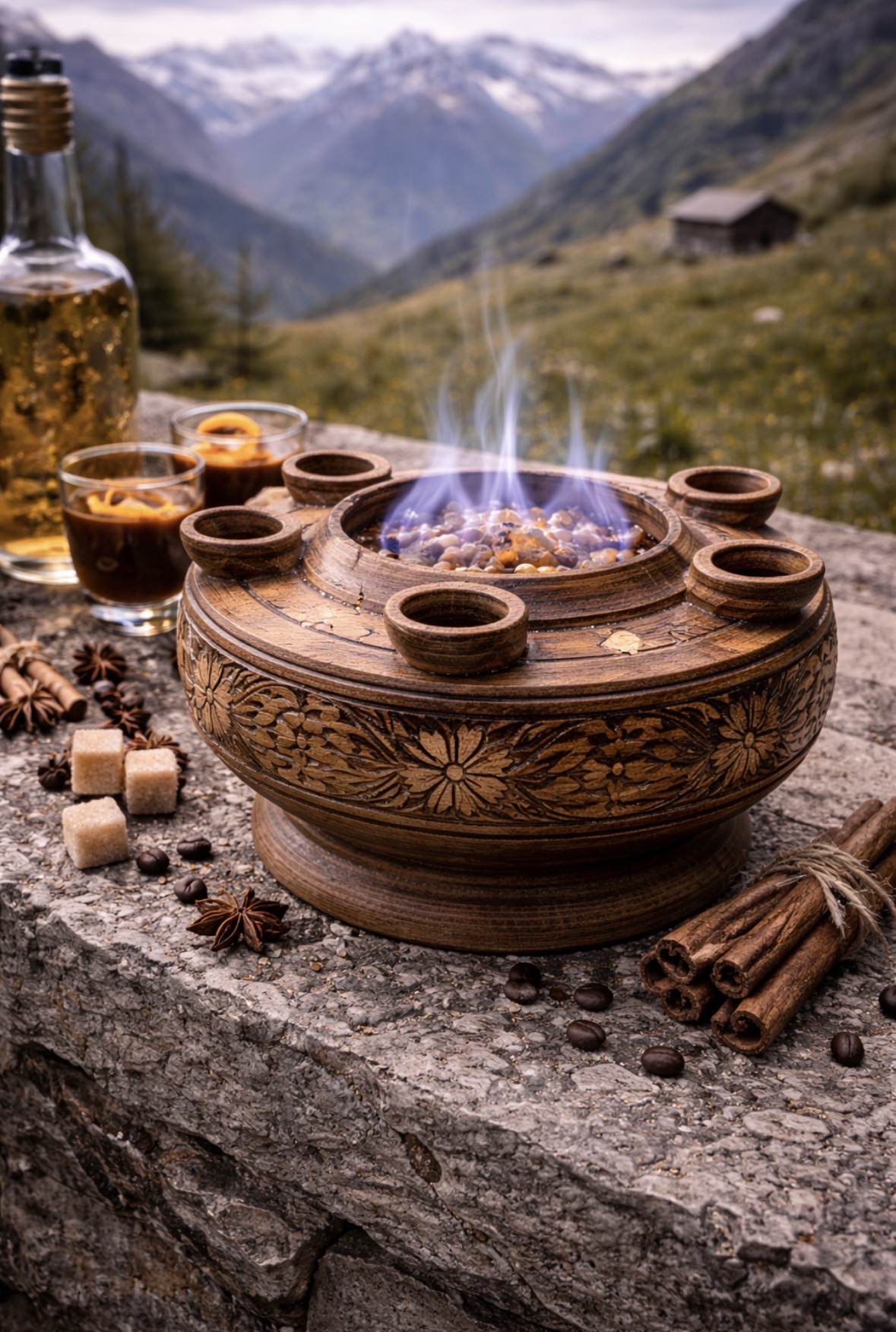
It is a wooden cup, often with multiple spouts, designed to be shared. Its shape is round and hollowed, sometimes decorated in a simple way. It is not an individual container: it is meant to pass from hand to hand. Its use is inseparable from the collective gesture.
Why it's special
The grolletta is one of the most emblematic objects of Valle d’Aosta. It represents the idea of community as a concrete practice, not an abstract concept. It speaks of hospitality, equality, and circular exchange. Within this object lives the Valle d’Aosta idea that social bonds are built through shared and repeated gestures.
History
The coppa dell’amicizia has been documented in Valle d’Aosta since the early modern period as a convivial ritual object. It was used during community occasions, celebrations, and gatherings between families and villages. The passing of the cup followed a precise order, without hierarchies. This ritual has endured through time, preserving its symbolic meaning even in the area of Aosta.
Price
€35-€120
Where to find it
Workshops of traditional Valle d’Aosta wood craftsmanship Contexts connected to Alpine community culture Traditional wooden craft productions
Discover Grolletta / Coppa dell’amicizia on Trouvenir →
3. Valdostan Carved Wooden Object
🏺 Craftsmanship
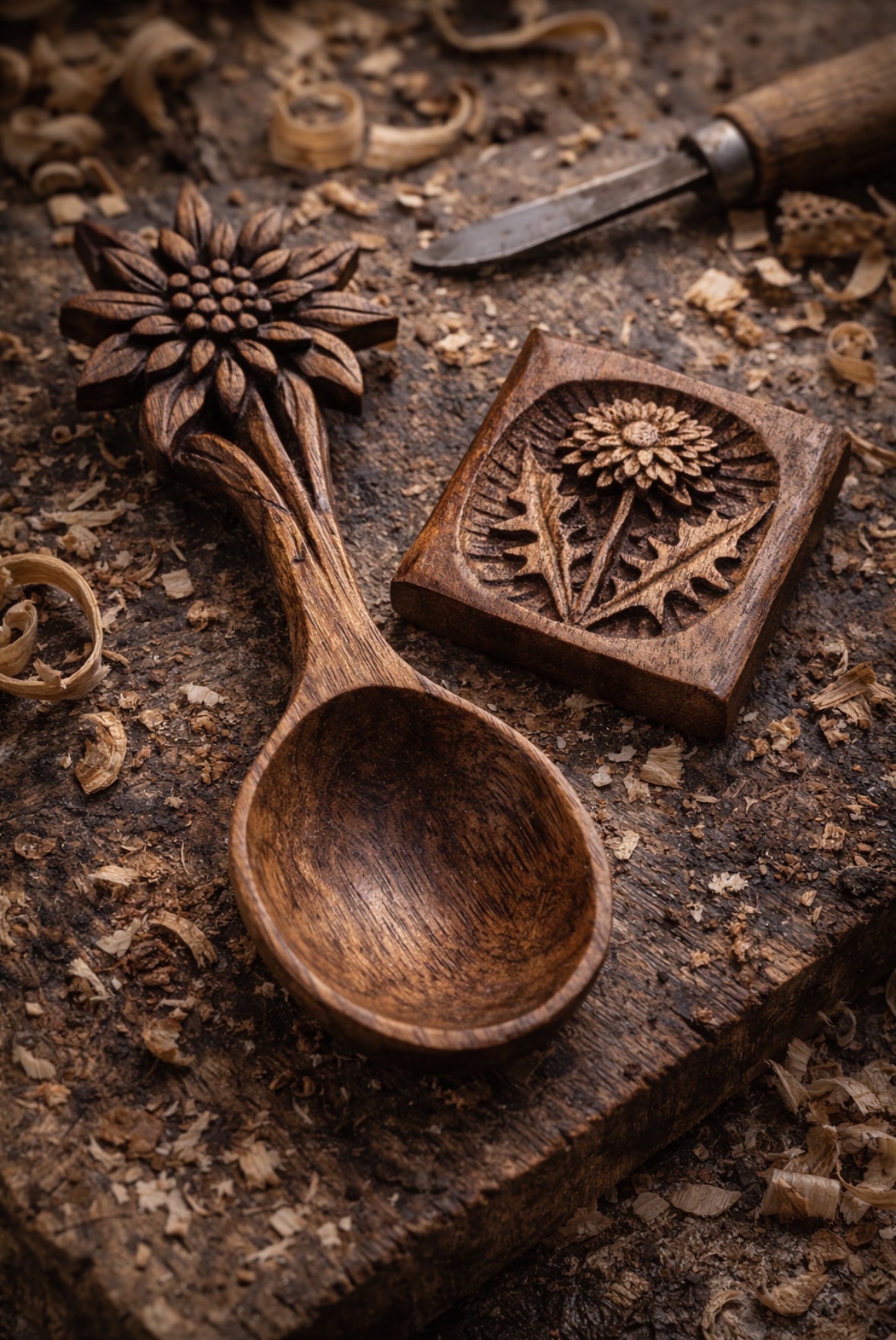
An object made from regional wood, handcrafted using carving techniques passed down over time. It can take many forms: a household tool, a small piece of furniture, or a symbolic element. The marks of the carving remain visible, never polished away until they disappear. The material stays recognizable, present, and unmasked.
Why it's special
The carved wooden object tells a story of self‑sufficiency and dwelling. It symbolizes a mountain culture built with what the land provides. It speaks of manual work, slowness, and a direct relationship with the material. In these objects lives the Valdostan idea that function comes before appearance.
History
Woodworking in Valle d’Aosta has been documented since the Middle Ages. Wood was a primary material for building houses, tools, and everyday objects. Carving began as a functional gesture and later became a form of expressive language. Over time, this tradition consolidated into one of the most recognizable aspects of the material identity of Aosta and its surrounding territory.
Price
€30-€150
Where to find it
Woodcraft workshops Traditional Alpine production settings Valdostan artisan supply chain
Discover Valdostan Carved Wooden Object on Trouvenir →
4. Soapstone Object
🏺 Craftsmanship
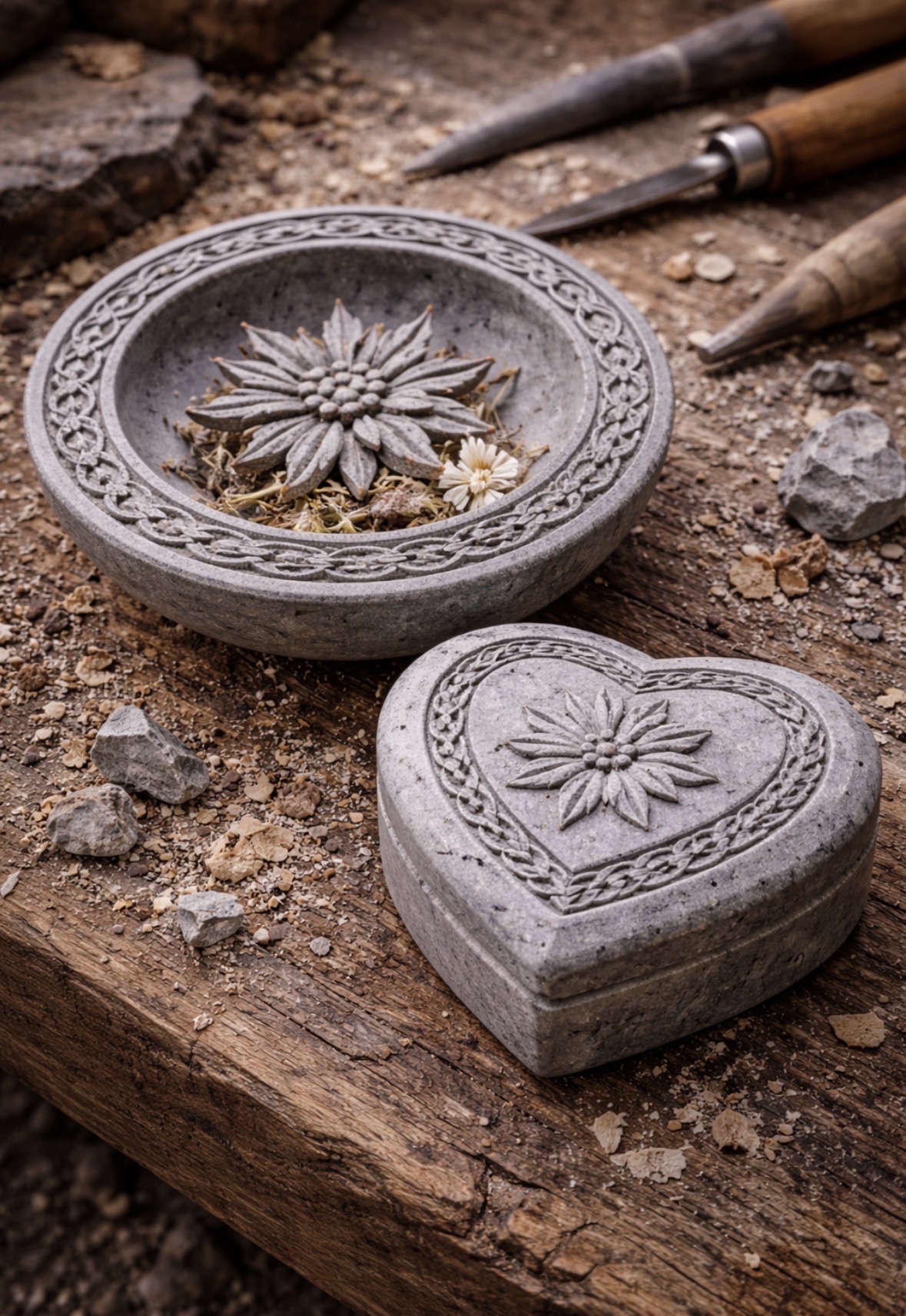
It is an object made from soapstone, a soft rock that is highly resistant to heat and shaped by hand. It may be a container, a kitchen utensil, or an essential household item. The surface is matte, compact, and pleasant to the touch. It is created for everyday use and for direct contact with fire and time.
Why it's special
Soapstone tells the story of a culture of stable, long‑lasting living. It is the symbol of a mountain community that learned to build with what endures. It speaks of domestic warmth, slow cooking, and objects that accumulate and release energy. Within these artifacts lives the Valle d’Aosta idea that the home is a place to protect and make livable over time.
History
The extraction and working of soapstone in the Alpi occidentali have been documented since ancient times. In Valle d’Aosta, steatite was used to create vessels resistant to fire and wear. Working the stone required time, precision, and deep knowledge of the material. This practice shaped an artisanal tradition tied to domestic life, including in the area of Aosta.
Price
€40-€150
Where to find it
Artisan workshops connected to stone craftsmanship Traditional Alpine production contexts Valle d’Aosta artisan supply chain
Discover Soapstone Object on Trouvenir →
5. Fontina d’alpeggio valdostana
🍽️ Food Specialties
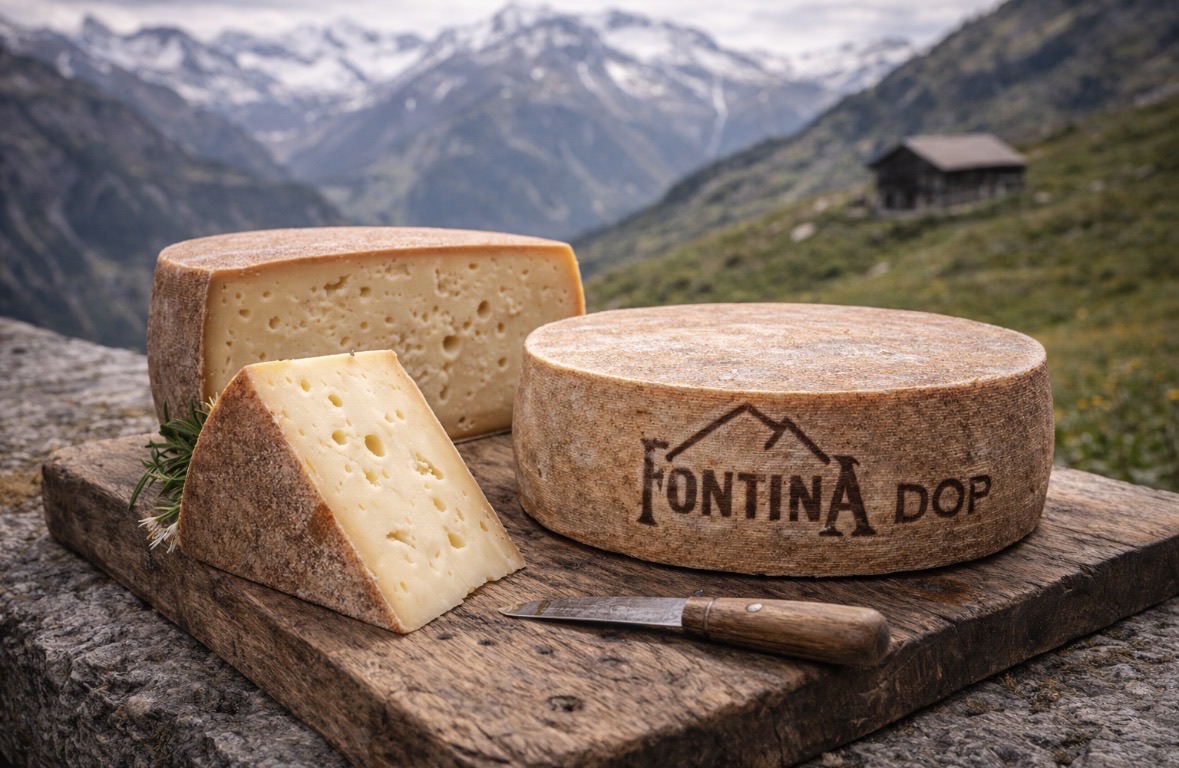
It is a cheese produced in the alpine pastures during the summer months, using milk processed immediately after milking. The texture is elastic, the flavor full yet measured, with notes that vary depending on the high‑altitude pastures. Each wheel reflects a season, an altitude, a precise mix of alpine herbs. It was created to nourish and preserve value over time, not to impress.
Why it's special
Fontina tells the story of an organized, communal pastoral culture. It is the symbol of a mountain that is inhabited, worked, and crossed seasonally. It speaks of grazing, of transhumance, of cooperation between people, animals, and land. Within this cheese lives the Valle d’Aosta idea that landscape is not a backdrop, but an active part of everyday life.
History
The production of Fontina has been documented in Valle d’Aosta since the Middle Ages. It emerged as a practical response to the need to transform and preserve milk produced at altitude. Cheese-making in the alpine pastures follows precise seasonal rhythms tied to the ascent to and descent from the grazing lands. Over time, Fontina became one of the pillars of the agricultural identity of the region and of the city of Aosta.
Price
€25-€80
Where to find it
Summer alpine pastures Contexts connected to mountain production Regional Valle d’Aosta short supply chain
Discover Fontina d’alpeggio valdostana on Trouvenir →
6. Lardo valdostano tradizionale
🍽️ Food Specialties
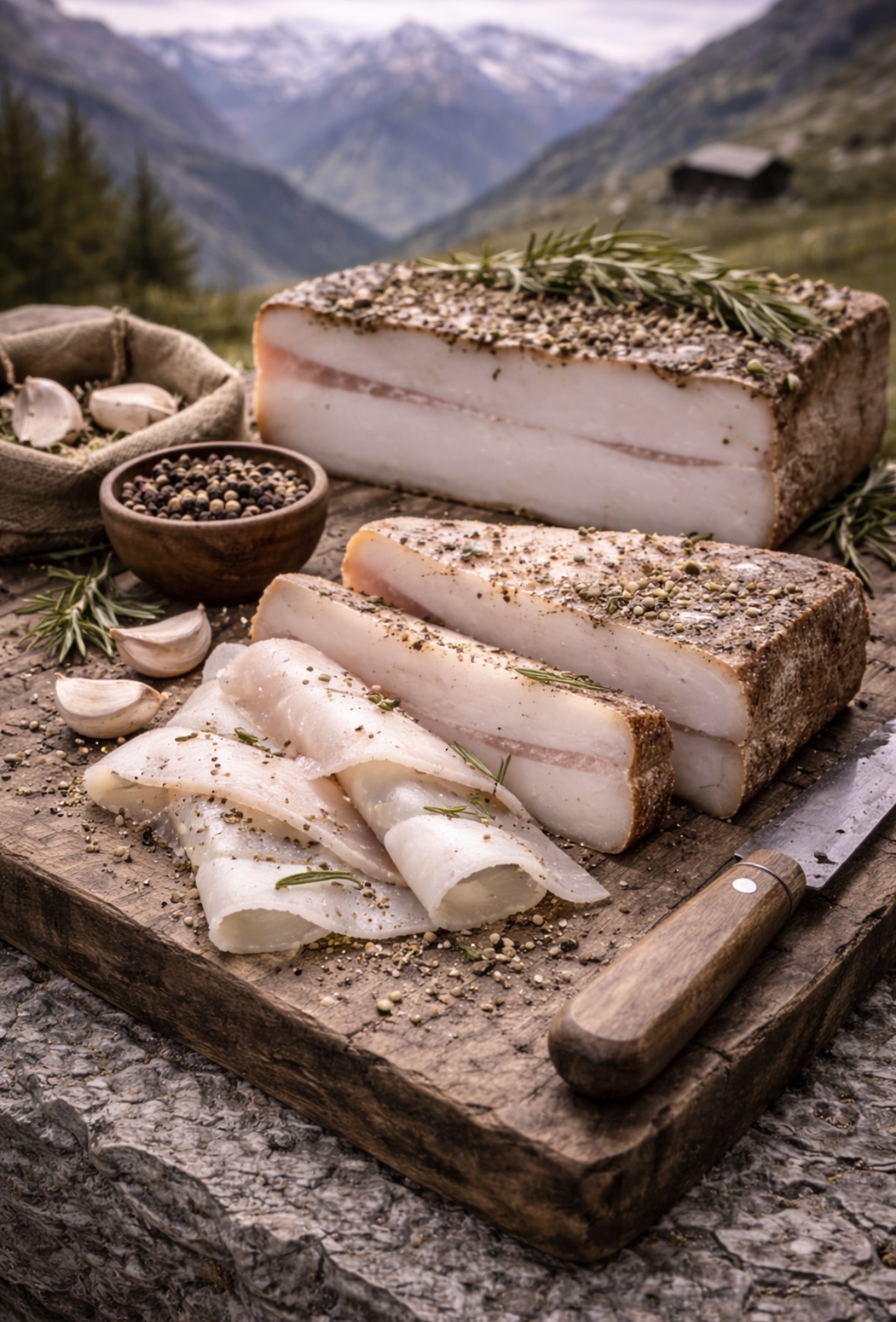
It is a food produced through traditional salting and curing practices designed for long-term preservation in a mountain environment. Its texture is compact, the flavor full yet measured, shaped more by time than by processing. It is used in small quantities, as a concentrated resource. It was created to sustain work and life at high altitude.
Why it's special
Lardo tells the story of a culture built on careful resource management. It is the symbol of a mountain society that had to concentrate energy and nourishment into durable forms. It speaks of foresight, domestic economy, and practical knowledge of time. In this food lives the Valdostan idea that food is first a strategy for survival, and only later a pleasure.
History
Techniques for preserving food with salt and curing have been widespread across the Alps since the Middle Ages. In Valle d’Aosta, these practices developed out of the need to face long winters and severe climatic conditions. Lardo became a stable food reserve, an integral part of the rural and pastoral diet. Over time it established itself as a key element of regional food culture, also linked to the city of Aosta and its surrounding territory.
Price
€20-€50
Where to find it
Traditional mountain productions Rural contexts of Valle d’Aosta Regional supply chains connected to food preservation
Discover Lardo valdostano tradizionale on Trouvenir →
7. Valle d’Aosta mountain honey
🍽️ Food Specialties
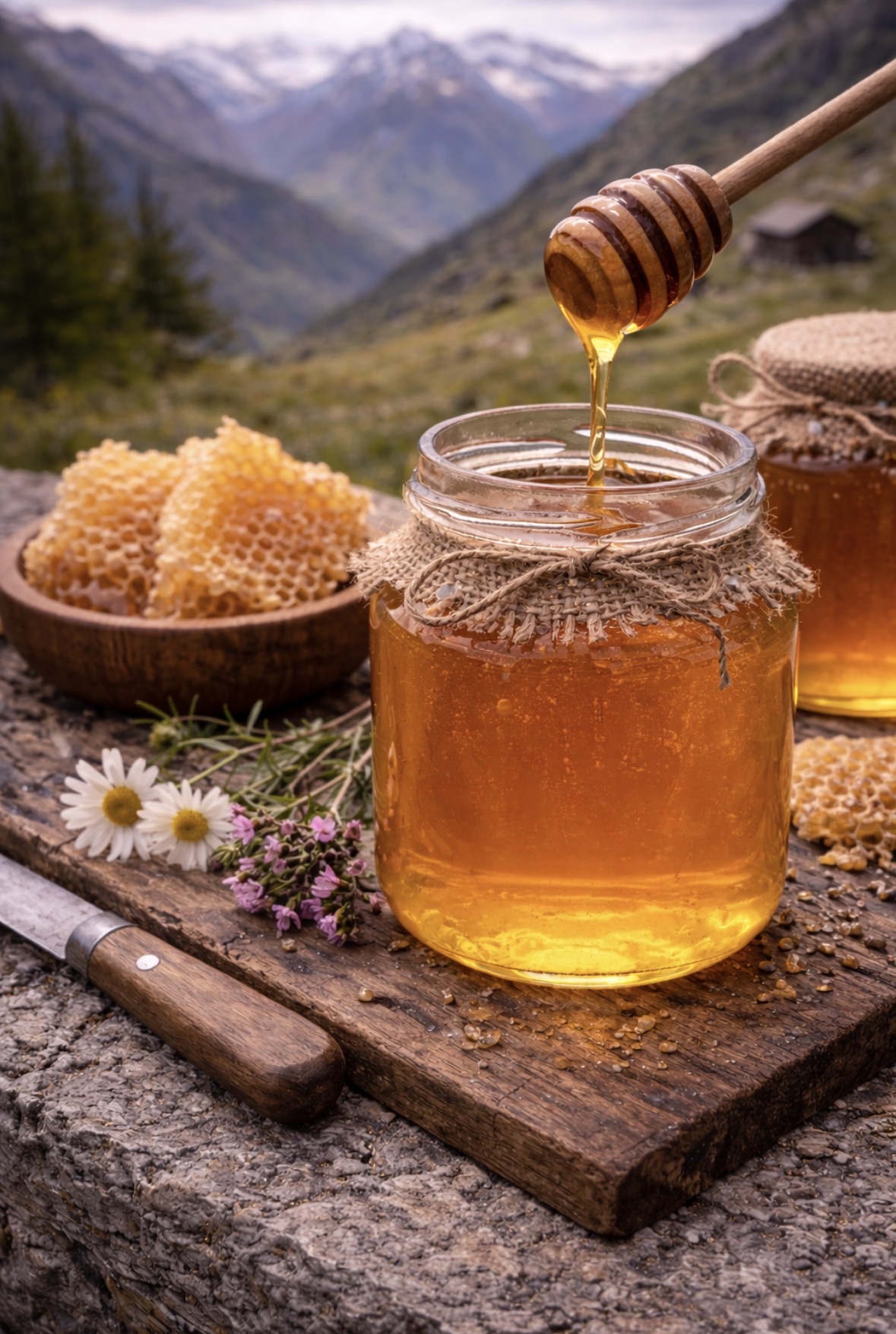
A honey produced in the alpine environment, obtained from spontaneous high‑altitude blossoms. Its color, aroma, and texture naturally vary depending on the season and altitude. The flavor is clear and never uniform, tied to a specific territory and a limited moment in time. It comes from a delicate balance between climate, plants, and human activity.
Why it's special
Mountain honey reflects a culture of observation and care. It symbolizes a territory that creates value without forcing the environment. It speaks of biodiversity, short natural cycles, and constant attention. In this product lives the Valle d’Aosta idea that quality arises from respecting the natural context.
History
Beekeeping in the alpine environment has been documented in Valle d’Aosta since ancient times, practiced in rural and monastic settings. Production has always been limited and seasonal, shaped by climate and flowering cycles. This has made honey a precious food, closely tied to deep knowledge of the land. Over time, it became an integral part of the regional food culture, including in the area of Aosta.
Price
€12-€45
Where to find it
Mountain beekeepers High‑altitude agricultural producers Valle d’Aosta regional supply chain
Discover Valle d’Aosta mountain honey on Trouvenir →
8. Pane nero di segale
🍽️ Food Specialties
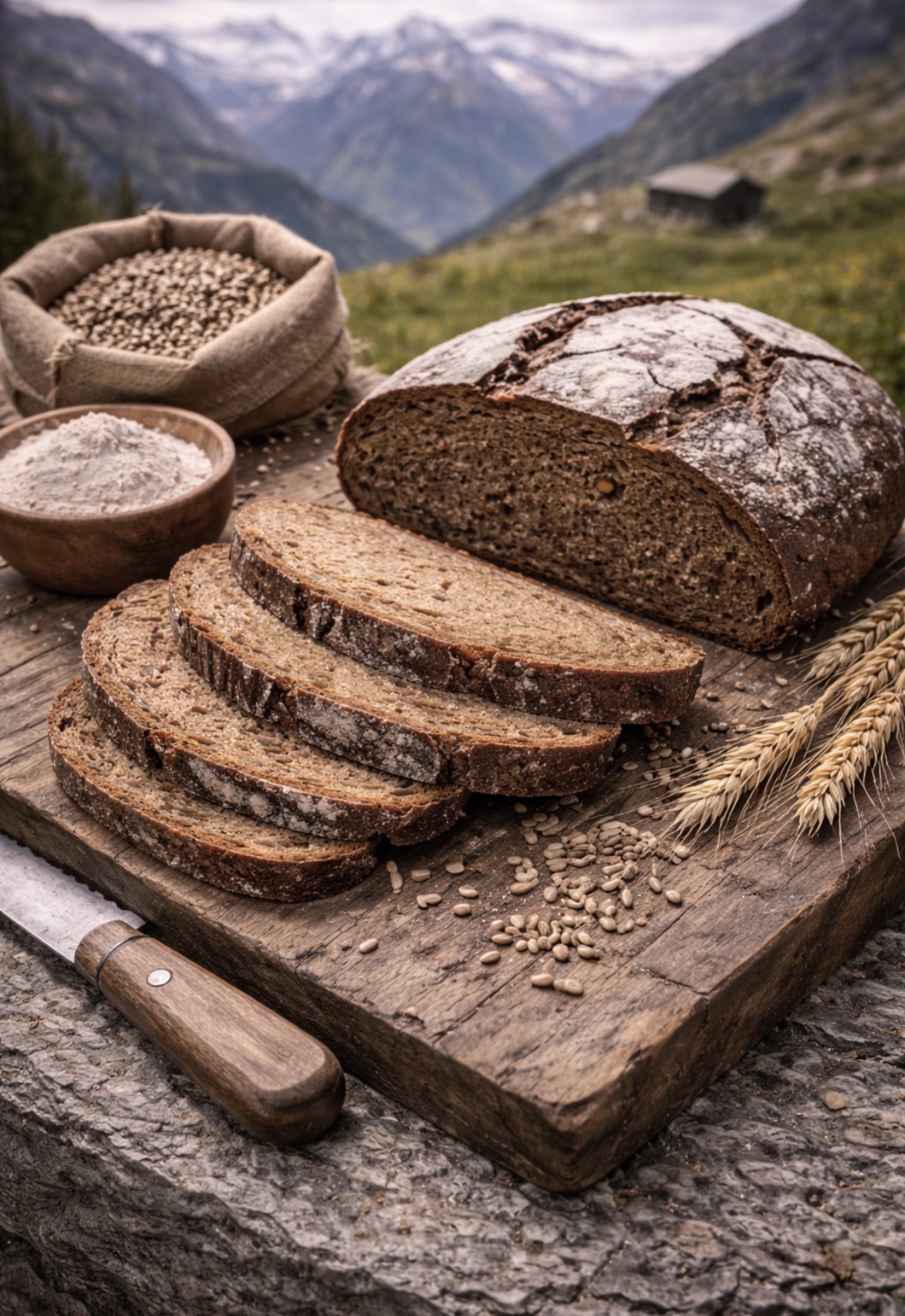
A compact, dark bread made from rye flour, created to last over time. The crust is thick, the crumb dense, the flavor strong and firm. It was not meant for immediate consumption, but to be stored, broken apart, and reused. It is a food built around the idea of scarcity and foresight.
Why it's special
Pane nero reflects a culture of organized survival. It symbolizes a community that learned to plan for the winter and share its resources. It speaks of collectivity, long rhythms of time, and essential nourishment. In this bread lives the Valdostan idea that food is, above all, a guarantee of continuity.
History
Rye-based breadmaking has been documented in Valle d’Aosta since the Middle Ages. Rye, more resilient than wheat, adapted better to harsh climates and high altitudes. The bread was prepared collectively once or twice a year in village ovens, then stored for months. This practice created a strong bond between food, community, and the territory around Aosta.
Price
€8-€25
Where to find it
Community ovens Traditional mountain producers Contexts linked to rural Valdostan breadmaking
Discover Pane nero di segale on Trouvenir →
How to recognise a typical souvenir in Aosta
Typical products from Aosta are found in artisan workshops, neighbourhood markets, and directly from producers — not in tourist shops in the city centre.
Practical rule
if a product has no indication of origin, producer, or production method, it's probably not what it seems.
Use Trouvenir to find certified workshops near you, with details on products, prices, and provenance.